Flock tries to quell surveillance fears as questions pile up

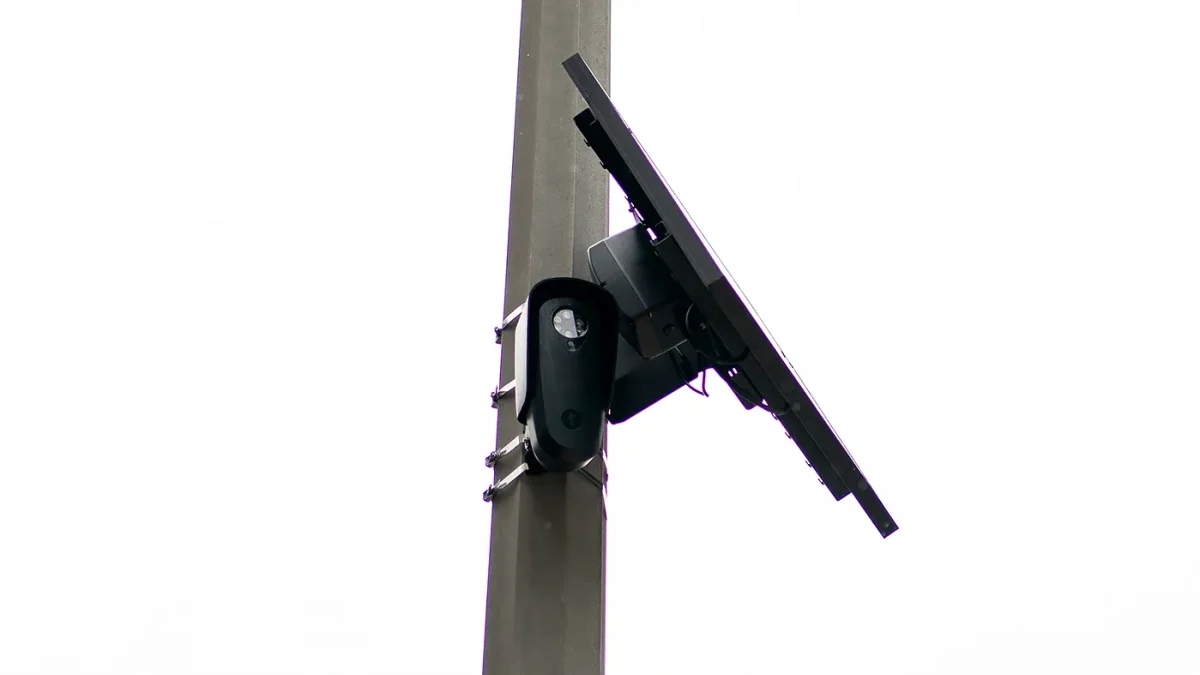
Table of Contents
Privacy Pushback Forces Flock Safety to Overhaul Its Data Practices
Provpnadvice.com – A surge of lawsuits, contract cancellations, and public outcry has pushed one of America’s most ubiquitous surveillance companies into a rapid policy reset. Flock Safety, the operator of thousands of automated license plate readers embedded in municipal roadways across the United States, announced a sweeping revision to its data retention rules and privacy framework this week — moves designed to blunt what critics describe as an out-of-control mass-surveillance apparatus.
The timing is telling. The announcement landed roughly two weeks after a Washington Post investigation revealed that more than fifty law enforcement officers had been accused, charged with, or convicted of using Flock cameras or comparable plate-reading systems to monitor ex-partners and romantic interests. That report crystallized a fear many communities had voiced informally for years: that the same infrastructure meant to help find missing children could quietly become a tool for personal stalking.
What the Technology Actually Captures
Flock’s hardware goes well beyond reading a plate number. Its network of automated license plate readers, paired video cameras, and audio-detection sensors assembles what the company terms a “vehicle signature” — a composite profile that logs make, model, paint color, and even distinctive cosmetic details such as bumper stickers, window decals, and aftermarket accessories. The firm stresses that it does not employ biometric scanning or facial recognition, a distinction advocates acknowledge but argue is cold comfort given the sheer volume of location data accumulated over time.
The company’s internal logic holds that a plate number is merely “just a start” in an investigation; the layered vehicle details can prove decisive when searching for missing persons or tracing suspects through dense urban corridors. Municipalities that deploy the system typically cite those emergency-use cases as justification, and many residents concede the technology has saved lives. The objection, however, centers on scale: millions of plates scanned daily across dozens of cities produce a de facto national travel log for every registered driver.
Civil Liberties Groups Call for More Than Self-Policing
Privacy attorneys and digital-rights organizations were quick to assess the new rules. Michael Soyfer, an attorney at the Institute for Justice, dismissed the revisions as cosmetic.
“I think it’s really just an effort, as the tide has turned on them, to quiet down all of the legislative and public opposition to their mass surveillance business model,” Soyfer said. He characterized the changes as “pretty much just window dressing.”
Andrew Crocker, surveillance litigation director at the Electronic Frontier Foundation, framed the concern in more granular terms. A plate-reading network, he explained, reconstructs a person’s movements across weeks and months — and from those patterns, intimate details of daily life fall out.
“A network of ALPR cameras has the ability to reveal where you have gone over a long period of time, and that, in turn, can reveal lots of things, intimate, private things about your life,” Crocker said. “Where you’re spending your time, who you’re spending your time with, what sorts of doctors you go to, where you might worship, all the sorts of things that you can imagine are revealed by just figuring out where you’ve traveled over time.”
The EFF’s position reflects a broader legal trend: several state legislatures have introduced bills in recent sessions that would cap how long plate-reading data may be stored and require judicial warrants before non-emergency queries. Flock’s self-imposed limits, advocates argue, do not substitute for statutory guardrails with enforcement teeth.
The Specific Policy Shifts
Under the revised framework, the recommended default retention window shrinks from thirty days to seven. Local or state ordinances can still extend that period, but Flock says the shorter baseline reduces the chance of deep behavioral profiling between queries. A new “evidence mode” lets detectives freeze particular plate-reader records as formal evidence in what the company labels “exceptional cases,” preserving them beyond the standard deletion cycle.
Flock also rolled out a municipal control panel that lets each city define exactly which categories of offense trigger cross-agency access to its camera feeds. The stated aim is to hand communities a dial for balancing collaborative policing against unilateral data sharing — though critics note the default settings remain opaque until individual cities publish their configurations.
Two additional safeguards target internal misuse. An “audit assistance” function flags anomalous query patterns for administrator review, while a “proactive lockout” mechanism automatically suspends a user’s access once activity crosses a predefined abnormality threshold. Both features were absent from earlier deployments and appear designed to answer the Washington Post findings directly.
The ACLU Waits for Implementation Details
The American Civil Liberties Union, which maintains several active litigation matters against Flock in different jurisdictions, offered a measured but skeptical read. The organization called the shortened retention window “seems positive at first blush,” yet warned that “the devil will be in the details” surrounding how evidence mode is interpreted and enforced in practice.
In other words, the ACLU’s posture is one of conditional acceptance: the direction is welcome, but the operative question is whether a detective’s judgment call about what constitutes an “exceptional case” will operate without meaningful oversight. Without published criteria or independent audit trails, advocates contend the feature could become a backdoor that effectively nullifies the seven-day deletion rule.
An Apology From the Top
Flock chief executive Garrett Langley addressed the misuse scandal in a CBS interview, offering what amounted to an institutional apology for cases in which officers exploited the platform for personal surveillance.
“Hindsight tends to be very clear,” Langley told CBS. “I think of course, we could have done more earlier, and we listen and we learn, and we’ll continue to move forward because until everyone has an equal level of safety in this country, we have work to do.”
The remark underscored a tension at the heart of Flock’s business model: the company sells infrastructure that municipalities operate, yet it retains substantial control over data architecture, retention defaults, and access protocols. When misuse occurs, responsibility diffuses across vendor, city police department, and individual officer — a diffusion privacy advocates say leaves drivers without a clear accountability path.
What Comes Next
The coming months will test whether the announced changes translate into enforceable practice or remain aspirational language. State legislatures weighing plate-reading bills will scrutinize Flock’s new defaults as a benchmark; cities renegotiating contracts will demand contractual audit rights; and the ACLU’s pending cases will force courts to define, in concrete rulings, how long location data may sit before it must vanish. Until those questions are answered with specificity rather than vendor discretion, the backlash that prompted this reset is unlikely to subside.
Related Reading
Frequently Asked Questions
What is Flock tries to quell surveillance fears?
Flock tries to quell surveillance fears is the main topic of this guide. The article explains the context, practical details, and next steps readers should understand.
Why does Flock tries to quell surveillance fears matter?
Flock tries to quell surveillance fears matters because readers are looking for a useful answer, not just a short summary. Good content should match search intent and help them decide what to do next.