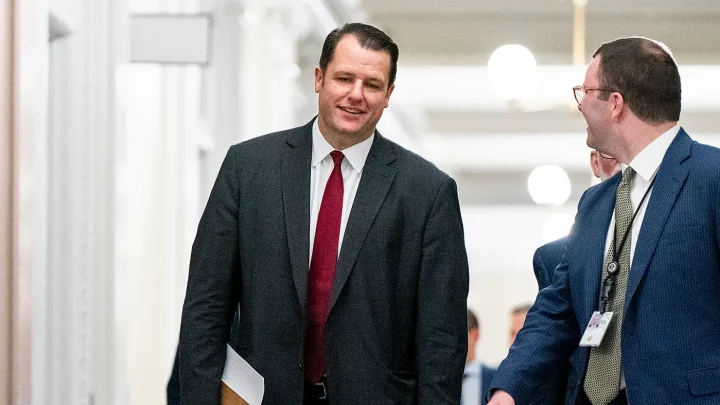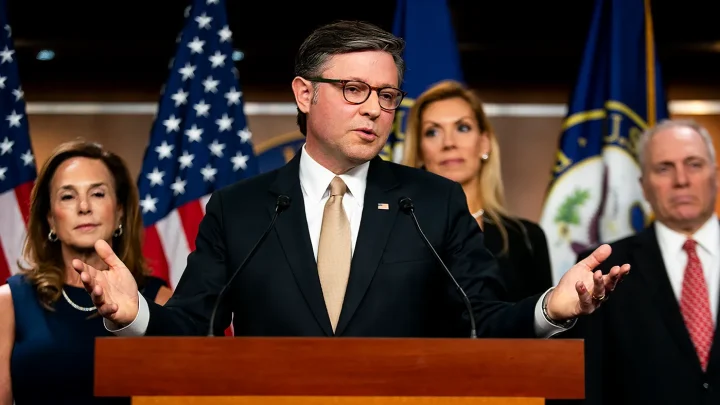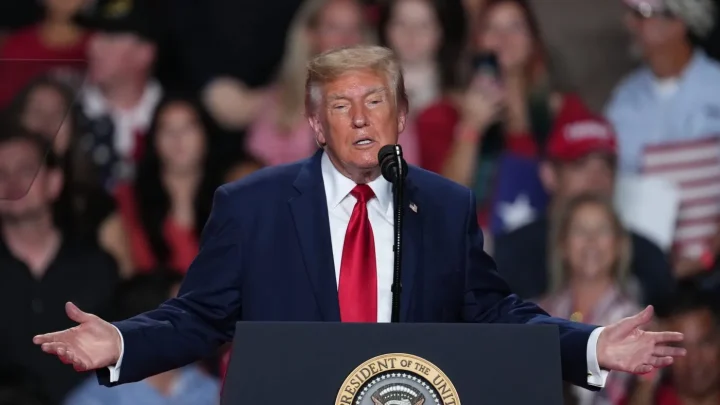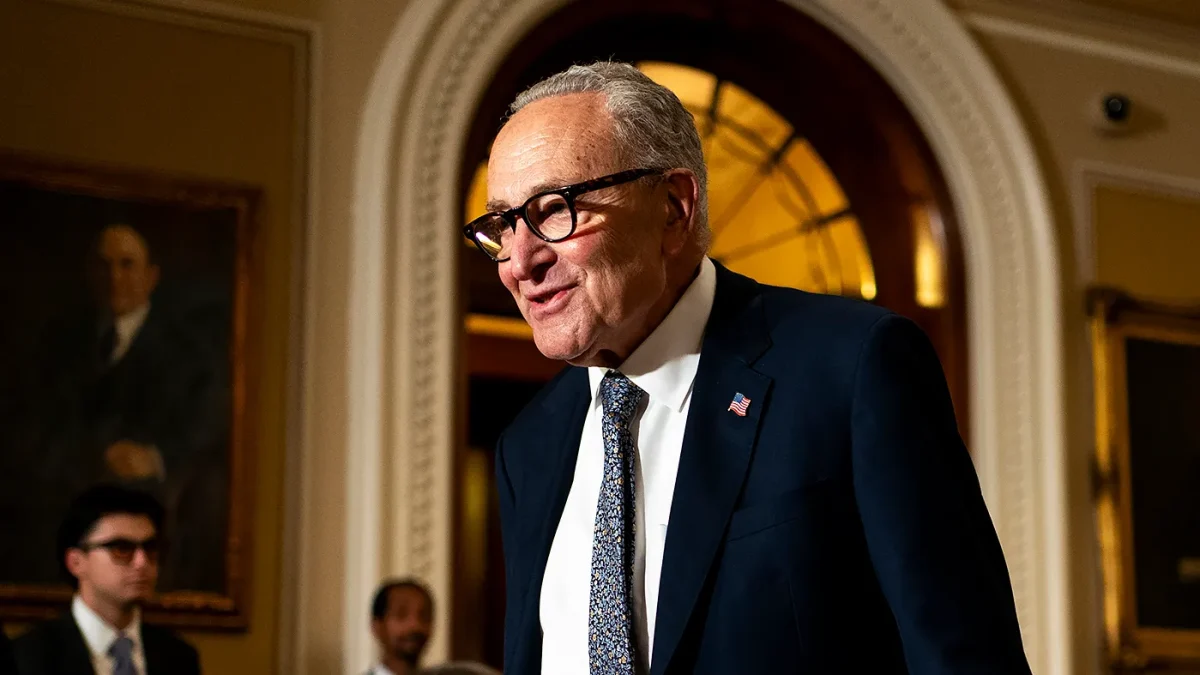


Kalshi suspends GOP House candidate in North Carolina for betting on own race

Kalshi Suspends GOP House Candidate for 3 Years

Provpnadvice.com – When Kalshi suspends GOP House candidate Laurie Buckhout from its trading platform, the move lands as a cautionary tale for every politician who has ever opened an account on an event-contract exchange. Buckhout, the Republican nominee in North Carolina’s 1st Congressional District, received a three-year ban and a $2,589.96 fine after purchasing fewer than $1,000 in contracts tied to her own November contest against Rep. Don Davis (D-N.C.). The settlement, effective Friday, follows Rule 5.17(z) of Kalshi’s trading guidelines, which prohibits participants from wagering—directly or through intermediaries—on events in which they hold decision-making authority or any material influence over the outcome.

What Happened and How the Platform Responded

Buckhout placed the offending trades shortly after announcing her candidacy last December. Because she was running in the very race the contracts tracked, the platform classified her as a direct decision maker for the underlying event. The published settlement notice stated plainly that her position as candidate gave her direct sway over the result, triggering the conflict-of-interest provision.

Buckhout cooperated fully with Kalshi’s internal investigation, and the platform credited that cooperation in its notice. In a public statement, she offered no excuses:

“I bet on myself. Literally. It was a dumb mistake, and as soon as I learned there was an issue, I worked to make it right. Safe to say my career as a Kalshi trader was short-lived.”

A platform spokesperson declined to comment beyond the language already contained in the published notice.

The Electoral Context

The suspension arrives at a moment when the 1st District race is genuinely competitive. Buckhout won the GOP primary in March, setting up a rematch against Davis, who had defeated her predecessor by fewer than two percentage points in 2024. After Republicans in the North Carolina General Assembly redrew the district’s boundaries last fall, the nonpartisan Cook Political Report now labels the seat as leaning Republican—a dramatic shift for a district that had long been a Democratic stronghold.

Buckhout’s résumé is military-heavy. A retired Army colonel with 26 years of active service, she spent less than six months last year as acting assistant secretary of defense for cyber policy. Since leaving the uniformed ranks in 2010, she has run a consulting practice focused on electronic warfare and cyberspace operations, credentials that align with the district’s expanding defense-technology employment base.

A Broader Enforcement Pattern

Buckhout’s case is the latest in a string of recent actions. Earlier this year, Kalshi handed five-year suspensions to Minnesota state Sen. Matt Klein (D), former Texas congressional candidate Ezekiel Enriquez, and Virginia Senate candidate Mark Moran (I). Klein paid a $539.85 fine; Enriquez paid $784.20. Moran, who ultimately did not appear on the general-election ballot, opted not to settle and instead received a $6,229.30 penalty assessed directly by the platform.

The harshest penalty in the series came the same Monday as Buckhout’s announcement: former Rep. George Santos (R-N.Y.) received a lifetime ban after wagering on his own attendance at this year’s State of the Union address and then failing to cooperate with the investigation. His accompanying fine of $71,356 was the largest in the recent enforcement wave.

As prediction-market trading draws retail investors who once limited speculative wagers to horse racing or fantasy sports, political figures are increasingly caught on the wrong side of platform rules. Operators now enforce conflict-of-interest provisions with a regularity that would have been unthinkable a few years ago.

FAQ

How long is Laurie Buckhout banned from Kalshi? Three years from all trading activity on the platform, effective the Friday the settlement took hold.

What rule did she violate? Rule 5.17(z) of Kalshi’s trading guidelines, which bars any participant from placing wagers on events where they serve as a decision maker or exercise any influence over the outcome.

How much did she pay in penalties? A monetary penalty of $2,589.96, in addition to the three-year trading ban.

Did she cooperate with the investigation? Yes. The settlement notice explicitly noted that Buckhout cooperated fully with Kalshi’s internal investigation.

Is this the first time a candidate has been penalized for betting on her own race? No. Earlier this year, three other political figures received five-year suspensions, and former Rep. George Santos received a lifetime ban with a $71,356 fine.

Republicans will pay for Trump’s tariffs in the midterms

The Tariff Backlash Is Rewriting Republican Midterm Math

Provpnadvice.com – For several months, the Republican Party had a manageable economic narrative heading into the fall elections. After the Iran conflict sent fuel prices surging and inflation climbing to levels unseen in years, the macroeconomic picture began to soften. Both the June and July readings of the Consumer Price Index landed well below expectations, and grocery shelf prices registered a decline for the first time in months. The party’s campaign apparatus was already stitching together a midterm platform centered on household affordability, banking on the notion that voters would reward Republicans for presiding over a cooling economy.

Then the president walked back into his most persistent policy fixation, and the entire calculus shifted overnight.

A Weekend Collapse and a 50-Percent Slap

Negotiations between the White House and Ottawa fell apart last weekend. Within hours, Trump imposed 50 percent duties on billions of dollars’ worth of Canadian imports, reigniting what the Wall Street Journal labeled “The Dumbest Trade War in History.” The move landed at precisely the moment when Republican operatives were trying to keep trade chaos out of the news cycle and redirect voter attention toward falling grocery bills and easing energy costs. Instead, tariff headlines now dominate the political conversation, and the party that controls the White House inherits every negative association voters attach to rising prices at the pump and the checkout counter.

The campaign-trail damage is already visible. As the Wall Street Journal observed, “Republicans are already getting pounded on the campaign trail over [Trump’s] tariffs and inflation.” Polling data corroborates the ground-level reports. A Politico survey found that 56 percent of Americans place cost-of-living pressure among the nation’s most urgent problems. Even within Trump’s own base, a plurality of 33 percent identify rising prices as “among the biggest failures of Trump’s second term.”

What the Numbers Say About Voter Sentiment

Public hostility toward tariffs is not new. A Harris Poll conducted in March showed that 72 percent of Americans — including 60 percent of Republicans themselves — judged the tariff program to be having a negative effect. That sentiment has not eroded; if anything, the renewed Canada confrontation has sharpened it.

New York Times-Siena Research polling, which surveyed likely voters in Alaska, Iowa, Maine, North Carolina, Ohio, and Texas, found that 54 percent disapprove of the tariffs. Reuters-Ipsos data reveal a more consequential shift: voters now favor the Democratic approach to household affordability over the Republican approach by an eight-point spread, 36 percent to 28 percent. Meanwhile, the Democratic lead on the generic congressional ballot has widened to just over six points — the largest margin of this election cycle.

Trump’s overall approval rating hovers just below 40 percent, more than 17 points below the 50-percent threshold. On the economy — once his most reliable source of favorable polling — his number has dropped to 34.5 percent, with more than 62 percent of respondents expressing disapproval. Even constituencies that should be natural allies, such as Western ranchers, are openly irritated by his decision to strip tariffs on imported beef as a supposed affordability measure.

Internal Fractures Along the Senate Map

Republican leaders recognize the danger but appear unable to halt it, even as it threatens to unravel what should have been a favorable Senate landscape. Senator Thom Tillis (R-N.C.) warned that the tariffs are generating “tension” inside the party and added, “the party that owns that tension…will probably suffer the consequences in November.”

“It makes no sense to start a trade war with our closest neighbor.” — Former Sen. John Sununu (R-N.H.)

The geographic overlap between tariff damage and contested Senate races makes the problem acute. Maine, Michigan, New Hampshire, Alaska, and Ohio are all heavily exposed to Canadian retaliatory duties, and each state hosts a fiercely contested race this fall. Senator Susan Collins (R-Maine), seeking to defend her seat, publicly called the Canada tariffs a “mistake” before skipping a campaign event with Vice President JD Vance in her state last week, where he was scheduled to defend the duties. Sununu, running to reclaim his old New Hampshire seat, piled on the criticism with the quote above.

The Democratic Playbook and the Broader Calculus

The Democratic Senatorial Campaign Committee has signaled its intention to press the affordability angle aggressively, and the polling suggests voters will be receptive to the argument that Trump and his party are “making life more expensive.” Democrats can frame every tariff headline as evidence of Republican mismanagement while positioning themselves as the party of household budgets.

It is fair to note that Trump did not create the inflationary environment; price pressures have been building since the pandemic-era supply disruptions of 2020 and 2021. But when voters are increasingly pessimistic about their financial outlook, struggling to cover basic necessities, and searching for a target to blame, the origin of the inflation matters far less than its current visibility. Trump understood this dynamic in reverse during the 2024 campaign, when he rode a wave of fury over “Bidenomics” to reclaim the presidency. Now he is actively keeping tariffs and price spikes in the headlines rather than letting voters focus on whatever cost-reduction measures his administration claims to be pursuing.

By waging trade wars, doubling down on duties, and dismissing affordability as “a fake word,” Trump hands Democrats a ready-made midterm narrative while fracturing his own party’s ability to defend a Senate map that was supposed to be winnable. The tariffs were never just a trade policy. They are now a campaign problem, and the political bill is coming due in November.

Frequently Asked Questions

What is Republicans will pay for Trump s tariffs?

Republicans will pay for Trump s tariffs is the main topic of this guide. The article explains the context, practical details, and next steps readers should understand.

Why does Republicans will pay for Trump s tariffs matter?

Republicans will pay for Trump s tariffs matters because readers are looking for a useful answer, not just a short summary. Good content should match search intent and help them decide what to do next.

Spanish prime minister points finger at Israel, Russia disinformation over Ceuta migrant crisis

Spanish PM Points Finger at Israel, Russia Over Ceuta

Provpnadvice.com – The Spanish prime minister points finger at two foreign capitals after a late-July migration surge turned the North African enclave of Ceuta into a humanitarian emergency. More than 72,000 people crossed the fence separating Morocco from Spanish territory in a matter of hours, and at least 100 died in the chaos that followed. Prime Minister Pedro Sánchez, speaking on Cadena Ser radio on Monday, accused Israel and Russia of orchestrating a coordinated disinformation push on social media that he says amplified panic and sought to delegitimize Madrid’s foreign-policy positions.

Alleged Information Campaign Traced to Moscow and Tel Aviv

Sánchez laid out a specific timeline: fabricated narratives and rumors began flooding social platforms immediately after July 30 and 31, the days when the border crossing overwhelmed local infrastructure. He attributed those digital operations to actors connected to both Moscow and Tel Aviv, as well as to what he called “an ultra-right international” that habitually weaponizes migration to fracture European solidarity.

“After July 30 and 31, rumors and disinformation spread on social networks linked to Russia and Israel, and to an ultra-right international that always uses migration to attack both Spain and Europe and divide it.”

The Spanish prime minister points finger at findings from the European External Action Service, the EU’s diplomatic arm, which he said documented collaboration between Israeli and Russian media outlets and far-right networks across the continent. In his framing, the unprecedented scale of the crossing was not merely a humanitarian emergency but also a political opening seized by foreign actors to undermine Madrid’s vocal opposition to what he termed the genocide in Gaza and its firm stance against Vladimir Putin’s invasion of Ukraine.

“It is evident that both countries used the large, unprecedented influx of migrants to criticize his government in response to Madrid’s stances regarding the genocide in Gaza or Putin’s invasion of Ukraine.”

Human Cost, Return Flows, and Legal Complications

Ceuta shares one of the very few land borders between the European Union and Africa, a geographic reality that has made it a perennial pressure point in migration flows. The late-July event saw tens of thousands of people — many of them families with children — attempt to breach the fence in a matter of hours. The sheer volume of arrivals, exceeding 72,000, overwhelmed hospitals, shelters, and municipal services almost instantly. At least 100 people lost their lives in the aftermath, though the true toll may be higher given the conditions under which many crossed.

In the weeks following the surge, Spanish officials reported that approximately 48,000 migrants had voluntarily returned to Morocco. The legal landscape governing those intercepted at sea while attempting to reach Ceuta or Melilla — Spain’s other North African territory — was clarified by a ruling from Spain’s Supreme Court, which held that such individuals cannot be forcibly repatriated to Morocco. That decision has complicated the government’s ability to manage the remaining population in the enclave.

Amid the political controversy, Sánchez announced a package of 168 million euros — roughly $195 million — earmarked for Ceuta to help the territory recover from the infrastructure strain and provide ongoing services to residents and displaced migrants. He stressed that the crisis “can only be resolved through cooperation and not through distrust towards Morocco,” signaling his intention to maintain a bilateral framework with Rabat rather than treat the event as a rupture in relations.

Israel and Russia Deny Involvement

The accusations did not go unanswered. Israeli Foreign Minister Gideon Sa’ar responded swiftly on social media, dismissing Sánchez’s claims as outright fabrication.

“This is a brazen lie. Continuing to spread defamatory lies will not distract from Sánchez’s disgraceful failure to manage his country’s affairs.”

In Moscow, Kremlin spokesperson Dmitry Peskov offered a flat denial when asked whether Russia had any involvement in the Ceuta episode.

“No. Nothing to do with it.”

Both denials leave the Spanish prime minister points finger claim without independent corroboration in the public record, though the European External Action Service research he cited remains the primary documentary basis for his accusation.

Frequently Asked Questions

How many people crossed into Ceuta during the late-July surge? More than 72,000 people entered the territory in a single event spanning July 30–31, overwhelming local infrastructure within hours.

How many deaths were confirmed? Local authorities confirmed at least 100 deaths in the aftermath of the crossing, though officials acknowledged the true figure could be higher.

What did Sánchez accuse Israel and Russia of doing? He alleged that both countries, along with far-right networks, ran a coordinated social-media disinformation campaign immediately after the crossing to amplify fear and delegitimize Spain’s positions on Gaza and Ukraine.

How much financial aid did Madrid pledge to Ceuta? Sánchez announced a 168-million-euro package (approximately $195 million) to help the territory recover infrastructure and fund ongoing services.

What did the Spanish Supreme Court rule regarding migrants intercepted at sea? The court held that individuals stopped at sea while attempting to reach Ceuta or Melilla cannot be forcibly repatriated to Morocco, complicating the government’s management of the remaining population.

Trump is using antisemitism claims as a pretext for a cash-grab

When Civil Rights Enforcement Becomes a Revenue Stream: The Title VI Antisemitism Probes Unraveled

Provpnadvice.com – A former Justice Department attorney assigned to the administration’s Task Force to Combat Anti-Semitism recently filed a whistleblower disclosure with Congress, revealing that sweeping federal investigations into alleged antisemitism at sixty colleges and universities were designed less to protect Jewish students than to compel those institutions to hand over vast sums of money. The disclosure, which describes the probes as a “politically mandated effort to disgorge enormous amounts of money from the universities,” lands at a moment when the financial and legal fallout from those probes is already reshaping the landscape of higher education funding.

The Investigation’s Origins and Scope

In early 2025, the Task Force to Combat Anti-Semitism — a joint body operating under the Department of Justice and the Department of Health and Human Services — opened Title VI investigations into what it characterized as “antisemitic discrimination and harassment” at sixty institutions of higher learning. Title VI, a provision of the Civil Rights Act of 1964, prohibits discrimination on the basis of race, color, or national origin in programs receiving federal financial assistance. The task force’s stated rationale was that Jewish students “continue to fear for their safety amid the relentless antisemitic eruptions that have severely disrupted campus life.”

The probes concentrated heavily on the pro-Palestine encampments that sprang up across American campuses in protest of Israel’s war in Gaza. Ivy League names dominated the target list: Harvard, Columbia, and Brown all found themselves under federal scrutiny. While the underlying incidents were real, the administration’s framing — portraying campus life as pervasively and systematically hostile to Jewish students — stretched well beyond what the evidence supported.

Procedural Failures and Predetermined Outcomes

The whistleblower’s account paints a picture of an investigation stripped of its legal scaffolding. According to the disclosure, the probes were

“marked by extraordinary procedural irregularities, predetermin[ed] outcomes without factual or legal support, and disregard for Title VI’s legal requirements and the First Amendment.”

In other words, the task force did not investigate to discover whether Title VI had been violated. It investigated to confirm a conclusion already fixed by political leadership, then used the resulting dossier as leverage to extract settlements.

The Price of Compliance

The financial consequences have been severe. Columbia University and Brown University ultimately agreed to pay a combined $270 million to settle the administration’s antisemitism claims and secure the release of frozen federal grants. Northwestern University, where the author of this piece serves as an emeritus professor, paid $75 million to resolve antisemitism and related claims under comparable terms. Hundreds of millions of dollars in federal grants had been frozen at targeted institutions before any finding of discrimination was formally established.

Harvard took a different path. The university refused to settle, and the administration moved to enforce its claims through a Title VI action in federal court. A federal judge dismissed the government’s case. The court acknowledged the seriousness of specific antisemitic incidents cited by the task force — including the storming of an event featuring an Israeli speaker — but concluded that those incidents were

“singly and collectively, to be too isolated and episodic to support a plausible inference” of widespread discrimination.

The ruling drew a clear line: real antisemitic acts occurred, but they did not meet the high threshold required for a Title VI enforcement action. Neither the court nor the whistleblower questioned the gravity of antisemitism on campuses. What they questioned was the administration’s leap from discrete incidents to a systemic finding of discrimination, and its use of that finding as a financial instrument.

A Lost Opportunity for Honest Discourse

In a less politically driven administration, the natural output of such an inquiry would have been a descriptive report: a catalog of actual anti-Jewish rhetoric and conduct on campuses, paired with recommendations for prevention and education. Instead, the administration’s overheated accusations produced a counterproductive effect. Genuine antisemitic incidents at Gaza encampments began to be discounted or denied by the very communities most affected, because they became entangled with what many perceived as a pretextual cash-grab dressed in the language of civil rights enforcement.

The moral distinction between political advocacy and threatening rhetoric — a distinction that deserves careful teaching — was lost once the administration’s bullying entered the frame. Students who joined chants such as “Globalize the Intifada” were not thereby absolved. The slogan, while protected by the First Amendment, is widely understood by Israelis and most Jews as an endorsement of indiscriminate violence against Jewish people and institutions worldwide, regardless of any connection to Israel or Zionism. But conflating that offense with a systemic pattern of discrimination, and then weaponizing the conflation for financial extraction, distorts both the problem and the remedy.

The Global Backdrop

The stakes of getting this distinction right extend far beyond American campuses. In Manchester, England, a driver globalized the Intifada by ramming his car into a synagogue on Yom Kippur and stabbing two congregants to death. In Sydney, Australia, a father and son carried out the same logic at Bondi Beach, massacring fifteen people and wounding dozens at a “Hanukkah by the Sea” celebration. In Mumbai, gunmen from Lashkar-e-Taiba turned on a Jewish community in yet another reminder that antisemitic violence operates on a global scale and demands precise, credible responses rather than politically convenient exaggerations.

When a federal task force blurs the line between isolated incidents and systemic discrimination, it does not strengthen the case against antisemitism. It weakens it. The universities that paid hundreds of millions to make the problem go away, and the Jewish students whose genuine fears were instrumentalized for political revenue, are the ones who bear the cost of that blurring.

Frequently Asked Questions

What is Trump is using antisemitism claims?

Trump is using antisemitism claims is the main topic of this guide. The article explains the context, practical details, and next steps readers should understand.

Why does Trump is using antisemitism claims matter?

Trump is using antisemitism claims matters because readers are looking for a useful answer, not just a short summary. Good content should match search intent and help them decide what to do next.

Bessent on trade war with Canada: Carney ‘chose to walk away’ from a deal

U.S. Treasury Chief Blasts Canadian PM for Scrapping Trade Agreement as Tariff War Intensifies

Provpnadvice.com – The trans-Pacific trade relationship between Washington and Ottawa has entered its most volatile chapter in years, with Treasury Secretary Scott Bessent publicly accusing Prime Minister Mark Carney of deliberately abandoning a negotiated trade framework at the eleventh hour. Speaking on CNBC’s “Squawk on the Street” program on Monday, Bessent framed the breakdown not as a policy disagreement but as a calculated political maneuver by Carney, one that he argued prioritizes domestic party survival over the economic welfare of ordinary Canadians.

“And then he started this. And it’s unfortunate that he’s not doing what’s best for the Canadian people. He’s doing best, what is best for the Liberal Party, what’s best for Mark Carney. And in the long run, the other Canadian people are going to see through that.”

The Treasury secretary went further, asserting that Canada had been presented with what he described as the most favorable bilateral trade arrangement extended to any nation on Earth. In his telling, Carney rejected that offer at the final moment, setting in motion the cascade of retaliatory tariffs that now define the August trade standoff.

The Escalation Timeline

Throughout the second half of August, both governments moved to impose significant tariff measures on each other’s imports, transforming what had been a relatively stable trading corridor into a contested economic front. The United States and Canada, neighbors sharing the longest international land border in the world and historically among each other’s largest trading partners, found themselves locked in a tit-for-tat exchange of duties that has rattled supply chains on both sides of the 49th parallel.

President Donald Trump amplified the confrontation on Sunday with a post on Truth Social in which he declared that American firms should no longer be importing Canadian products. He credited his tariff regime with having “revived, and indeed saved” the domestic automobile sector, pointing to reported profit gains at Ford, General Motors, and other U.S. auto manufacturers during his second term as evidence that the policy is delivering tangible industrial results.

“They’ve been ripping us off for decades, and it’s going to stop. This should have happened long ago with other Presidents, just as stopping Iran should have happened long ago.”

Trump also labeled Canada “one of the worst abusers” in international commerce, a characterization that followed the activation of 50 percent import duties on roughly $27.6 billion worth of Canadian goods earlier in the month. That figure represents a substantial slice of bilateral merchandise flow and touches sectors ranging from agriculture to heavy industry.

What the Tariffs Actually Cover

The American duties imposed on Canadian-origin products span an unusually eclectic list of goods. Among the items now subject to the elevated tariff rates are wine, hockey sticks, cement, natural honey, and wallpaper. The breadth of the product list underscores that the measures are not narrowly targeted at a single industrial sector but are designed to apply pressure across multiple categories of Canadian export, from consumer goods to construction materials.

For Canadian producers and exporters, the implications are immediate. Small-batch wineries in British Columbia, maple-syrup and honey operations in Quebec and Ontario, and manufacturers of sporting equipment face either a sudden collapse in their U.S. market or the need to absorb the cost differential, squeezing margins that many of these firms operate on at razor-thin levels.

Bessent Dismisses the Dispute as Political Theater

While the tariff numbers dominate headlines, Bessent sought to reframe the entire episode as a domestic political stunt rather than a genuine trade-policy disagreement. On the same CNBC appearance, he mocked the idea that two neighboring democracies could be said to be in a state of conflict, invoking an image of Canadian submarines being dispatched from a shopping mall in Edmonton.

“I think this is very unfortunate that Prime Minister Carney has turned this into the — a political shouting match. I mean, we’re not at war with Canada. How are we going to be at war with Canada? They’re going to take their two submarines from the Edmonton mall and sic them on us?”

The remark was pointed at Carney’s public posture, which has emphasized national sovereignty and pushed back against what Ottawa frames as unilateral American economic coercion. By characterizing the Canadian response as a “shouting match,” Bessent positioned the U.S. administration as the rational party offering a deal, while casting Carney as a leader who preferred electoral optics to economic pragmatism.

Broader Context and Reader Implications

The U.S.-Canada trade relationship carries weight far beyond the two nations. Canada is consistently among the top three trading partners for the United States, and the two economies are deeply integrated through North American supply chains, particularly in automotive manufacturing, energy, and agricultural processing. A prolonged tariff standoff therefore carries spillover effects for third-country suppliers, logistics operators, and consumers on both sides who face higher prices for everyday goods.

For Canadian voters, the dispute lands amid a period of domestic political uncertainty. Carney, who assumed the premiership in early 2025, faces the challenge of defending what he presents as a principled stand on national economic sovereignty while managing the short-term pain that tariffs inflict on exporters and import-dependent industries. Bessent’s public framing — that Carney is acting for the Liberal Party rather than for Canadians — is designed to sharpen that domestic dilemma and potentially influence the political calculus in Ottawa.

Whether the two governments can return to a negotiating table, or whether the tariff architecture becomes a more permanent feature of the bilateral relationship, remains the central question heading into the autumn. What is clear from Monday’s remarks is that the U.S. Treasury intends to keep public pressure on Carney high, framing every subsequent Canadian policy choice as either acceptance of the American terms or continued political posturing at the expense of ordinary citizens.

Frequently Asked Questions

What is Bessent on trade war with Canada?

Bessent on trade war with Canada is the main topic of this guide. The article explains the context, practical details, and next steps readers should understand.

Why does Bessent on trade war with Canada matter?

Bessent on trade war with Canada matters because readers are looking for a useful answer, not just a short summary. Good content should match search intent and help them decide what to do next.

Trump to meet with oil refiners amid stubborn gas prices

White House Convenes Refining Sector as Pump Prices Defy Political Pressure

Provpnadvice.com – Average pump prices across the United States sat near $4.08 per gallon on Monday, roughly 90 cents above the level drivers paid at the same point twelve months ago. That gap, tracked by the American Automobile Association, has turned the cost of filling a tank into one of the most politically charged numbers in American life heading into the midterm elections. With voters already feeling the pinch at the checkout lane, the White House moved quickly to signal that it intends to intervene directly in how fuel reaches the consumer.

President Donald Trump is set to sit down Tuesday with representatives from fuel refineries of every scale — small, medium, and large — alongside major distributors. The stated objective of the session is straightforward: explore ways to expand domestic refining throughput so that more crude oil can be converted into finished gasoline domestically, thereby easing the price pressure that has persisted since the spring.

Who Is in the Room

The administration has assembled a senior cabinet-level delegation for the discussion. Interior Secretary Doug Burgum, Energy Secretary Chris Wright, and Jarrod Agen, who serves as executive director of the National Energy Dominance Council, are all expected to take part. Their presence underscores that the White House views the refining question not as a routine industry briefing but as a matter of national energy policy with direct electoral consequences.

The administration has not released a full roster of invited participants. What has drawn attention, however, is who was conspicuously left out. ExxonMobil, which ranks as the third-largest refiner in the country, did not receive an invitation. A company spokesperson did not immediately respond to a request for comment. The omission is unlikely to be accidental, given the public friction between the president and the oil major earlier this year.

The Exxon Friction

The tension dates back to remarks made by Exxon’s chief executive earlier in the year, who described Venezuela as currently “uninvestible.” Trump took public issue with that characterization, criticizing the company for what he framed as a failure to embrace a major opportunity in a country where U.S. investment could reshape the global supply picture. The exclusion from Tuesday’s meeting reads as a continuation of that public disagreement, signaling that the administration expects its invited partners to align with its policy direction rather than voice reservations.

Why Prices Stayed High

The sustained elevation in pump prices traces back to the U.S.-Iran conflict that disrupted global energy logistics earlier this year. Shipping lanes, refinery schedules, and hedging positions were all thrown into disarray, and the downstream effect has been a persistent premium on finished products. Even as some of the acute supply shocks have eased, the structural tightness in available refining margin — the gap between crude input and finished fuel output — has kept retail prices well above their pre-conflict trajectory.

For consumers, the arithmetic is unforgiving. A family driving an average commuter distance now spends roughly $36 to $40 more per month on fuel than it did a year ago. That incremental cost, multiplied across millions of households, is precisely the kind of economic pain that reshapes voter behavior in a midterm cycle. Polling consistently shows that gas prices rank among the top concerns for swing-state voters, and the administration appears to recognize that the issue will dominate the fall campaign narrative unless prices move meaningfully.

The Political Calculus

Trump has not limited himself to rhetorical pressure. He has repeatedly called on energy companies to cut prices, accused major firms of gouging consumers, and directed the Department of Justice to open an investigation into pricing practices at the retail level. Tuesday’s meeting extends that pressure from the courtroom and the podium into the boardroom, placing executives in a room where the president’s expectations are stated face-to-face.

The policy lever the administration is most likely to press is capacity expansion: adding barrels-per-day of refining throughput so that more of the crude already flowing through U.S. pipelines and ports gets converted into gasoline rather than exported as intermediate products. Critics of that approach note that new refinery capacity takes years to design, permit, and build, and that near-term relief is more likely to come from existing plants running at higher utilization rates or from strategic petroleum reserve releases. Supporters counter that the signal of government commitment to expanding capacity can itself shift market expectations and reduce speculative premiums embedded in futures prices.

What Comes Next

The outcome of Tuesday’s session will be watched closely by both markets and voters. If the administration announces concrete steps — whether accelerated permitting for new units, incentives for existing refineries to maximize gasoline yield, or further regulatory action against perceived price manipulation — the message to consumers will be that the government is treating the pump as a policy problem, not merely a market outcome. If the meeting produces only generalities, the political risk for the administration in the months ahead grows substantially, particularly as the midterm calendar tightens and every dollar at the register becomes a campaign issue.

For now, the number that matters most remains the one printed on the price board outside every gas station in the country: $4.08 and climbing. The White House believes it can move that number. Whether Tuesday’s conversation produces anything beyond a photo opportunity will be the question the next few weeks answer.

Frequently Asked Questions

What is Trump to meet with oil refiners?

Trump to meet with oil refiners is the main topic of this guide. The article explains the context, practical details, and next steps readers should understand.

Why does Trump to meet with oil refiners matter?

Trump to meet with oil refiners matters because readers are looking for a useful answer, not just a short summary. Good content should match search intent and help them decide what to do next.

Why we should care about what’s happening with Donald and Natalie

The Spectacle of Flattery and the Silence on Suffering

Provpnadvice.com – Washington’s attention span has once again narrowed to a single corridor: the one connecting the Oval Office to the desk of Natalie Harp, President Donald Trump’s special assistant. For weeks, commentators have dissected every interaction between the two, parsing tone, proximity, and phrasing as though the fate of the republic hinges on whether a subordinate offers a compliment at the right hour. The spectacle is, of course, entirely predictable. What is less predictable is what the spectacle obscures.

While cable panels debate whether Harp’s devotion constitutes professional conduct or something stranger, the material conditions of American workers have deteriorated in ways that receive far less airtime. The disconnect is not accidental. It is structural — a pattern in which Republican leaders perform outrage over perceived slights against their own while remaining silent, or worse, gleeful, about the consequences of their own policies on the people they claim to represent.

A Convenient Feminism

The defense of Harp has come, predictably, from figures who have spent decades opposing the very protections that working women depend on. Newt Gingrich, of all voices, has positioned himself as guardian of “working professional women” against those who deploy “misogynistic language” to belittle women “simply doing their job.” The irony is not lost on anyone who watched the same cohort cheer as Project 2025’s blueprint for mass federal workforce reductions was executed by Elon Musk and Russell Vought. Hundreds of thousands of federal employees — a majority of them women, many of them women of color — lost their positions in that purge. No one from the Gingrich wing of the party rallied to their defense. The prevailing mood was not concern. It was satisfaction.

Trump himself has shown no shortage of appetite for what he considers appropriate language aimed at journalists, members of Congress, and Supreme Court justices. The standard applied to Harp is, to put it mildly, selective.

The Economic Ledger

The numbers tell a story that no amount of media theater can soften. In his first year back in office — before the decision to launch military action against Iran sent fuel prices and economic anxiety spiraling upward — the administration had, in the words of the Economic Policy Institute, “actively made life less affordable for working people.” The institute identified the central mechanism: a systematic erosion of workers’ bargaining power.

“His policies have systematically stripped workers of leverage in the labor market, driving down pay and making it harder for working families to afford the basics.”

The characterization is not hyperbole. The administration has pursued what can only be described as the most aggressive anti-union agenda in American history, dismantling protections that had accumulated over decades. Simultaneously, a sweeping deregulation campaign has removed “dozens upon dozens of rules” that shielded workers from occupational illness, injury, and uncompensated labor. The result is a workforce that is less safe, less compensated, and less able to organize.

In June, Senator Elizabeth Warren (D-Massachusetts) published a report cataloguing what she called “10 Ways President Trump Has Hurt American Workers.” Her summary was blunt:

“Donald Trump promised American workers he’d have their backs, then turned on them once he took office. He’s made it harder for workers to get a job and join a union, and easier for giant corporations to deny benefits and endanger workers.”

Beyond labor and safety rollbacks, the report pointed to the undermining of the National Labor Relations Board and to a trade policy that has generated uncertainty through erratic tariff actions and confrontations with close allies. Industries ranging from bourbon distilling to automobile manufacturing have felt the tremor. Small businesses dependent on cross-border commerce and tourism have been caught in the crossfire.

Enrichment and the Rigged Game

While workers absorb these costs, the Trump family has collected billions of dollars in revenue streams that would have been unthinkable a decade ago. The latest scheme involves monetizing the president’s social media posts — selling early access to Wall Street insiders who will trade on information designed to move markets. Each new arrangement tightens the grip of insider advantage over ordinary participants in the economy.

The indifference is not limited to economics. Soldiers and sailors are carrying the operational burden of a war launched without a coherent exit strategy. Families are contending with elevated gas prices that cascade into higher costs for groceries, commuting, and heating. Immigrant communities face the terror of mass deportation operations. Children and families are exposed to the consequences of an administration that has moved to weaken public-health infrastructure, including vaccination programs.

Why the Harp Story Captivates

Understanding the fixation on Harp requires recognizing what it substitutes for. When a president’s most visible act of personal loyalty is directed at a subordinate whose primary function is flattery and late-night amplification of his rhetoric, the spectacle becomes a proxy for every other question the public would rather not ask. Why does the person who stripped workers of leverage, started a war without a plan, and funneled billions into family enterprises receive such tender treatment from the media ecosystem that should be scrutinizing him? Why do cabinet members who degrade themselves to earn his approval find their professional futures secured by a single well-timed compliment?

The answer, ultimately, is that the spectacle is cheaper than the substance. It is easier to debate whether a woman’s devotion to her boss constitutes a scandal than to confront the fact that the boss has made life materially worse for tens of millions of Americans while enriching himself and his circle. The melodrama around Harp is not the story. It is the curtain. And behind it, the workers, the veterans, the immigrants, and the small-business owners are still waiting for someone in power to treat their suffering as newsworthy.

Frequently Asked Questions

What is Why we should care about what?

Why we should care about what is the main topic of this guide. The article explains the context, practical details, and next steps readers should understand.

Why does Why we should care about what matter?

Why we should care about what matters because readers are looking for a useful answer, not just a short summary. Good content should match search intent and help them decide what to do next.

Pentagon brings on Grok and ChatGPT for military use

Two More AI Assistants Join the Pentagon’s Military Toolkit

Provpnadvice.com – The Department of Defense confirmed on Monday that it has integrated two additional commercial artificial intelligence assistants into its unclassified operations: Starshield AI’s Grok for Government and OpenAI’s ChatGPT. The move broadens the roster of generative AI tools available to service members and civilian employees, pushing the department’s reliance on outside-language-model vendors further into daily workflow.

What Each Model Will Handle

Grok for Government is positioned as the reasoning-heavy option. The Pentagon described the addition as delivering

“immediate productivity gains, stronger knowledge continuity and more secure and efficient collaboration.”

Personnel will reportedly gain access to what the agency calls “advanced capabilities, including deep-thinking inference, adaptive reasoning modes (Auto, Fast, and Expert), customizable workspaces, persistent projects and reusable ‘playbooks’ that capture and scale institutional knowledge.” In practical terms, that language points toward a tool designed to retain context across long-running projects and to encode procedural know-how so it can be replicated across units without relying on individual memory.

The department framed the operational upside in blunt military language:

“Starshield AI’s Grok for Government enables the Joint Force to execute missions faster and with greater precision across numerous operational contexts, ranging from market research analysis for acquisition professionals to supply chain management for logisticians.”

ChatGPT, branded internally as ChatGPT Mil, takes a different lane. Its stated role centers on document-intensive, unclassified tasks spanning planning, policy drafting, logistics coordination, and administrative processing. The Pentagon emphasized that the model is “built for scale to support” the department’s workforce of more than three million personnel, signaling an expectation that the tool will be used at a volume far beyond pilot programs.

The GenAI.mil Platform and Its Rapid Growth

Both models will be delivered through GenAI.mil, the Pentagon’s centralized portal for commercial generative AI products. Launched in December of last year, the platform initially carried only Google’s Gemini for Government. Within roughly a year of operation, the department reported that more than 1.7 million users had registered, a figure that underscores how quickly the tooling moved from experimental to institutional.

The Monday announcement follows months of negotiations. Elon Musk’s xAI division and OpenAI each struck separate agreements with the Pentagon to deploy their models in classified environments, meaning the unclassified rollout now layered on top of work already underway in secure settings. The combined effect is a multi-vendor AI architecture spanning both sides of the classification line.

The Anthropic Fracture

The expansion arrives against a backdrop of sharp tension with another major AI firm. In February, the Pentagon moved to bar products from Anthropic after the company sought contractual guarantees that its Claude model would not be embedded in fully autonomous weapons systems or used for mass surveillance. The department went further, formally designating Anthropic as a national security supply-chain risk—a step that effectively shut the company out of DoD procurement.

A federal judge last week vacated that designation, ruling the department’s measures against the tech firm were

“illegal and baseless.”

Despite the court’s ruling, Pentagon chief technology officer Emil Michael told attendees at a Breitbart News event last week that the department intends to finish stripping Anthropic’s platforms from its systems by the end of September. The episode has become a flashpoint in the broader debate over how much leverage the military holds over commercial AI suppliers and where the line sits between procurement leverage and due process.

Grok’s Track Record and Civilian Footprint

Grok has not been without controversy. Questions about the model’s reliability in image generation and the consistency of its textual responses have drawn scrutiny from independent reviewers. Nevertheless, the DoD has consistently characterized the system as a national security asset.

In a court filing earlier this year, Cameron Stanley, the Pentagon’s chief digital and AI officer, wrote that Grok enabled U.S. forces to deploy more than 2,000 munitions against 2,000 targets within a 96-hour window during the Iran conflict. Whether or not that claim withstands independent verification, it illustrates the scale of operational tasks the department now entrusts to a commercial language model.

Beyond the military, Grok is spreading through civilian government. Under an agreement with the General Services Administration, federal agencies can license xAI’s Grok models at a rate of 42 cents per unit through March 2027, a pricing structure designed to make the tool economically trivial for budget-constrained departments.

What the Expansion Signals

Taken together, the Monday announcement marks a threshold: the Pentagon now fields at least four distinct commercial generative-AI products—Gemini, Grok, ChatGPT, and previously Anthropic’s Claude—across classified and unclassified tiers. The strategic implication is that no single vendor holds a monopoly on the department’s cognitive-tooling layer. For the services, that diversification reduces single-point-of-failure risk but complicates integration, training, and data-governance. For the AI industry, it confirms that the U.S. military has become one of the largest institutional buyers of frontier language models, and that procurement decisions are increasingly shaped by geopolitical and supply-chain considerations as much as by raw model performance.

Frequently Asked Questions

What is Pentagon brings on Grok and ChatGPT?

Pentagon brings on Grok and ChatGPT is the main topic of this guide. The article explains the context, practical details, and next steps readers should understand.

Why does Pentagon brings on Grok and ChatGPT matter?

Pentagon brings on Grok and ChatGPT matters because readers are looking for a useful answer, not just a short summary. Good content should match search intent and help them decide what to do next.

Vance calls El-Sayed ‘very, very evil’

Vance Brands El-Sayed “Evil” in Detroit Rally, Escalating Michigan Senate Clash

Provpnadvice.com – The race for Michigan’s open Senate seat took a sharp turn on Monday when Vice President JD Vance took the stage in Detroit and delivered what amounted to a personal indictment of Democratic nominee Abdul El-Sayed, calling him “very, very evil” and tying his candidacy to a broader cultural threat he said is reshaping American politics.

The remarks came at a campaign-style rally where Vance framed El-Sayed not merely as a political opponent but as a symbol of what he described as a factional mindset that prioritizes one identity group over the whole citizenry. The language was unusually blunt even by the standards of a 2026 general-election season, and it immediately drew responses from both camps in a state where the Senate contest is expected to be among the closest of the year.

“Very, Very Evil” and the Charge of Tribal Politics

“There’s something about Abdul El-Sayed that is very, very evil and on the rise in the United States of America today.”

Vance elaborated that his objection centered on candidates who, in his view, position themselves as champions of a single community rather than as representatives of every resident regardless of faith, race, or background.

“It’s people who see themselves not as citizens of a combination, fighting for every single person, whether they’re Jewish or Christian, whether they’re white or Black or brown, but see themselves as fighting for one group at the expense of others. And that is how, ladies and gentlemen, you destroy the United States of America.”

The framing placed El-Sayed, a former federal official and longtime Detroit community organizer, squarely in the crosshairs of the administration’s messaging apparatus. By invoking the phrase “on the rise,” Vance suggested the problem was systemic rather than isolated to one candidate, a rhetorical move designed to widen the target beyond a single ballot line.

The Hasan Piker Factor

A second pillar of Vance’s critique focused on El-Sayed’s decision to campaign alongside Twitch streamer Hasan Piker during the Democratic primary. Piker, who commands a large online following among younger voters, had earlier made remarks suggesting that the United States “deserved” the September 11, 2001, terrorist attacks — comments he later walked back with a public apology. Vance seized on that history to paint El-Sayed as sympathetic to voices hostile to American Jews.

“When I see Abdul El-Sayed campaign around this state with somebody who said that America deserved 9/11, what I see is a man who has sympathy and compassion for people who share his religion but have nothing for people who don’t. A person who will apologize for a murderer so long as he looks the right way but will not understand the plight of an innocent child if that person has the wrong faith.”

Piker’s presence in the race has been a recurring flashpoint. Though he does not appear on any ballot, the streamer has taken a central organizing role in the state’s Senate contest, appearing at rallies and producing content that reaches millions of viewers. His recent comments — including the observation that “Jews in America keep putting this idea out there that they are singularly invested in Israel, eventually someone’s going to come around and take action,” followed by the clarification “Not against the state of Israel, mind you, but against American Jews” — generated backlash across the political spectrum and intensified scrutiny of El-Sayed’s campaign choices.

El-Sayed Responds: Drawing a Line

In a written statement issued after the Piker controversy intensified, El-Sayed drew a firm boundary around his own campaign communications.

“Nobody speaks for this campaign besides me and my campaign spokespeople.”

He further stated that his commitment to Jewish safety “is the same” as his commitment to protecting his own daughters, and he characterized antisemitism as “a scourge.” The language was calibrated to reassure Jewish voters and community leaders without conceding that Piker’s remarks reflected campaign positions.

The Synagogue Attack and the “Hurt People” Remark

El-Sayed spent much of the weekend in direct outreach to the Jewish Democratic caucus in Michigan, a group that had raised concerns after his March comments made in the aftermath of an attack on a Detroit-area synagogue. In that earlier exchange, he had said “hurt people hurt people,” a phrase that drew criticism from some in the Jewish community as minimizing the terror of the event.

“We condemned that terrorist attack. We condemned it outright. What I was trying to do was offer context for why it happened, but it wasn’t the time for context, and you don’t ever want to trample somebody’s pain,”

he told reporters over the weekend, effectively conceding the timing was poor while defending his intent.

Vance, however, turned that episode into a Monday talking point, telling his Detroit audience that the synagogue’s rabbi and its security guards were present at the rally — a pointed reminder that the victims’ community was watching the exchange unfold in real time.

El-Sayed’s Counter-Punch: Trade War and Rogers

Before Vance arrived in the city, El-Sayed had already set his own agenda at a press conference, directing fire at what he called the chaotic trajectory of the Trump administration and at his general-election opponent, former Representative Mike Rogers of Michigan.

“Over the past couple of weeks, Michiganders have been struck by yet another disastrous Trump policy: the expansion of a trade war with Canada. With Mike Rogers, he has no choice but to rubber stamp, to ‘roger,’ a trade war that is now costing Michiganders — that he says he wants to serve — nearly $6,000 a year.”

The $6,000 figure referenced estimates of per-household cost increases tied to tariff measures affecting Michigan’s manufacturing and supply-chain sectors. El-Sayed framed the choice facing voters in binary terms.

“The choice could not be more clear. It is the chaos of the Trump administration, the cowardice of Mike Rogers, and the corruption of the entire MAGA party — or it’s a politics built on the notion that it should be people, rather than corporations and special interests, who dictate what our future looks like.”

What the Clash Signals

The Detroit exchange compressed several of the season’s defining tensions into a single evening: the question of how candidates manage allied voices in digital media, the weight of antisemitism accusations in a state with a substantial Jewish population, and the economic anxiety surrounding tariff policy in a blue-collar industrial state. With both campaigns now trading personal attacks in public, the Michigan Senate race has moved decisively from policy debate into character warfare — a shift that will likely shape how each side frames the final stretch of the campaign.

Frequently Asked Questions

What is Vance calls El Sayed very very?

Vance calls El Sayed very very is the main topic of this guide. The article explains the context, practical details, and next steps readers should understand.

Why does Vance calls El Sayed very very matter?

Vance calls El Sayed very very matters because readers are looking for a useful answer, not just a short summary. Good content should match search intent and help them decide what to do next.

Mexico’s mezcal boom is under threat from organized crime

Mezcal’s Golden Age Faces a Highway Gauntlet of Armed Robbery

Provpnadvice.com – The scent of charred agave drifting from stone-lined pits in the highlands of southern Mexico has become, in recent years, a marker of economic aspiration. Yet the journey that each bottle of mezcal undertakes from those isolated mountain workshops to international markets now threads through some of the most dangerous stretches of highway in the Western Hemisphere. Organized crime syndicates have turned the corridors linking Oaxaca’s rural producers to the northern border into lucrative hunting grounds, and the industry’s rapid expansion has made it an increasingly attractive target.

In 2025, Mexican producers shipped out roughly 7.7 million bottles of mezcal — a figure that dwarfs the output recorded a decade earlier in 2015. The spirit’s global market is projected to surpass the one-billion-dollar threshold by the early 2030s, and American consumers have driven much of that surge. An average of 20,000 trucks crossed from Mexico into the United States during 2025, many of them loaded with agave-based spirits bound for U.S. shelves.

From Stone Oven to Cargo Truck

Unlike tequila, which has largely migrated to large-scale industrial facilities, the overwhelming majority of mezcal still emerges from small, family-run distilleries scattered across Oaxaca’s valleys and ridges. Production relies on low-technology methods: underground earthen ovens heated with wood, and milling stones once pulled by donkeys. The state of Oaxaca accounts for approximately 90 percent of Mexico’s total mezcal output, making the region’s rural economy disproportionately dependent on this single product.

That dependence is acute because Oaxaca ranks as Mexico’s third-poorest state. In 2025, the state attracted only about $5 million in foreign direct investment, a fraction of the record $41 billion that Mexico as a whole drew in that year. For communities in towns like Santiago Matatlan, where a visitor can watch the distillation process firsthand, mezcal represents one of the few viable pathways out of entrenched poverty.

A Highway Corridor Under Siege

Once a batch of bottles leaves the mountain workshop, it must travel more than 750 miles northward to reach the U.S. border. Mexico currently holds the distinction of being the world’s highest-risk country for violent, in-transit cargo truck hijacking. The routes threading from Oaxaca through central Mexico have become the nation’s most perilous logistics arteries.

Specific incidents illustrate the scale of the problem:

In September 2024, an armed crew intercepted a truck loaded with Monte Alban mezcal on the Mexico-Tuxpan highway near the town of Zempoala. In July 2025, a shipment of 9,000 bottles of premium agave spirits — valued at an estimated $1.3 million — was seized in the state of Guanajuato. Just days later, on July 6, hijackers in Hidalgo took a truck carrying 64 tons of bottled alcohol.

These are not isolated events. They reflect a broader pattern in which organized crime groups specializing in cargo theft deliberately seek out food products and beverages that can be quickly resold through informal street markets. The ease of liquidation makes agave spirits particularly appealing targets.

Puebla: The Worst Hotspot

Private-sector logistics analysts now identify the state of Puebla — a critical crossing point for U.S.-bound mezcal leaving Oaxaca — as the single worst hotspot for cargo truck hijacking in the country. Local authorities and residents in small Puebla towns are alleged to cooperate with criminal networks, concealing stolen trucks and merchandise while obstructing police investigations. A comparable pattern of institutional collusion reportedly pervades other states in the ring around Mexico City.

Data compiled in the Mexico Cargo Truck Hijacking Data Portal, maintained by Reliance Partners, indicates that during the first six months of 2026, more than 79 percent of all recorded hijackings occurred in just two states: Mexico State and Puebla, both situated north of Oaxaca in central Mexico. Together, these figures underscore how concentrated the threat has become along the mezcal supply corridor.

Political Dimensions and Institutional Response

The political landscape complicates any straightforward crackdown. President Claudia Sheinbaum, whose administration began in late 2024, has overseen a measurable decline in overall violence across Mexico. However, critics note that her government has moved slowly to examine allegations that members of her own Morena party maintain ties with criminal organizations. The governor of Oaxaca, Soloman Jara Cruz, along with the governors of neighboring Puebla and Mexico State, all belong to Morena — the same party that leads the federal government.

Breaking apart the networks that prey on highway cargo may therefore require not only stronger policing but also scrutiny of elected officials who could be shielding operators. Until that scrutiny materializes, producers in remote mountain towns remain exposed to a risk they did not create and cannot easily insure against.

The scale of daily losses is staggering: goods worth nearly $1 million vanish to cargo robbery in Mexico every single day, and estimates suggest close to 50 trucks are hijacked daily across the country. In June, the Mexican Association of Transport Organizations organized a massive protest demanding federal attention to highway robbery on Mexican roadways.

Mezcal’s rise from a handful of rural stills to a billion-dollar global category is one of Mexico’s most compelling economic stories of the decade. Its continuation depends, in large part, on whether the highways between the agave fields and the border can be made safe enough for the trucks to keep rolling.

For the families in Oaxaca who still tend wood fires and turn milling stones by hand, the question is no longer whether the world wants their product. It is whether the product can survive the journey.

Frequently Asked Questions

What is Mexico s mezcal boom is under?

Mexico s mezcal boom is under is the main topic of this guide. The article explains the context, practical details, and next steps readers should understand.

Why does Mexico s mezcal boom is under matter?

Mexico s mezcal boom is under matters because readers are looking for a useful answer, not just a short summary. Good content should match search intent and help them decide what to do next.