As public trust declines, Muslim politicians are rising to the occasion

Table of Contents
The Quiet Machinery Behind Muslim American Political Breakthroughs
Provpnadvice.com – Long before Zohran Mamdani claimed a historic victory in New York, before Abdul El-Sayed entered the race for Michigan’s Senate seat, and before Reps. Ilhan Omar (D-Minn.) and Rashida Tlaib (D-Mich.) carved out their seats in the House, a quieter process was already underway. For roughly twenty years, civic organizations rooted in the Muslim American community — including the Council on American-Islamic Relations and Engage Action — have been assembling the unglamorous plumbing of electoral power: voter registration drives, candidate training pipelines, donor networks, and relationships with local party officials. That groundwork matters because it explains something the simpler narrative of “growing tolerance” cannot.
A Numbers-Driven Transformation
The infrastructure investment is visible in hard data. Voter registration among eligible Muslim Americans climbed from 60 percent in 2016 to 85 percent by 2025, a figure tracked by the Institute for Social Policy and Understanding. That twenty-five-point surge did not arrive by chance. It reflects deliberate, sustained organizing within a community that now also constitutes the youngest religious demographic in the United States. The combination of youthful energy and institutional scaffolding creates a political force that older, less-organized groups simply cannot replicate on short notice.
The Representation Gap and Why Outsiders Suddenly Win
Tolerance is part of the story, but it is not the mechanism. The deeper driver is a collapse of institutional trust that has reshaped who voters are willing to seat at the table. In 1958, 73 percent of Americans told pollsters they trusted the federal government to do the right thing most of the time. That number now sits at 17 percent, per Pew Research Center — close to the lowest reading ever recorded. Overlay the economic picture: a record 55 percent of Americans say their financial situation is deteriorating, and that trend has persisted for five consecutive years, Gallup data shows.
When citizens simultaneously believe their government does not serve them and feel their wallets shrinking, they become receptive to candidates who can credibly claim distance from the established political class. Political scientists label this widening distance the “representation gap” — the perception that elected officials, regardless of party, have drifted away from the people who put them in office. The gap does not care whether the outsider candidate is Muslim, an immigrant, or something else entirely. It cares only about perceived distance from the establishment.
Precedents Beyond Demographics
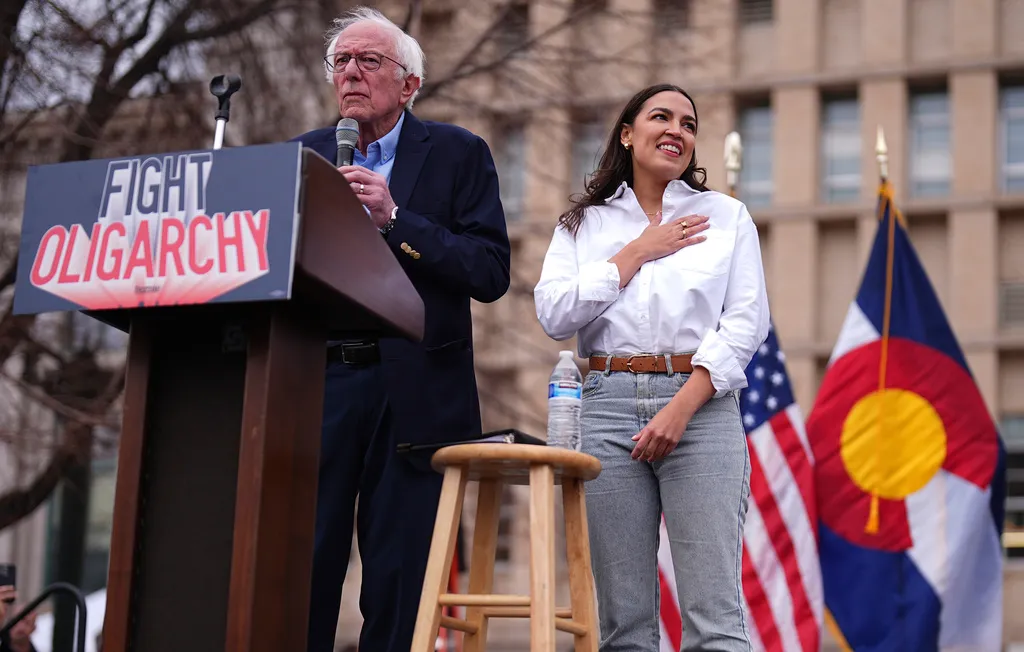
The pattern is not unique to Muslim candidates. Sen. Bernie Sanders (I-Vt.) and Rep. Alexandria Ocasio-Cortez (D-N.Y.) rode the same structural opening years earlier, and neither fits the demographic profile of a beneficiary of rising religious tolerance. What linked their insurgencies to Mamdani’s was not identity but position: each ran as an alternative to a political class that voters had already stopped believing in. The opening is structural; who walks through it depends on who has prepared to do so.
Organizing Capacity Meets Opportunity Structure
The critical distinction lies in the intersection of two variables. Distrust without organizing capacity produces protest votes and one-off insurgent candidacies that rarely survive a single election cycle. Organizing capacity without a receptive political climate produces well-run campaigns that nonetheless lose. Muslim American political success in 2025 and 2026 sits precisely at the intersection of both conditions: a wide-open opportunity structure created by institutional distrust, met by a community that had already spent a decade building the institutions capable of exploiting that opening the moment it appeared.
That combination is a far more precise explanation for the current moment than either factor in isolation. It also carries an important caveat. The same distrust that empowers marginalized candidates can equally empower demagogues. Outsider status is a political opening, not a guarantee of democratic renewal. Distrust creates the doorway; it does not determine who walks through it or what they do once inside. That distinction belongs specifically to Muslim Americans and has almost nothing to do with luck.
The Limits of Electoral Victory
Winning office measures political belonging — whether institutions include you in their formal structures. It does not measure social belonging, which asks whether the broader society has accepted a group as an unremarkable, fully legitimate part of the national fabric. Those two forms of belonging move at different speeds, through different mechanisms, and one does not guarantee the other.
The evidence underscores the gap. In the same year Muslim American voter registration reached its record high, 63 percent of American Muslims reported experiencing religious discrimination within the preceding twelve months — the highest rate of any faith group surveyed by the Institute for Social Policy and Understanding. Electoral inclusion and social acceptance are parallel tracks, not sequential steps. A candidate can win a seat in City Hall or the state legislature while the community around that seat still faces daily microaggressions, workplace bias, and public hostility.
Understanding that distinction matters for how the next generation of Muslim American leaders frames their work. The organizing infrastructure built over two decades will continue to produce candidates and elected officials. Whether those victories translate into broader social normalization — whether the community moves from “tolerated outsider” to “unremarkable neighbor” — depends on cultural work that no single election can accomplish. The political door has swung open. What happens in the rooms beyond it remains, as always, a question of sustained effort rather than a single historic moment.
Related Reading
Frequently Asked Questions
What is As public trust declines Muslim politicians?
As public trust declines Muslim politicians is the main topic of this guide. The article explains the context, practical details, and next steps readers should understand.
Why does As public trust declines Muslim politicians matter?
As public trust declines Muslim politicians matters because readers are looking for a useful answer, not just a short summary. Good content should match search intent and help them decide what to do next.