Republicans, fearing voter anger about costs, clash over economic strategy

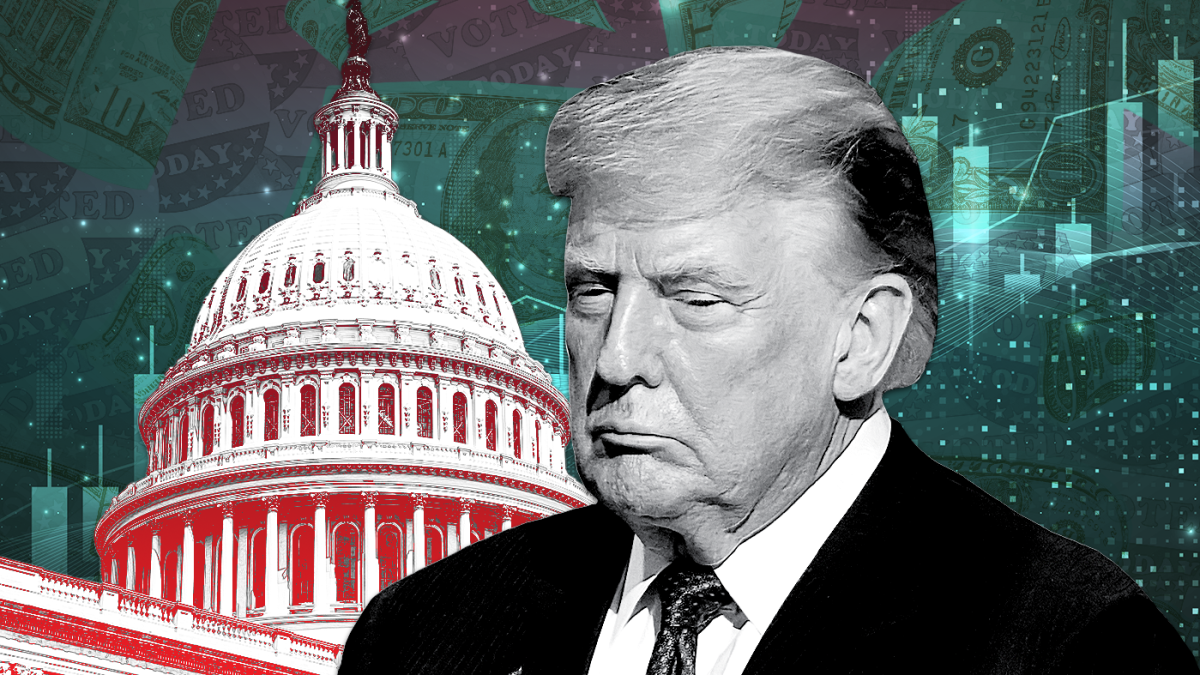
Table of Contents
GOP Searches for an Economic Message as Election Day Nears
Provpnadvice.com – With less than two months remaining before the midterm election, Republicans are wrestling with an increasingly urgent question: how to persuade voters that they can ease the pressure of everyday costs. Weak economic polling and renewed concern over gasoline, food and borrowing expenses have intensified disagreement within the party over both the message and the policy response.
President Trump’s most expansive proposal — a $5,000 payment for every U.S. adult if Republicans prevail in the midterms — has become a focal point of that debate. The idea has prompted skepticism from Republicans with sharply different political priorities, exposing a divide between those seeking an immediate, visible response to voter frustration and those concerned about the cost and design of such a plan.
Dispute Over a $5,000 Payment
Senate Commerce Committee Chair Ted Cruz (R-Texas) said he could support the proposal if it were structured as a tax refund. But he argued that eligibility should be tied to work and tax payments.
“I think we should be incentivizing work. I don’t think we should be paying people that are not working,” he argued.
Senate Appropriations Committee Chair Susan Collins (R-Maine) raised a different concern. She described the potential expense as “extraordinarily costly” and questioned whether payments should go to people without a financial need for them.
The disagreement illustrates the challenge Republicans face as they try to offer voters a clear affordability agenda. A universal payout could be easy to explain on the campaign trail, yet lawmakers must also contend with questions about who receives it, how it is financed and whether it would address the underlying causes of higher prices.
Limited Time for Legislative Action
Other Republicans are advocating for measures that they say could reduce costs more directly. Options under discussion include advancing the stalled farm bill and placing limits on credit card fees. Yet Congress has little room left on its calendar to produce major legislation before voters go to the polls.
The Senate is expected to remain in session for only three more weeks before senators again leave Washington for the election. The House has scheduled just one week of work before its members return to campaigning. That compressed timetable makes it difficult to build agreement on measures that face resistance within the GOP itself.
A Senate Republican strategist said concern is rising among congressional Republicans that the economic outlook may not improve before Election Day. The strategist linked affordability concerns to the war in Iran and its potential effect on energy prices.
“Affordability and the war in Iran are going to continue on. They’re tied to each other. As long as the war in Iran continues, we will have high energy prices that will bleed over to consumers,” the strategist warned. “It just is a bad recipe.”
For candidates, the problem is immediate: families see changes in the economy most clearly through household bills, grocery receipts and the price displayed at the gas pump. Even policy proposals that take time to enact may be framed as evidence of which party has a plan for lowering expenses.
Credit Card Fees Become a Flashpoint
Sen. Roger Marshall (R-Kan.) has centered his own campaign message on the Credit Card Competition Bill. Marshall, who faces a tougher-than-expected race against Democratic megachurch pastor Adam Hamilton, says the measure would lower fuel and grocery costs by 2 or 3 percent by challenging what he calls the Visa-Mastercard “duopoly.”
Marshall has said the legislation could save Americans $1,200 annually. Trump endorsed the proposal during the midterm convention in Dallas last week and repeated the projected benefit in remarks on Wednesday.
“We’ll cut out-of-control credit card swipe fees, saving the average family at least $1,200 per year,” Trump declared on Wednesday.
But the bill is meeting substantial resistance from Republican members of the Senate Banking Committee. The conflict underscores a broader difficulty for party leaders: proposals designed to lower costs for consumers can also create opposition from industries, states and lawmakers concerned about their economic effects.
Fuel Prices Add Pressure to Campaigns
Gasoline prices have become another source of alarm. The national average reached $4.30 a gallon on Friday, a level that is drawing particular attention from Republican candidates in competitive races.
Sen. Mike Rounds (R-S.D.), who is seeking reelection and faces a more difficult contest than expected in recent Democratic polling, said reducing the price of gasoline must be a priority.
“That’s a problem,” said Sen. Mike Rounds (R-S.D.).
“People need to bring the price of gas down. We all know that and we’re going to do everything we can to see that that happens,” he said.
Rounds has promoted a provision in the farm bill that would permanently permit nationwide sales of gasoline containing higher levels of ethanol, known as E15. He said the change could reduce gas prices by 30 cents per gallon. Senate Republicans hope to move the farm bill through the Agriculture Committee after Sen. Mitch McConnell (R-Ky.) returns from a lengthy absence.
That idea also reveals regional tensions. Republicans from oil-producing states including Texas, Oklahoma and Louisiana have resisted broader E15 availability, citing concerns tied to mid-size refineries in their states. What may offer a potential saving at the pump can therefore create a separate political and economic dispute among lawmakers.
Farm-State Backlash to Beef Imports
Trump’s intervention in the beef market has similarly divided Republicans on Capitol Hill. His decision to permit imports of 300,000 metric tons of foreign beef was intended to lower ground beef prices in grocery stores. Senators from farming and ranching states responded angrily, arguing that lower-priced imported beef could hurt cattle producers already dealing with costly fuel and weak commodity prices.
Sen. Thom Tillis (R-N.C.) criticized government efforts to manage market outcomes, calling some of Trump’s economic interventions “gimmicks.”
“Every time the government micromanages the economy, the consumer suffers,” warned Sen. Thom Tillis (R-N.C.).
Treasury Secretary Scott Bessent’s intervention in the bond market to reduce yields and consumer borrowing costs has added another dimension to the discussion. Taken together, the disputes show a party attempting to respond to voter anger over prices while struggling to agree on how much government intervention is appropriate — and which voters, industries and regions should bear the consequences.
Related Reading
Frequently Asked Questions
What is Republicans fearing voter anger about costs?
Republicans fearing voter anger about costs is the main topic of this guide. The article explains the context, practical details, and next steps readers should understand.
Why does Republicans fearing voter anger about costs matter?
Republicans fearing voter anger about costs matters because readers are looking for a useful answer, not just a short summary. Good content should match search intent and help them decide what to do next.