Air Force colonel recounts how he survived after F-15E jet was shot down over Iran

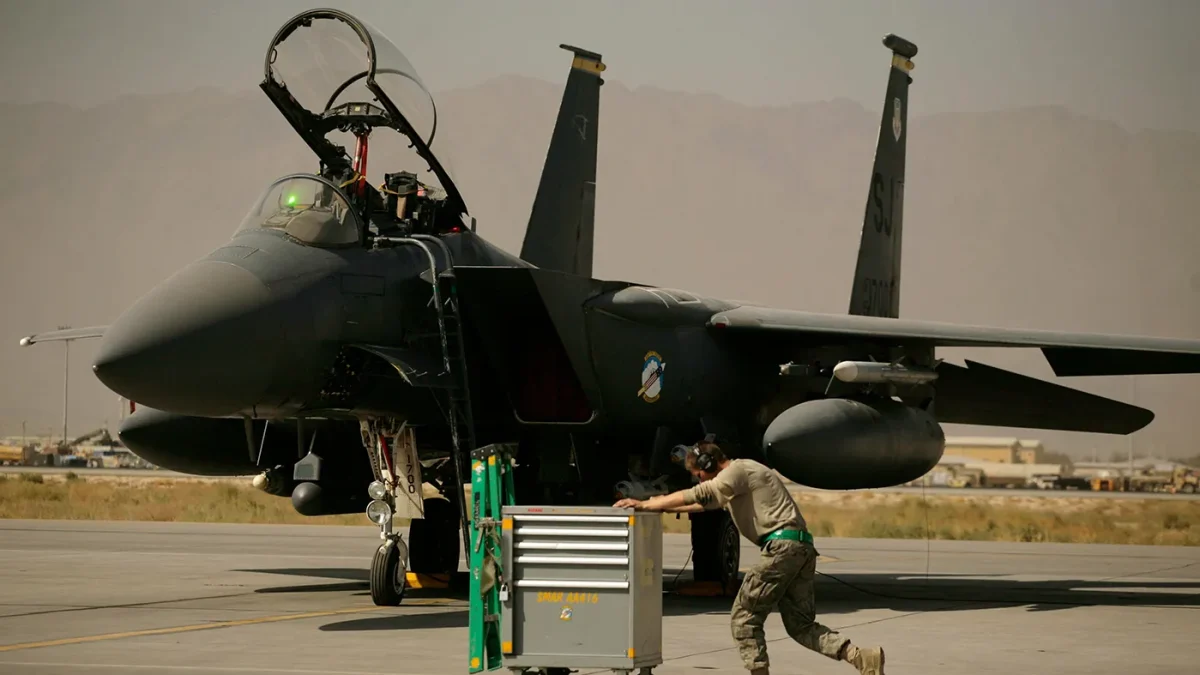
Table of Contents
Air Force officer describes survival after F-15E was brought down over Iran
Provpnadvice.com – A U.S. Air Force colonel has described the extraordinary chain of events that followed the destruction of his F-15E fighter jet over Iran in April, when he survived a parachute emergency, severe injuries and an extended wait for rescue in hostile terrain.
The officer, identified publicly only by the mission call sign Bravo because of continuing security concerns, was the weapon-systems officer aboard the two-person aircraft. His account offers a close look at the risks faced by aircrews during the early stages of the U.S.-Israeli conflict with Iran, as well as the complicated choices involved in recovering personnel from enemy territory.
A mission over Iranian industrial targets
The flight, using the mission designation Dude 44, had been assigned to strike Iranian industrial sites connected to the country’s drone and missile programs. Adm. Brad Cooper, commander of U.S. Central Command, said the mission focused on facilities tied to those capabilities.
Bravo and the pilot, known as Alpha, were flying together when an Iranian shoulder-fired missile struck their F-15E. Bravo likened the impact to a violent collision.
“It was like getting hit by a freight train.”
The crew attempted to retain control of the aircraft but ultimately could not save it. Both men ejected. Alpha separated safely, while Bravo faced an immediate crisis in the air after his parachute was damaged by the missile attack.
Falling at an estimated 70 to 100 mph, he looked upward and realized that the parachute was not functioning normally. He recalled that instant as the most frightening moment of the ordeal.
“At one point when I looked up and saw no parachute, that was the most terrifying thing I’ve ever seen.”
Bravo said he stopped to pray as he fell.
“So I paused, right then, and I prayed, ‘Lord, your will be done. But if I’m getting through this, I need help.’”
Injured but still moving
Both airmen landed in the Isfahan area, roughly 5 miles apart. Bravo’s landing was particularly punishing. He later learned that he had broken his back, one arm and a shoulder, yet he began moving away from the location where he came down.
“I had injuries, but we all train to adapt and overcome the things that we’re faced with.”
“I moved as quickly as I could, despite the injuries, away from the place that I landed.”
Despite his condition, Bravo climbed toward a ridgeline about 7,000 feet above sea level. He eventually reached a valley bounded by cliffs, an environment that made movement and concealment especially difficult. Iranian forces closed to within a few hundred meters of his position.
He called the outcome a “modern-day miracle,” reflecting both the physical challenge of surviving the descent and the effort required to remain mobile after sustaining multiple fractures. For isolated personnel on the ground, every decision can matter: whether to move, conserve energy, seek cover or attempt to communicate can affect the prospects of recovery.
A rescue operation under pressure
U.S. rescuers located Alpha about six hours after the aircraft was shot down. Bravo was able to notify U.S. forces that he had been injured but was continuing to move, setting off a more difficult recovery effort.
Defense Secretary Pete Hegseth described the choice facing commanders as exceptionally difficult after learning Bravo’s location. A rescue helicopter had drawn Iranian fire, and Hegseth decided that the colonel would be recovered during the next 24 hours rather than immediately.
That decision left Bravo facing another day in harsh conditions with little food or water. The delay illustrates the tension at the center of combat rescue operations: commanders seek to bring personnel home quickly, but an immediate attempt can expose rescuers and the isolated service member to even greater danger.
Two rescue aircraft later found Bravo, but the operation developed another serious complication. Sand became lodged in the landing gear, stranding more than 90 personnel described by Cooper as among the military’s most elite service members on Iranian territory.
To keep the aircraft from being captured, the stranded troops destroyed the planes before additional U.S. forces extracted them. The episode turned a mission to recover one injured airman into a broader operation requiring coordination among aircrews, ground teams and commanders overseeing the response.
“Leave no man behind”
Bravo said the experience was bigger than a single survivor’s story. He pointed to the preparation of the crews, the work of the rescuers, the leadership decisions made during the operation and his own faith while waiting for help.
“It’s a story of the teamwork, the training, of the faith, of the decisions and the leadership to do something that will live in history as an example of what America’s willing to do, in order to uphold our promise and leave no man behind.”
The conflict with Iran has now entered its seventh month, with U.S. and Iranian forces exchanging fire in recent weeks. President Trump has said he expects the war to end after the midterm elections. He has also raised the possibility of the United States taking control of Iran’s oil supply, drawing a comparison to the U.S. oil arrangement with Venezuela.
The shutdown of the Strait of Hormuz since March has pushed gasoline prices sharply higher, underscoring how the conflict reaches beyond military operations. The waterway is a major route for energy shipments, and disruption there can affect fuel markets far from the fighting.
For Bravo, the events over Iran remain a personal account of survival amid a wider war. His return depended on an ejection from a stricken aircraft, the endurance to move while badly injured, the willingness of rescuers to enter danger and a military commitment to recover personnel even when the risks are severe.
Related Reading
Frequently Asked Questions
What is Air Force colonel recounts how he survived?
Air Force colonel recounts how he survived is the main topic of this guide. The article explains the context, practical details, and next steps readers should understand.
Why does Air Force colonel recounts how he survived matter?
Air Force colonel recounts how he survived matters because readers are looking for a useful answer, not just a short summary. Good content should match search intent and help them decide what to do next.