Ontario premier slams Trump wildfires criticism: ‘Absolutely unacceptable’

Ford Condemns U.S. Political Response to Canadian Wildfire Crisis
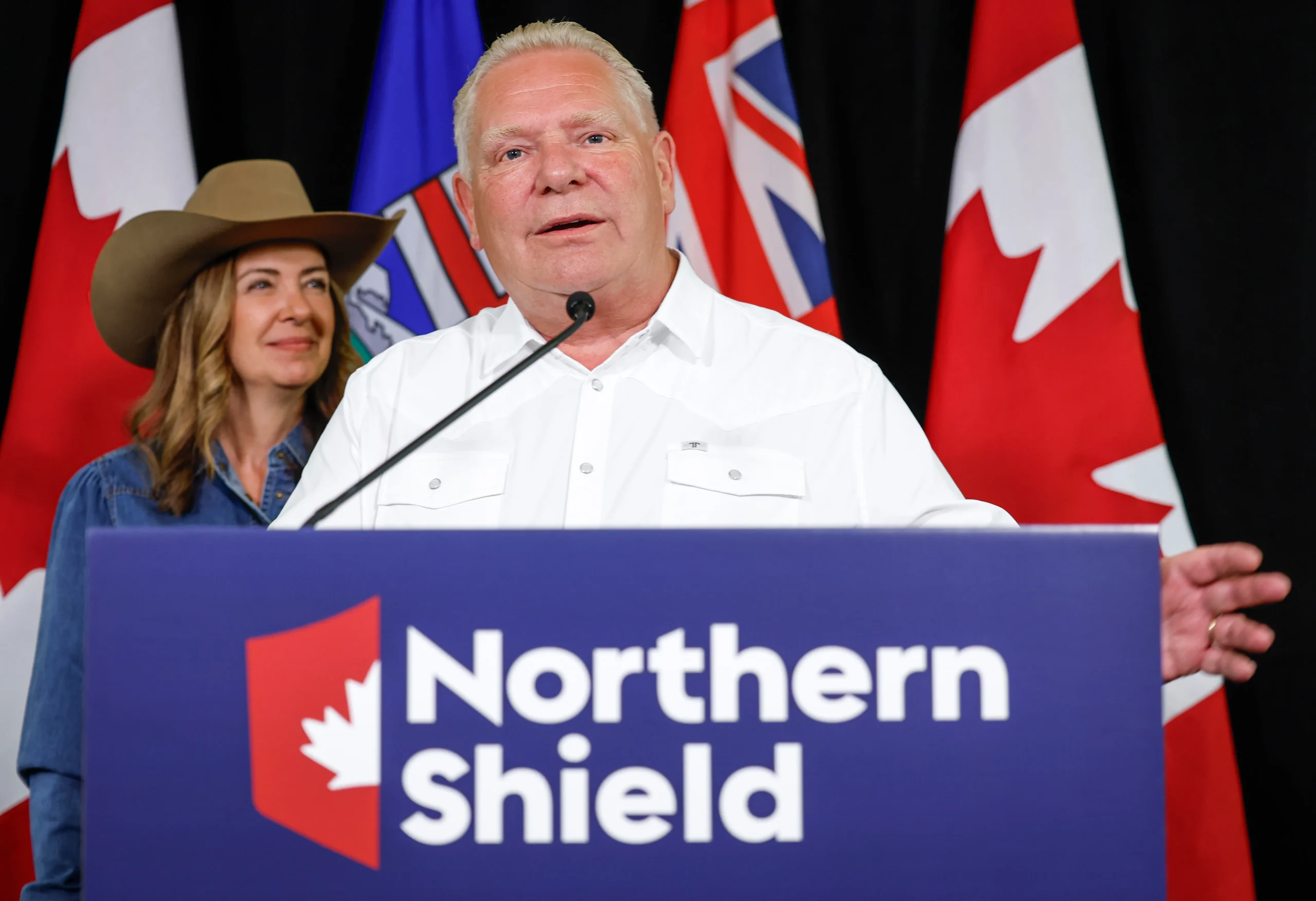
Provpnadvice.com – Ontario’s premier, Doug Ford, issued a sharp rebuke on Saturday directed at the Trump administration and Republican lawmakers in Congress for their public criticism of Canada’s wildfire management efforts. The premier characterized the American political response as “totally unacceptable” given the scale of the emergency unfolding across the country. During a media briefing held in Thunder Bay, Ford addressed reporters with visible frustration regarding the tone of the criticism. “We’re trying to get through this,” he explained, describing the rhetoric emanating from certain American political figures as “shameful.” The premier emphasized that Canada is actively working to contain the blazes while simultaneously dealing with unwarranted political attacks.
Trump’s Tariff Threats and Public Criticism
President Trump escalated tensions on Friday by threatening to levy additional tariffs against Canada. The president attributed the worsening situation to what he termed the Canadian government’s “willful negligence” and its failure to engage in “basic Forest Management.” According to Trump, these shortcomings have resulted in massive smoke plumes drifting across the United States, affecting regions from the Midwest to the East Coast. In a lengthy statement posted on Truth Social, the president made his position clear:
We are holding Canada responsible for the fact that they are not properly maintaining their Forests, and Brush therein, and the United States is being unnecessarily invaded by filthy, polluted, and unhealthy air, the quality of which is dangerous, and totally unacceptable!
Trump further argued that the situation is financially damaging to the United States, claiming it is costing the nation “billions of dollars” in health impacts and economic disruptions. The president indicated he intended to speak directly with Prime Minister Mark Carney to determine what actions Canada plans to take regarding the hundreds of wildfires currently burning throughout the country.
Scale of the Canadian Fire Emergency
The magnitude of the crisis became increasingly apparent as the weekend progressed. According to data from the Canadian Interagency Forest Fire Centre, there were 955 active fires burning as of 5:30 p.m. EDT on Saturday. Ontario alone accounted for 191 of those active blazes, making it one of the hardest-hit provinces. Ford painted a grim picture of the situation on the ground. He described current conditions as a “terrible scenario,” noting that approximately 655,000 hectares—equivalent to about 2,528 square miles—were currently burning across Ontario. “It’s a massive issue,” Ford stated, expressing deep empathy for those affected. “My heart breaks for the people who’ve lost their homes or their camps and their businesses.”
Health Impacts and Political Backlash
The smoke from Canadian wildfires has created significant public health concerns on both sides of the border. More than 100 million Americans are currently living under air quality alerts as smoke drifts southward, also affecting areas in northern Minnesota. The airborne particles pose serious health risks to vulnerable populations. Republican lawmakers have been particularly vocal in their criticism of the Canadian government. They have argued that Canada has not done sufficient work to prevent fires from igniting and spreading. However, Ford suggested that these critics have a “short, short memory” when it comes to cross-border cooperation. The premier reminded reporters that Canadian hydro-linemen and water bombers had previously traveled south to assist with wildfire suppression efforts in California, Georgia, and South Carolina during the previous year. “That’s what neighbors do, right?” Ford asked rhetorically. He added that if the situation were reversed and Canada faced a similar crisis, Canadians would “be down there without hesitation” to provide assistance. The premier’s comments underscored a broader point about international solidarity during natural disasters, even as political tensions occasionally flare between the two nations.