Trump’s attacks on NBC’s Welker raise pressure on FCC

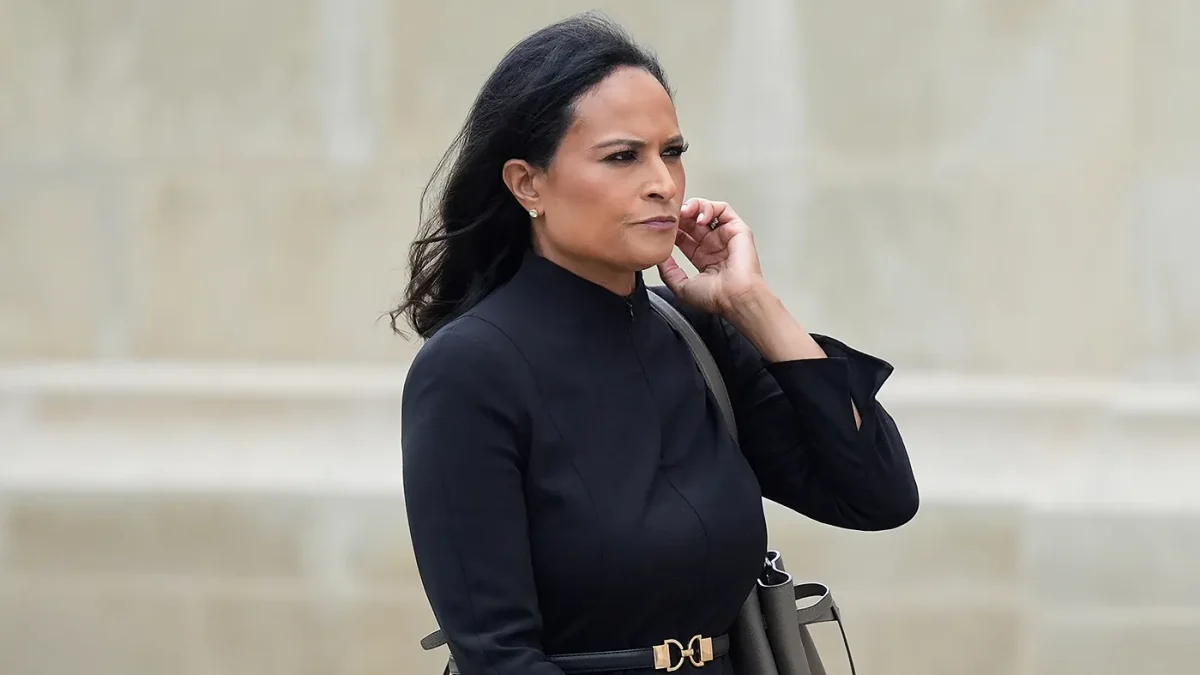
Table of Contents
FCC Threat Against NBC Anchor Reignites Debate Over Media Regulation and Press Freedom
Provpnadvice.com – The Federal Communications Commission, a body long understood to operate independently of partisan politics, has once again found itself at the center of a constitutional flashpoint. President Donald Trump’s public declaration that he would have the agency sanction NBC’s “Meet the Press” host Kristen Welker for her commentary on his endorsement record has drawn sharp criticism from media scholars, Democratic commissioners, and civil-liberties advocates who see the move as part of a sustained effort to weaponize broadcast regulation against unfavorable journalism.
A Sunday Teaser Sparks a Presidential Outburst
The confrontation began on a Washington, D.C., NBC affiliate when Welker, promoting the following week’s episode of the flagship Sunday interview program, remarked that Trump would “loom large over” the autumn midterm elections. She added that candidates who had received his public backing had delivered “mixed results” at the ballot box. The remark, delivered as routine promotional copy, set off a chain reaction within hours.
Trump took to Truth Social and declared that Welker would “be reported to the FCC for rebuke or punishment,” characterizing her comment as “purposeful inaccuracy.” He posed a rhetorical question that underscored his view of broadcast media as a public resource subject to executive oversight:
“How can anyone be allowed to say this, working for freely given Public Airwaves?”
NBC responded swiftly through a spokesperson, affirming its commitment to the journalist:
“Kristen is one of the best in the business and we stand by her.”
Academics and Commissioners Sound the Alarm
Jill Olmstead, an associate professor at American University’s School of Communication, described the exchange as “alarming” and argued that it “distorts” what the FCC is constitutionally designed to do. In her assessment, the president was not engaging with the substance of Welker’s factual claim but instead launching a personal attack on the reporter herself.
“He once again threw a verbal tantrum over Welker’s use of factual information about his mixed endorsement record, attacking the journalist rather than addressing the facts. His playbook has now worn thin and is recognized as the distraction that it is.”
Anna Gomez, the sole Democratic member of the five-seat commission, posted a pointed rebuttal on social media, emphasizing that the agency’s statutory mandate does not extend to disciplining individual reporters:
“As I’ve said many times, the FCC has no authority to punish journalists this administration doesn’t like. These threats to press freedom are dangerous. They undermine the foundation of our democracy, and they have no place in it.”
The commission itself declined to comment publicly on Trump’s remarks, leaving the question of whether any formal complaint would actually be filed unresolved.
Brendan Carr and the Question of Agency Independence
At the helm of the FCC sits Brendan Carr, a conservative communications-law attorney who has, like the president, been a vocal critic of mainstream news organizations. In December, Carr drew particular attention when he stated that “formally speaking” the commission is not an independent agency — a characterization that sits uneasily with the statutory framework Congress established when it created the body in 1934 to insulate broadcast regulation from day-to-day political interference.
Carr’s tenure has been marked by a series of regulatory actions that critics interpret as coordinated pressure on broadcasters perceived as sympathetic to the president’s opponents. He has reopened previously litigated complaints alleging news distortion against outlets including NBC. He has appeared regularly on conservative cable programs to defend those moves. Late last year, he initiated investigations into the diversity, equity, and inclusion hiring practices of both NBC and ABC. He has also publicly praised the editorial overhaul at CBS News under Bari Weiss, an appointment tied to Trump ally and billionaire David Ellison.
Perhaps most consequentially, Carr moved earlier this year to recall the broadcast licenses of several local ABC affiliates that were up for early renewal. The Disney-owned network sued, alleging the agency was attempting to punish the company over its programming choices. The litigation remains pending, and its outcome will shape how aggressively the commission can use license renewal as a lever against networks it views as adversarial.
A Pattern Ahead of the Midterms
Observers of media law and First Amendment doctrine see the Welker episode not as an isolated outburst but as the latest installment in a months-long campaign to use the FCC’s regulatory toolkit — license renewals, public-interest inquiries, distortion complaints — as instruments of editorial discipline. Conor Gaffney, an attorney at the nonprofit Protect Democracy, framed the structural concern plainly:
“Even if the FCC gets an instruction from the president that is on its face unconstitutional, the chairman gets the message and can figure out a way to creatively use the FCC’s regulatory power to put pressure on the offending media company.”
The timing matters. With midterm elections approaching, broadcasters face renewal cycles, advertising decisions, and audience-loyalty calculations that make regulatory uncertainty costly. A network that fears its licenses or its public-interest standing may recalibrate its coverage posture before a single formal complaint is ever docketed. That chilling effect, critics argue, is precisely what the First Amendment was designed to prevent.
Personal History Between the Two
Trump’s animus toward Welker predates the Sunday incident by years. Earlier this summer, he walked out of a sit-down interview with her after she pressed him on an unfounded claim that the California gubernatorial primary had been “rigged.” He has also attacked her on multiple occasions after she questioned his statements on camera, a pattern that has made their interactions a recurring fixture of cable-news coverage.
What distinguishes the latest episode from prior personal feuds is the explicit invocation of a federal regulatory body. By naming the FCC as the instrument of punishment, Trump has moved the conflict from the realm of social-media sparring into the territory of administrative law, where the stakes include broadcast licenses, public-interest obligations, and the constitutional question of whether an elected president may direct an independent agency to discipline a journalist for her on-air commentary. Until a court or Congress answers that question, the commission’s independence — and the press’s freedom to report without fear of regulatory reprisal — remains under sustained strain.
Related Reading
Frequently Asked Questions
What is Trump s attacks on NBC s Welker?
Trump s attacks on NBC s Welker is the main topic of this guide. The article explains the context, practical details, and next steps readers should understand.
Why does Trump s attacks on NBC s Welker matter?
Trump s attacks on NBC s Welker matters because readers are looking for a useful answer, not just a short summary. Good content should match search intent and help them decide what to do next.