Trump is using antisemitism claims as a pretext for a cash-grab

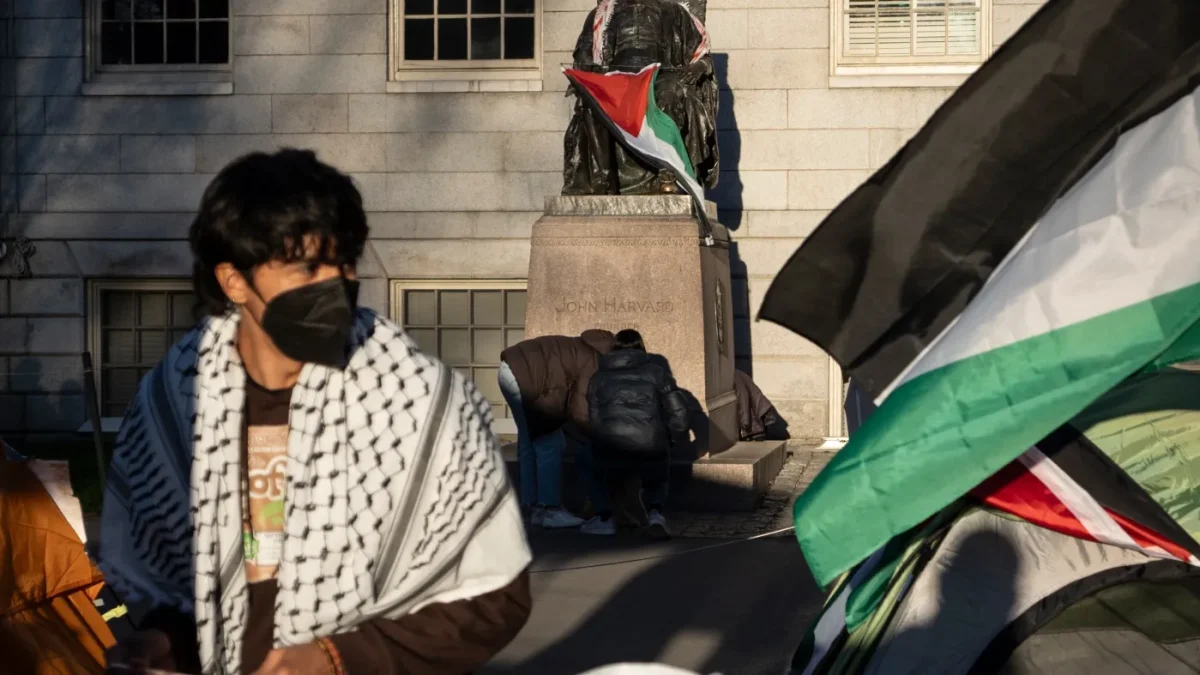
Table of Contents
When Civil Rights Enforcement Becomes a Revenue Stream: The Title VI Antisemitism Probes Unraveled
Provpnadvice.com – A former Justice Department attorney assigned to the administration’s Task Force to Combat Anti-Semitism recently filed a whistleblower disclosure with Congress, revealing that sweeping federal investigations into alleged antisemitism at sixty colleges and universities were designed less to protect Jewish students than to compel those institutions to hand over vast sums of money. The disclosure, which describes the probes as a “politically mandated effort to disgorge enormous amounts of money from the universities,” lands at a moment when the financial and legal fallout from those probes is already reshaping the landscape of higher education funding.
The Investigation’s Origins and Scope
In early 2025, the Task Force to Combat Anti-Semitism — a joint body operating under the Department of Justice and the Department of Health and Human Services — opened Title VI investigations into what it characterized as “antisemitic discrimination and harassment” at sixty institutions of higher learning. Title VI, a provision of the Civil Rights Act of 1964, prohibits discrimination on the basis of race, color, or national origin in programs receiving federal financial assistance. The task force’s stated rationale was that Jewish students “continue to fear for their safety amid the relentless antisemitic eruptions that have severely disrupted campus life.”
The probes concentrated heavily on the pro-Palestine encampments that sprang up across American campuses in protest of Israel’s war in Gaza. Ivy League names dominated the target list: Harvard, Columbia, and Brown all found themselves under federal scrutiny. While the underlying incidents were real, the administration’s framing — portraying campus life as pervasively and systematically hostile to Jewish students — stretched well beyond what the evidence supported.
Procedural Failures and Predetermined Outcomes
The whistleblower’s account paints a picture of an investigation stripped of its legal scaffolding. According to the disclosure, the probes were
“marked by extraordinary procedural irregularities, predetermin[ed] outcomes without factual or legal support, and disregard for Title VI’s legal requirements and the First Amendment.”
In other words, the task force did not investigate to discover whether Title VI had been violated. It investigated to confirm a conclusion already fixed by political leadership, then used the resulting dossier as leverage to extract settlements.
The Price of Compliance
The financial consequences have been severe. Columbia University and Brown University ultimately agreed to pay a combined $270 million to settle the administration’s antisemitism claims and secure the release of frozen federal grants. Northwestern University, where the author of this piece serves as an emeritus professor, paid $75 million to resolve antisemitism and related claims under comparable terms. Hundreds of millions of dollars in federal grants had been frozen at targeted institutions before any finding of discrimination was formally established.
Harvard took a different path. The university refused to settle, and the administration moved to enforce its claims through a Title VI action in federal court. A federal judge dismissed the government’s case. The court acknowledged the seriousness of specific antisemitic incidents cited by the task force — including the storming of an event featuring an Israeli speaker — but concluded that those incidents were
“singly and collectively, to be too isolated and episodic to support a plausible inference” of widespread discrimination.
The ruling drew a clear line: real antisemitic acts occurred, but they did not meet the high threshold required for a Title VI enforcement action. Neither the court nor the whistleblower questioned the gravity of antisemitism on campuses. What they questioned was the administration’s leap from discrete incidents to a systemic finding of discrimination, and its use of that finding as a financial instrument.
A Lost Opportunity for Honest Discourse
In a less politically driven administration, the natural output of such an inquiry would have been a descriptive report: a catalog of actual anti-Jewish rhetoric and conduct on campuses, paired with recommendations for prevention and education. Instead, the administration’s overheated accusations produced a counterproductive effect. Genuine antisemitic incidents at Gaza encampments began to be discounted or denied by the very communities most affected, because they became entangled with what many perceived as a pretextual cash-grab dressed in the language of civil rights enforcement.
The moral distinction between political advocacy and threatening rhetoric — a distinction that deserves careful teaching — was lost once the administration’s bullying entered the frame. Students who joined chants such as “Globalize the Intifada” were not thereby absolved. The slogan, while protected by the First Amendment, is widely understood by Israelis and most Jews as an endorsement of indiscriminate violence against Jewish people and institutions worldwide, regardless of any connection to Israel or Zionism. But conflating that offense with a systemic pattern of discrimination, and then weaponizing the conflation for financial extraction, distorts both the problem and the remedy.
The Global Backdrop
The stakes of getting this distinction right extend far beyond American campuses. In Manchester, England, a driver globalized the Intifada by ramming his car into a synagogue on Yom Kippur and stabbing two congregants to death. In Sydney, Australia, a father and son carried out the same logic at Bondi Beach, massacring fifteen people and wounding dozens at a “Hanukkah by the Sea” celebration. In Mumbai, gunmen from Lashkar-e-Taiba turned on a Jewish community in yet another reminder that antisemitic violence operates on a global scale and demands precise, credible responses rather than politically convenient exaggerations.
When a federal task force blurs the line between isolated incidents and systemic discrimination, it does not strengthen the case against antisemitism. It weakens it. The universities that paid hundreds of millions to make the problem go away, and the Jewish students whose genuine fears were instrumentalized for political revenue, are the ones who bear the cost of that blurring.
Related Reading
Frequently Asked Questions
What is Trump is using antisemitism claims?
Trump is using antisemitism claims is the main topic of this guide. The article explains the context, practical details, and next steps readers should understand.
Why does Trump is using antisemitism claims matter?
Trump is using antisemitism claims matters because readers are looking for a useful answer, not just a short summary. Good content should match search intent and help them decide what to do next.