US military strikes ‘mulitple’ Iranian oil tankers

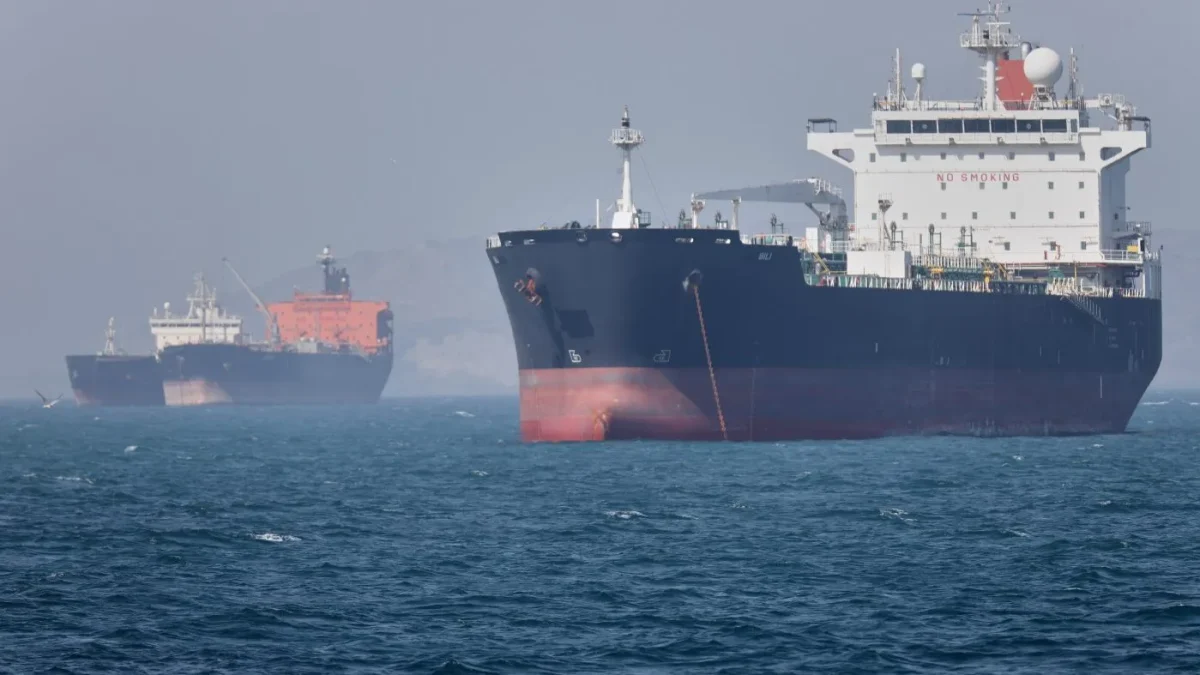
Table of Contents
Escalating Naval Confrontation: U.S. Forces Hit Multiple IRGC-Linked Tankers in Persian Gulf
Provpnadvice.com – The already volatile maritime corridor between Iran and the wider world grew more dangerous on Tuesday when American warships opened fire on several oil tankers operated under the banner of the Islamic Revolutionary Guard Corps. The strikes were a direct retaliatory measure, taken after what U.S. officials described as additional Iranian missile attempts aimed at American naval vessels in the region. A senior U.S. government source confirmed the operation to NewsNation, describing the targets as “multiple” tankers tied to the IRGC’s commercial fleet.
The timing and geography of the action matter enormously. Kharg Island, a small landmass sitting roughly 25 miles off Iran’s southern coast in the northern Persian Gulf, serves as the country’s principal crude-oil export terminal. The vast majority of Iran’s seaborne petroleum shipments pass through its deep-water berths before heading south toward the Strait of Hormuz. A strike on a tanker in that immediate vicinity therefore lands close to the heart of Tehran’s revenue-generating infrastructure, sending a message well beyond the immediate military calculus.
What Happened on Tuesday
U.S. forces engaged at least one oil tanker in waters adjacent to Kharg Island, according to Tasnim News Agency, the semi-official wire service maintained under IRGC auspices. The broader operation, however, was not limited to a single vessel. American officials characterized the Tuesday action as targeting “multiple” tankers, indicating a coordinated multi-ship engagement rather than an isolated incident.
“Multiple” Iranian oil tankers linked to the IRGC were struck in response to “more” attempted Iranian missile launches at U.S. Navy warships.
The phrasing signals that the Monday salvo of Iranian missiles — which Centcom, the U.S. command responsible for Middle East operations, has not formally confirmed in a public statement — was not a one-time event but part of a continuing pattern of harassment. No American ship was damaged in the Monday exchange, yet the decision to escalate to kinetic strikes on commercial vessels the following day underscores how Washington is weighing the cumulative effect of repeated provocations.
The Saturday Precedent: Three Tankers “Permanently Disabled”
Tuesday’s action did not arrive in a vacuum. Just two days earlier, on Saturday, U.S. forces carried out what officials termed a permanent disabling of three IRGC crude-oil tankers, two of them near Kharg Island and one in the Gulf of Oman. The language — “permanently disabled” — implies that the vessels were rendered inoperable, likely through precision strikes on hulls, engines, or superstructures, rather than a brief warning shot. The stated rationale was retaliation for Iran’s own strikes against American Navy vessels.
Then, on Sunday, Iranian state media reported that the IRGC launched an attack on a remotely operated U.S. military vessel transiting the Strait of Hormuz. The strait, at its narrowest roughly 33 miles wide, funnels approximately one-fifth of the world’s daily oil consumption. Any engagement inside that corridor carries implications far beyond the two parties involved, touching on shipping insurance premiums, tanker routing decisions, and the energy security of every nation that imports Gulf crude.
Tehran’s “Restricted Zone” and Sanctions Threat
Amid the tit-for-tat exchanges, Iran moved to formalize its claim over a stretch of water near the strait. Press TV, the state-run television network, reported on Sunday that Tehran would designate a “restricted zone” in the vicinity of the Strait of Hormuz. Under the announced framework, any vessel entering the zone that fails to coordinate with Iranian authorities would be added to a sanctions list — a mechanism that, if enforced, would effectively give Tehran a veto over commercial passage through one of the planet’s most critical energy chokepoints.
The announcement lands against a backdrop in which the United States has been actively enforcing a naval blockade in the Arabian Sea. Centcom disclosed on Monday that, since mid-July, American forces have redirected 94 commercial ships, disabled three, and boarded another to compel compliance with blockade conditions. The scale of that operation — nearly a hundred vessel interventions in a matter of weeks — illustrates the degree to which normal maritime commerce in the region has been upended.
Market Repercussions and Broader Implications
Oil markets have already begun pricing in the heightened risk. Brent crude, the global benchmark for seaborne crude trading, stood at $97 per barrel on Tuesday. While that level is below the record highs seen during earlier supply shocks, it reflects a premium attributable in part to the prospect of sustained disruption in Gulf shipping lanes. Tanker insurers, freight forwarders, and commodity traders all monitor the situation closely; each additional strike on a commercial vessel, whether Iranian or otherwise, feeds directly into war-risk premiums and can nudge prices higher even if no barrel is actually lost.
The pattern emerging over the past week — Saturday’s disabling of three tankers, Sunday’s IRGC attack on a U.S. unmanned vessel, Monday’s unacknowledged Iranian missile salvo, and Tuesday’s multi-ship American response — suggests a tit-for-tat escalation spiral that neither side has yet shown willingness to break. For the roughly 50,000 seafarers who transit the Strait of Hormuz daily, and for the economies dependent on uninterrupted Gulf energy flows, the stakes of each new exchange grow incrementally higher.
What remains to be seen is whether the Tuesday strikes will prompt a proportional Iranian countermeasure or whether both capitals will allow a fragile, unspoken pause to settle. Until then, the waters around Kharg Island and the narrow throat of the strait remain among the most heavily watched maritime spaces on Earth.
Related Reading
Frequently Asked Questions
What is US military strikes mulitple Iranian oil tankers?
US military strikes mulitple Iranian oil tankers is the main topic of this guide. The article explains the context, practical details, and next steps readers should understand.
Why does US military strikes mulitple Iranian oil tankers matter?
US military strikes mulitple Iranian oil tankers matters because readers are looking for a useful answer, not just a short summary. Good content should match search intent and help them decide what to do next.