Jackson calls Supreme Court’s mail-in voting ruling a ‘Kafkaesque nightmare’

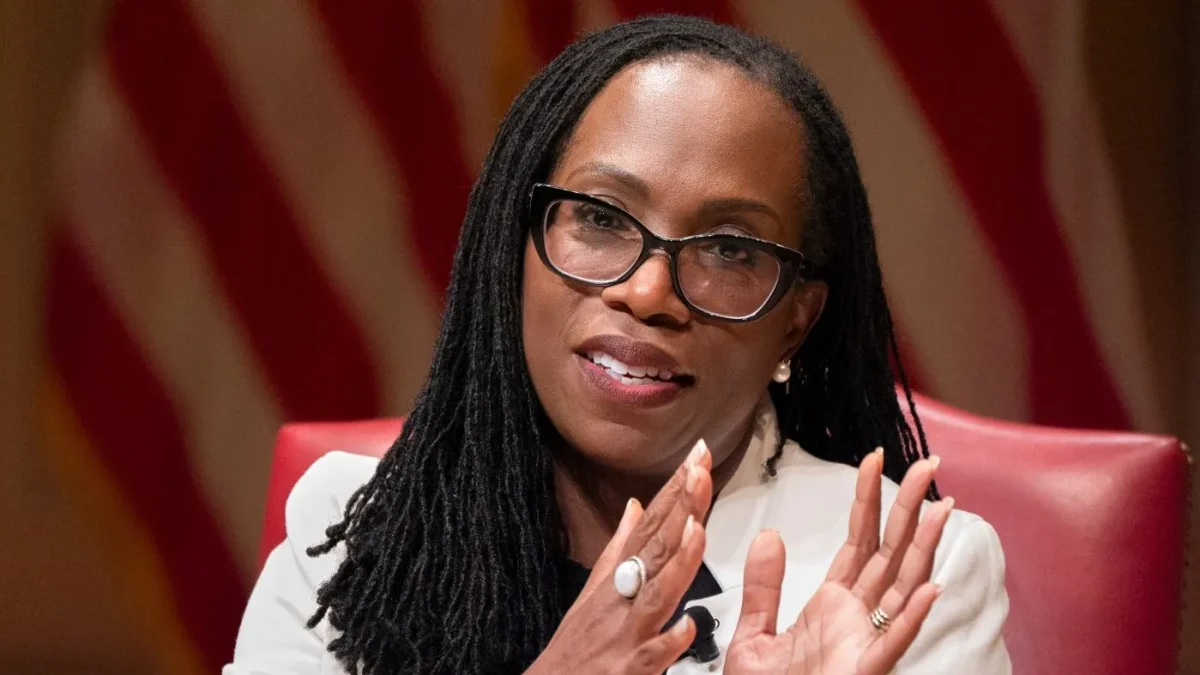
Table of Contents
Jackson Calls Mail-In Vote Order a ‘Kafkaesque Nightmare’
Provpnadvice.com – When Jackson calls Supreme Court’s mail-in ballot decision a procedural disaster, she is channeling frustration that has built across months of emergency-docket skirmishes. Justice Ketanji Brown Jackson, who took her seat in 2022 and now anchors the junior end of the court’s liberal trio, filed a 23-page separate dissent Monday to condemn the majority’s order unblocking President Trump’s March executive directive on absentee-ballot processing. The ruling, issued through the fast-track emergency docket, strips away a temporary injunction that had frozen implementation of the order just weeks before the November midterms.
The practical consequence is stark: states that rely heavily on mail-in and absentee ballots must now tolerate at least the initial rollout of new federal conditions — administered through the U.S. Postal Service — before they may return to court with a fresh challenge. For voters in Colorado, North Carolina, and a dozen other states where absentee ballots shape turnout, the interim effect is uncertainty about which set of rules will govern their ballots this cycle.
A Separate Dissent, Not a “Close Call”
What distinguishes Jackson’s filing from routine liberal pushback is its independence. Justice Sonia Sotomayor wrote the primary dissent, joined by Justice Elena Kagan, completing the three-vote progressive bloc. Jackson declined to append her name to that opinion. Instead, she authored her own extended critique, opening with the flat declaration that the question before the court was not a “close call” — a pointed rebuke to any framing that reasonable jurists might divide.
At the core of her argument was what she labeled a failure of “situational awareness.” In her telling, the majority’s logic — that states must absorb at least the first steps of a federal takeover of ballot processing before mounting a legal challenge — amounts to a “catch-me-if-you-can” game played at the expense of voters and state election officials.
“When the Government’s obvious goal is to interfere with the Plaintiff States’ practices and prerogatives in a manner that the Constitution does not authorize, it is both a serious legal error and a grave misuse of our equitable emergency powers to let the Executive proceed even one step further.”
Jackson also accused the majority of “needlessly inject[ing] chaos” into an electoral cycle already strained by partisan disputes over signature verification, ballot deadlines, and mail-processing timelines. In recent public remarks outside the courthouse, she warned that the cumulative effect of such emergency orders carries a “potentially corrosive” impact on public confidence in the judiciary.
Procedural Step, Not Final Judgment
It is critical to note that Monday’s order does not resolve whether the executive directive’s substantive requirements are lawful. The court declined to keep the injunction in place while the case works through lower courts; a full merits ruling on the constitutionality of federal mandates directed at state-run ballot processing could still be years away. The interim uncertainty Jackson warned about — the very chaos she described in her dissent — may therefore persist well into election season.
The timing sharpens the stakes. With midterms roughly four months out, mail-in ballots account for a substantial share of votes in many competitive states. Rules governing their preparation, mailing, and tabulation are ordinarily set by state legislatures and administered by state election boards. An executive order imposing uniform federal conditions on those processes, phased in before November, places the entire ballot-counting apparatus in limbo precisely when voters need clarity most.
Frequently Asked Questions
What exactly did the Supreme Court order on Monday? The court lifted a temporary injunction that had blocked implementation of the March executive order on mail-in ballot processing. It did not issue a merits ruling; it simply allowed the executive branch to begin carrying out the directive while lower courts continue to hear the case.
Does this mean federal rules will override state ballot procedures immediately? Not automatically. The order permits the initial steps of federal implementation to proceed. States retain the ability to challenge those steps in court, but they must now wait until the process has at least begun before mounting a new injunction motion.
Why did Justice Jackson file a separate dissent instead of joining Sotomayor’s? Jackson wanted to emphasize that the question was not a close call and to lay out her own extended critique of the majority’s equitable reasoning. A separate filing allowed her to frame the issue in terms of “situational awareness” and the misuse of emergency powers without being subsumed into a shorter, more conventional liberal objection.
Will voters’ ballots be invalidated by this order? The order does not invalidate any ballots already cast or in process. Its effect is prospective: it governs how new federal conditions may be layered onto state procedures going forward, creating uncertainty about which rules apply during the remainder of the cycle.