El-Sayed and Watters clash in Fox News interview over culture war, gas prices

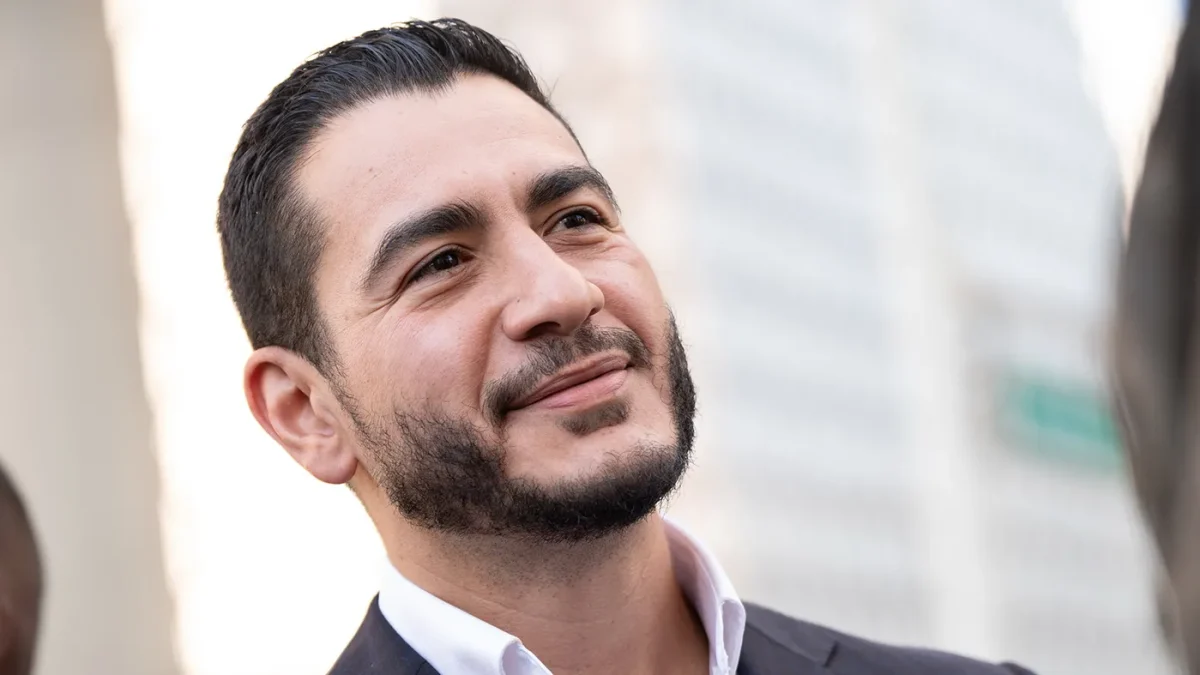
Table of Contents
El-Sayed and Watters Trade Barbs in Lengthy Fox News Showdown Spanning Faith, Fuel Costs, and Football
Provpnadvice.com – A heated exchange between Michigan Democratic Senate candidate Abdul El-Sayed and Fox News anchor Jesse Watters turned a primetime interview into a sprawling, frequently overlapping debate that stretched from the Iran conflict to the price of gasoline at the pump, from Islamic jurisprudence to Christian canon law, and from Colin Kaepernick’s legacy to the cost of a family ticket at an NFL stadium. The roughly thirty-minute segment aired Monday on “Jesse Watters Primetime” and featured the host cutting in repeatedly, shifting topics mid-sentence, and playing back clips of El-Sayed’s earlier remarks to press him on their implications.
Fuel Prices and the Iran Conflict Dominate the Opening Volley
The interview’s sharpest early exchange centered on soaring gasoline costs tied to the ongoing Iran war. El-Sayed, a progressive Democrat running for the U.S. Senate seat in Michigan, accused Watters of displaying no visible alarm over pump prices that have climbed toward five dollars per gallon. He also took a swipe at Defense Secretary Pete Hegseth, noting that the secretary had effectively become the “sixth host” on Fox’s panel show “The Five” and had pushed for a military budget of $1.5 trillion.
“You don’t seem to be upset about that,” El-Sayed said. “What, so we can fight a war we don’t know how to get out of, to raise our gas prices to $5 a gallon? That doesn’t make sense to me.”
The two then talked over one another regarding the roughly $7 trillion federal budget. El-Sayed zeroed in on President Trump’s February characterization of the conflict as a brief “special military operation,” arguing that the administration had set expectations for a quick resolution that never materialized.
“Oopsie, you go to war and you tell us that it’s going to be a special military operation. That was February,” El-Sayed continued. “We’re now in September almost, and we’re still fighting the special military operation. I mean, it’s not working for us.”
Watters, who maintained a steady smile throughout the segment, pushed back on the framing. “We’re not really fighting it, it’s a blockade,” he said, reframing the military posture without conceding the candidate’s broader point about prolonged conflict and its economic fallout on ordinary households.
Sharia Law, Canon Law, and the Question of Religious Freedom
The conversation pivoted to culture-war territory when Watters played clips of El-Sayed’s past remarks about Sharia law, the body of religious jurisprudence governing practicing Muslims. El-Sayed, who is himself Muslim, had previously argued that politicians seeking to ban Sharia law represent the same forces that displaced Indigenous peoples two centuries ago, destroyed Black Wall Street a century ago, bombed a building decades ago, and attempted to outlaw Sharia law less than a decade ago.
El-Sayed turned the question back on Watters by asking whether the host understood what Canon law is, the codified religious law of Christianity. Assuming Watters was Christian, El-Sayed drew a parallel between the two traditions.
“All right, so Canon law is the name for Christian law,” El-Sayed said. “I don’t begrudge you your right to practice your faith as you choose. I don’t know why the idea that I could practice my faith as I choose is a problem. Nobody is trying to push Sharia law on anyone else, just like, I hope, nobody is trying to push Canon law on anybody else, because we live in an America where you should have the freedom of your religion.”
El-Sayed characterized legislative moves against Sharia law as “deliberately targeting the Muslim community.” Watters countered that Sharia law in Michigan struck him as “kinda scary” and suggested voters would reject it. El-Sayed interrupted repeatedly, insisting that no one was imposing Islamic law on non-Muslims and steering the conversation back to what he called the real concern of Michiganders: affording their gas.
Kaepernick, Ticket Prices, and the Cost of Watching Football
Watters then raised El-Sayed’s earlier comments calling the NFL racist and describing former San Francisco 49ers quarterback Colin Kaepernick as “a good guy.” El-Sayed sharpened his praise, calling Kaepernick a “pretty damn good quarterback” who “should have had several more years in the NFL.” He quickly redirected the discussion to what he saw as the more pressing issue for fans: the price of admission.
“The bigger issue that we have for football right now is I looked at ticket prices to try and go and see a game with my family,” El-Sayed said. “It’s astronomical through the roof.”
The remark landed in a context where NFL ticket prices have climbed sharply over recent seasons, making family attendance increasingly expensive and fueling broader conversations about sports affordability.
Gender-Affirming Care and a Personal Exchange
The interview’s final stretch moved to gender-affirming medical care for children. El-Sayed, a physician by training, argued that such decisions belong in the room between a child’s doctor and their parents, not in the federal government’s purview. Watters pressed him with a pointed question about whether it was acceptable for a parent to “slash his kid’s thing a little,” invoking circumcision as a parallel.
“Do you really want to have this conversation?” El-Sayed asked. “Are you circumcised?”
“Yeah, but I mean, uh, that’s a personal question, doctor,” Watters replied. “A circumcision’s different than castration.”
“It’s a problem that you think that you get to decide what happens between a parent, a doctor and a patient,” El-Sayed replied. “And I’m just saying that, yes, circumcision is surgery on a kid’s dingleing. So if you really want to bring that up, you can. I just think you guys are really selective about how you want to go about these things.”
Watters closed the segment by asking about transgender athletes in competitive sports. El-Sayed pushed back on the premise of the question, and Watters clapped back, noting that the topic was “kind of a big thing if you’ve been following the news.” The exchange underscored the broader tension in 2025 campaign coverage between candidates who frame bodily-autonomy and medical decisions as private matters and hosts who treat them as subjects warranting direct, sometimes confrontational, on-air scrutiny.
For Michigan voters watching the race, the interview offered a compressed preview of how El-Sayed intends to handle adversarial media: by refusing to let the interviewer set the agenda, by redirecting every culture-war prompt back to economic concerns like fuel costs and household budgets, and by treating the host’s personal assumptions as fair game for rebuttal. Whether that approach resonates with a statewide electorate still weighing the Iran conflict’s domestic economic fallout remains the central question the candidate will face through election day.
Related Reading
Frequently Asked Questions
What is El Sayed and Watters clash in Fox?
El Sayed and Watters clash in Fox is the main topic of this guide. The article explains the context, practical details, and next steps readers should understand.
Why does El Sayed and Watters clash in Fox matter?
El Sayed and Watters clash in Fox matters because readers are looking for a useful answer, not just a short summary. Good content should match search intent and help them decide what to do next.