Divided Supreme Court rules White House ballroom construction may proceed

Table of Contents
Supreme Court Clears Path for White House Ballroom, Splitting 5-4 Over Standing Question
Provpnadvice.com – Construction crews can resume full-scale work on the White House ballroom after the Supreme Court issued a narrow but consequential ruling on Monday, allowing above-ground construction to proceed without waiting for further congressional authorization. The decision, handed down by a 5-4 vote, does not settle whether the project is ultimately lawful. Instead, it resolves a threshold procedural question: whether a historic-preservation organization has the legal standing to challenge the demolition and rebuilding of a landmark wing of the executive mansion in the first place.
The court concluded that the National Trust for Historic Preservation likely lacks standing to bring its challenge, meaning the lower-court order that had paused construction pending additional legislative sign-off is effectively lifted. In the interim, a workforce of roughly 250 laborers continues operating around the clock — court filings indicate a schedule of 20 hours per day, seven days per week — on what has become one of the most politically charged construction projects in modern presidential history.
The Standing Dispute at the Heart of the Ruling
The unsigned majority opinion framed the question in familiar doctrinal terms, emphasizing that the court had never before recognized standing in circumstances comparable to those presented by the preservation group’s complaint.
“This Court has not found standing in circumstances like these before,” the opinion states. “To the contrary, we have repeatedly held that mere offense, disagreement, or distaste does not qualify.”
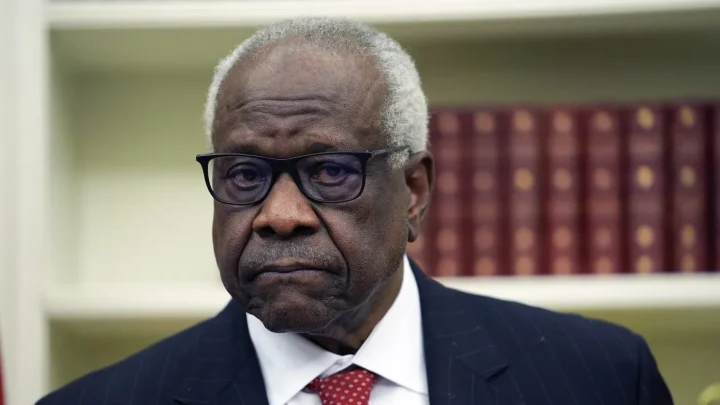
Justices Clarence Thomas, Samuel Alito, Neil Gorsuch, Brett Kavanaugh, and Amy Coney Barrett formed the majority. All three of President Trump’s appointees — Kavanaugh, Barrett, and Thomas — voted with the administration’s position. Chief Justice John Roberts, along with Justices Sonia Sotomayor, Elena Kagan, and Ketanji Brown Jackson, dissented.
Roberts’ Dissent: A Warning on Separation of Powers
Chief Justice Roberts, who had earlier granted a temporary stay allowing construction to continue while the case was briefed, argued in dissent that the preservation group’s articulated concerns were sufficient to confer the right to appear in federal court.
“In failing to appreciate as much, the Court misconceives the plaintiff’s injury, allowing the Executive’s likely infringement of the Legislature’s power of the purse and authority to regulate federal property in the District of Columbia to continue,” Roberts wrote. “Today’s decision is no victory for the separation of powers.”
He underscored the symbolic weight of the site at issue:
“The White House is not just any building,” the chief justice emphasized.
What the Project Involves
Last fall, the administration demolished the East Wing of the White House to clear ground for a 90,000-square-foot ballroom and associated military complex on the presidential campus. The Trump administration contends the project already carries the requisite approvals because it is financed with private funds rather than taxpayer dollars, and it has argued that the preservation group’s challenge should be dismissed on standing grounds before any merits questions are reached.
Solicitor General D. John Sauer, representing the government before the justices, warned that recognizing the group’s suit would flood the federal courts with challenges from visitors who simply dislike what they see.
“[It] would open the courthouse doors to any of the millions of people who visit government buildings, historic sites or parks and happen to think that they dislike something they see,” Sauer told the court.
The National Security Rationale
As litigation progressed, the administration sharpened its argument that halting the ballroom would endanger the president’s personal safety. Department of Justice filings pointed to a series of recent incidents — the threat that forced Trump to board an alternate aircraft, an alleged plot to disrupt a UFC event at the White House, the shooting at the White House Correspondents’ Association dinner, the assassination attempt at his Butler, Pennsylvania, campaign rally, and the shooting near his Florida golf course — and characterized each as a presidential assassination attempt. The implication: completing the ballroom’s protective infrastructure is a matter of executive safety, not mere aesthetics.
In recent filings, the Justice Department also stressed that the project is now 65 percent complete, with a concrete-and-steel framework already rising five stories deep and standing 70 feet high. The administration’s position is that stopping work at this stage would be impractical and wasteful.
The Preservation Group’s Response
Brent Leggs, president and CEO of the National Trust for Historic Preservation, issued a statement Monday expressing disappointment while noting the ruling leaves the core legal question unresolved.
“We are deeply disappointed in the Supreme Court’s ruling today and respectfully disagree with the majority’s opinion on standing,” Leggs said. “It is noteworthy that the majority did not weigh in on whether the ballroom project was in fact legal.”
He pressed the broader constitutional argument his organization has advanced throughout the litigation:
“In addition, this is not the final decision on the merits of our case and does not resolve our fundamental argument—that each President is a temporary steward of the People’s House and does not have the unilateral authority to demolish and redesign it without the approval of Congress,” Leggs added.
What Comes Next
Because the ruling addresses only standing and not the underlying question of whether a president may, without congressional authorization, demolish and rebuild a major portion of the White House campus, the case retains the possibility of returning to the Supreme Court on the merits. Lower courts may revisit the statutory and constitutional questions once the procedural barrier is removed or if new facts emerge. Until then, however, the ballroom’s concrete skeleton will continue to rise above the South Lawn, and the administration will point to the project’s completion — which Trump has projected for the summer of 2028 — as evidence that the decision was both legally sound and practically inevitable.
“When completed in the Summer of 2028, the magnificent Ballroom and Military Complex will be something that the entire Country is very proud of,” Trump wrote in a post on Truth Social.
For historians of presidential power and federal property law, the ruling’s lasting significance may lie less in the ballroom itself than in the standing doctrine it applies: a narrow gate that, for now, keeps millions of citizens’ aesthetic and historic-preservation grievances outside the federal courthouse doors.
Related Reading
Frequently Asked Questions
What is Divided Supreme Court rules White House?
Divided Supreme Court rules White House is the main topic of this guide. The article explains the context, practical details, and next steps readers should understand.
Why does Divided Supreme Court rules White House matter?
Divided Supreme Court rules White House matters because readers are looking for a useful answer, not just a short summary. Good content should match search intent and help them decide what to do next.