Fewer adults in new poll say they gamble

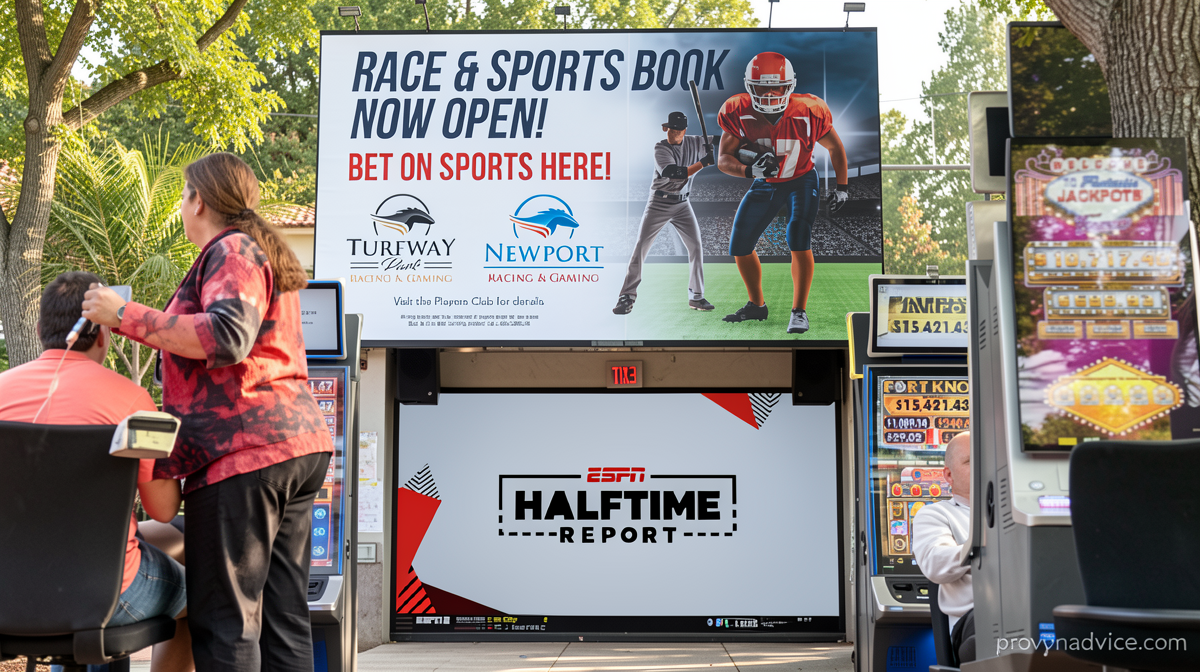
Table of Contents
America’s Gambling Habits Are Shrinking — Even as New Platforms Push the Boundaries
Provpnadvice.com – The landscape of wagering in the United States is undergoing a quiet but measurable contraction. A fresh national survey conducted by Gallup reveals that fewer than half of American adults placed any kind of bet in the twelve months preceding the survey window. That figure, 45 percent, marks a steep decline from the 64 percent recorded roughly ten years earlier and the 63 percent captured in 2007. In practical terms, the share of adults who touched some form of gambling has dropped by nearly twenty percentage points in a single decade.
What Americans Still Bet On
Among those who did wager, the breakdown of activity tells a story of low-stakes, lottery-adjacent behavior rather than high-roller casino culture. Buying a state lottery ticket remained the single most common form of gambling, claimed by 31 percent of respondents. Visiting a casino followed at 14 percent, while placing a wager on professional sports accounted for just 7 percent of reported activity. The gap between the top and bottom of that list underscores how far mainstream American gambling has drifted from the image of crowded sportsbooks and slot-machine floors.
The contraction is not merely statistical noise. Gallup’s methodology for this round ran from July 1 through July 19, surveying 1,200 adults with a margin of error of four percentage points. While that margin allows for modest fluctuation, the trajectory from 64 to 45 percent is too large to attribute to sampling variance. The trend suggests a genuine cultural shift: fewer adults are choosing to stake money on uncertain outcomes, whether through scratch tickets, table games, or sports wagers.
The Prediction-Market Wildcard
Yet the very moment Americans are stepping back from conventional gambling, a new class of platforms is courting the same appetite for speculative wagers. Prediction markets such as Kalshi and Polymarket let participants buy and sell contracts tied to the outcomes of elections, geopolitical events, economic indicators, and sporting contests. Their operators argue that these instruments are fundamentally distinct from traditional gambling — closer to financial derivatives than to a roulette spin — and therefore fall under the jurisdiction of the Commodity Futures Trading Commission rather than state gaming regulators.
That regulatory distinction is precisely where the friction now lives. State governments, which have long treated wagering as a taxable, licensable activity under their own gaming codes, see prediction markets as an end-run around decades of consumer-protection and revenue-collection frameworks. The question of whether a contract on whether a candidate wins a primary is “gambling” or “trading” is no longer academic; it is the subject of active litigation.
New York Takes Kalshi to Court
Late last month, the state of New York filed suit against Kalshi, contending that the platform was operating an unlicensed gambling business within its borders. The complaint alleged that Kalshi had failed to obtain a license from the New York State Gaming Commission and had thereby sidestepped associated tax obligations. The state framed the action as a matter of consumer protection and fiscal integrity, not merely a turf dispute between regulators.
“Kalshi has chosen to ignore New York’s gaming laws, which exist to protect consumers, prevent problematic gambling, deliver funding for critical public services, and ensure that every company plays by the same rules,” New York Gov. Kathy Hochul (D) said in a statement.
The suit lands at an awkward intersection. On one hand, the Gallup data show that traditional gambling participation is falling, which could be read as evidence that Americans do not crave more wagering products. On the other, the rapid growth of prediction-market platforms suggests that a subset of users still wants to express views through money — they simply prefer a structure that looks like trading over one that looks like betting. Whether courts will accept that distinction, or whether state legislatures will close the gap through new statutes, will shape the next chapter of American wagering law.
Why the Numbers Matter Beyond the Headline
The decline in overall gambling participation carries implications that extend past the casino floor. State lottery revenues, which fund education, infrastructure, and senior-care programs in many jurisdictions, are directly tied to ticket sales. A sustained drop in lottery participation — the single most common gambling activity — pressures those budget lines even as prediction markets, taxed (or untaxed) under different regimes, grow. Policymakers watching the Gallup trend line must therefore ask not only whether Americans are gambling less, but where the displaced wagering appetite is migrating, and whether the tax base follows.
For the individual reader, the poll’s message is straightforward: the average American adult is less likely to have placed a bet in the past year than at any point in the last decade. Whether that reflects greater financial caution, a generational shift in leisure preferences, or simply the maturation of a post-pandemic economy remains an open question. What is no longer open is the fact that the regulatory perimeter around wagering — once neatly drawn around casinos, racetracks, and sportsbooks — is being redrawn in real time, one court filing and one legislative session at a time.
Related Reading
Frequently Asked Questions
What is Fewer adults in new poll say they?
Fewer adults in new poll say they is the main topic of this guide. The article explains the context, practical details, and next steps readers should understand.
Why does Fewer adults in new poll say they matter?
Fewer adults in new poll say they matters because readers are looking for a useful answer, not just a short summary. Good content should match search intent and help them decide what to do next.