Trump rips allies Oman, South Korea amid escalating tensions with Iran

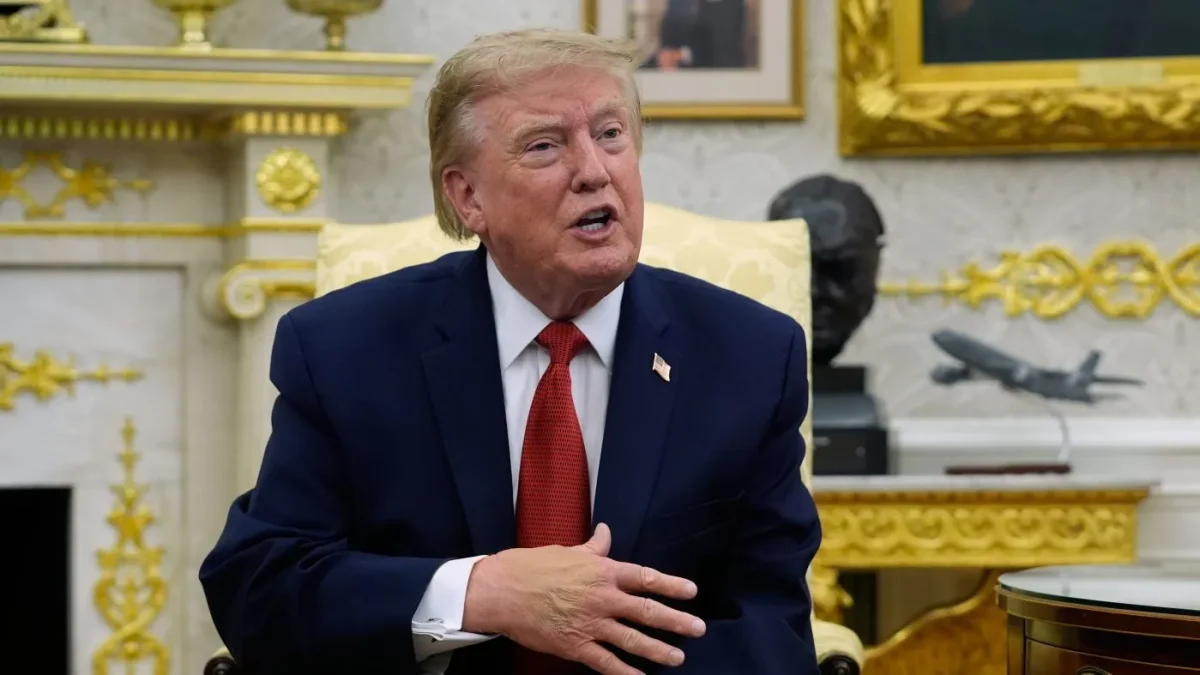
Table of Contents
U.S.–Iran Economic Standoff Intensifies as Trump Pressures Allies and Rivals Alike
Provpnadvice.com – The transatlantic and Pacific alliances are feeling the strain of a prolonged economic confrontation between Washington and Tehran, with President Donald Trump lashing out at both partners and adversaries in rapid succession. What began as a maritime blockade aimed at choking Iran’s export revenues has morphed into a broader contest of wills, one that now drags in neighboring Gulf states, distant Pacific allies, and the global energy market itself.
Threats Aimed at Oman and South Korea
In a series of remarks delivered over two days, Trump escalated rhetoric directed at two very different audiences. On Monday, he warned that the United States would “bomb the s‑‑‑ out of” Oman if the small Gulf sultanate obstructed American efforts to reopen shipping lanes through the Strait of Hormuz. The comment came just one day after he instructed Defense Secretary Pete Hegseth to scale back joint military exercises with South Korea, a move that signaled Washington’s willingness to deprioritize a long-standing Pacific partnership in favor of Middle Eastern leverage.
Oman, which has positioned itself as a neutral diplomatic mediator between Washington and Tehran, has been negotiating with Iran on the creation of new shipping corridors through the strait. Trump’s threat effectively told Muscat that its independent diplomatic track is subordinate to American negotiating priorities.
The Hormuz Territory Gambit
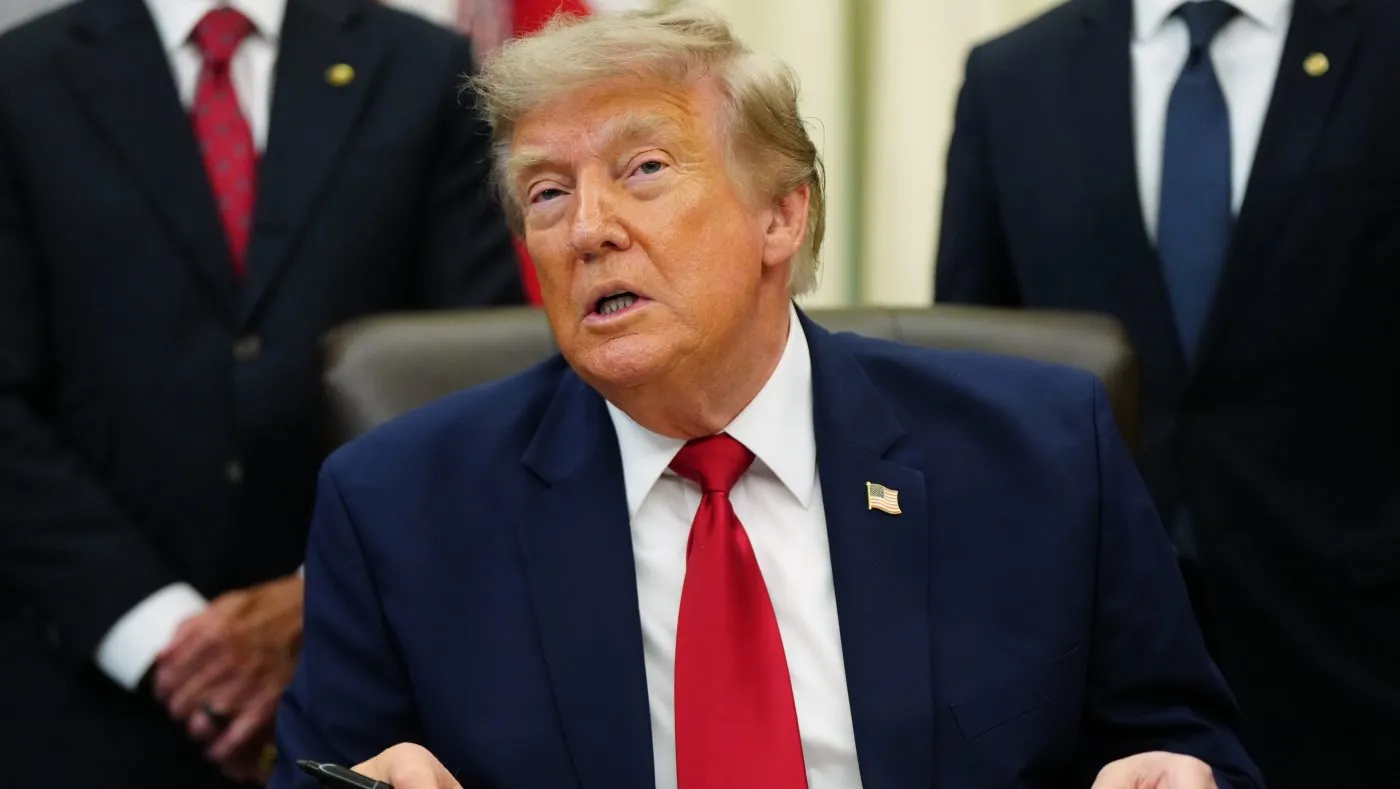
Separately on Monday, Trump pressed the notion that the United States exercises complete authority over the Strait of Hormuz and floated the idea of formally annexing the waterway as American territory.
“We control it with the blockade, and I like the idea of declaring it a territory,” Trump told reporters gathered in the Oval Office.
The strait is the world’s most critical energy chokepoint, carrying roughly 20 percent of global oil supply in normal conditions. Trump’s framing of the waterway as something the U.S. can “control” and potentially absorb into its sovereign domain represents an extraordinary expansion of American maritime claims, one that has no clear precedent in post-World War II international law.
Minimizing the Adversary While Markets Push Back
Despite the gravity of the standoff, Trump continued to downplay Iran’s strategic weight. He characterized the Islamic Republic as little more than an irritant in a larger American operation.
“They can be a nuisance,” Trump said. “They can put a mine in the water and people don’t like having mines hit their billion dollar ships.”
He also insisted that American forces were extracting enormous volumes of crude through the strait and that prices would keep falling absent further escalation.
“We’re taking out millions of barrels of oil a week,” he said. “The oil prices are coming down, and they will continue to come down unless we decide to something far drastic, more drastic than what we’re doing.”
The market data told a different story that same day. Brent crude climbed 2.58 percent to close at $91.10 per barrel. At the pump, the average American driver paid approximately $4.06 per gallon of gasoline, roughly 93 cents above the year-earlier level, according to AAA tracking data. Trump, asked about the price spike, dismissed it as minor and justified.
A Six-Month Attrition With a Domestic Deadline
The confrontation has now persisted for nearly six months. Its mechanism is straightforward: Washington blockades Iranian ports to strangle export revenue, while Tehran tightens its grip on the strait to raise the cost of American and allied energy imports. Shipping transits through the waterway have slowed markedly. MarineTraffic.com data showed 95 confirmed crossings in the most recent week, down from 118 the week before — a declining trend rather than a recovery.
The complication for the White House is the calendar. Congressional midterm elections fall less than three months from now, and polling indicates the Iran conflict is already denting Trump’s approval ratings and perceptions of his economic stewardship. Tehran, for its part, is fully aware of that domestic pressure and has made no indication of easing its posture.
“A lot of it does boil down to this staring match and this perseverance contest. I think that if things were to continue just as they are today, the Trump administration probably would have an advantage,” said Clay Seigle, a senior nonresident scholar at the Center for Strategic and International Studies.
Seigle cautioned, however, that the calculus changes when the adversary factors in the opponent’s political vulnerability. Iran’s army commander in chief, Amir Hatami, framed the strait in explicitly existential terms.
“We will protect this capacity with all our power,” Hatami said, describing the waterway as a “god-given geopolitical asset for the Iranian nation and this leverage will never return to its former state.”
Back Channels and the Question of Permanence
In a Monday phone interview with Fox News correspondent Trey Yingst, Trump said he was “not in a hurry” to lock in a permanent arrangement with Tehran and that he had “no time schedule.” He confirmed the existence of a back channel running directly to officials within Iran’s Islamic Revolutionary Guard Corps, suggesting that formal diplomacy and informal pressure are proceeding in parallel.
Victoria Coates, who served as deputy national security adviser during Trump’s first term, offered a measured assessment of the administration’s Hormuz strategy. She acknowledged that Washington has a legitimate interest in ensuring the strait remains “free and open” during a transitional period, while stressing that permanent American administration of the waterway is neither the goal nor the intent.
“I know that’s the plan that we should not be there in perpetuity overseeing it. That we’ll figure out another mechanism once we demonstrate it can be done,” Coates said.
On the Oman question, Coates expressed surprise that the sultanate had not pushed back more forcefully against Iranian overtures, pointing to Oman’s recent push toward tax reform, rule-of-law upgrades, and broader economic liberalization as factors that make it an attractive partner for Tehran.
“Oman should double down. They should embrace economic freedom and embrace the Emirates. They have other neighbors,” she advised.
For now, the standoff continues: a blockade on one side, mine-laying and transit restrictions on the other, and a global energy market that keeps repricing the risk with every headline. The question that will determine the outcome is not military but temporal — which side blinks first before the American electorate votes.
Related Reading
Frequently Asked Questions
What is Trump rips allies Oman South Korea?
Trump rips allies Oman South Korea is the main topic of this guide. The article explains the context, practical details, and next steps readers should understand.
Why does Trump rips allies Oman South Korea matter?
Trump rips allies Oman South Korea matters because readers are looking for a useful answer, not just a short summary. Good content should match search intent and help them decide what to do next.