Florida tourism dips as Canadian visitors drop 14 percent

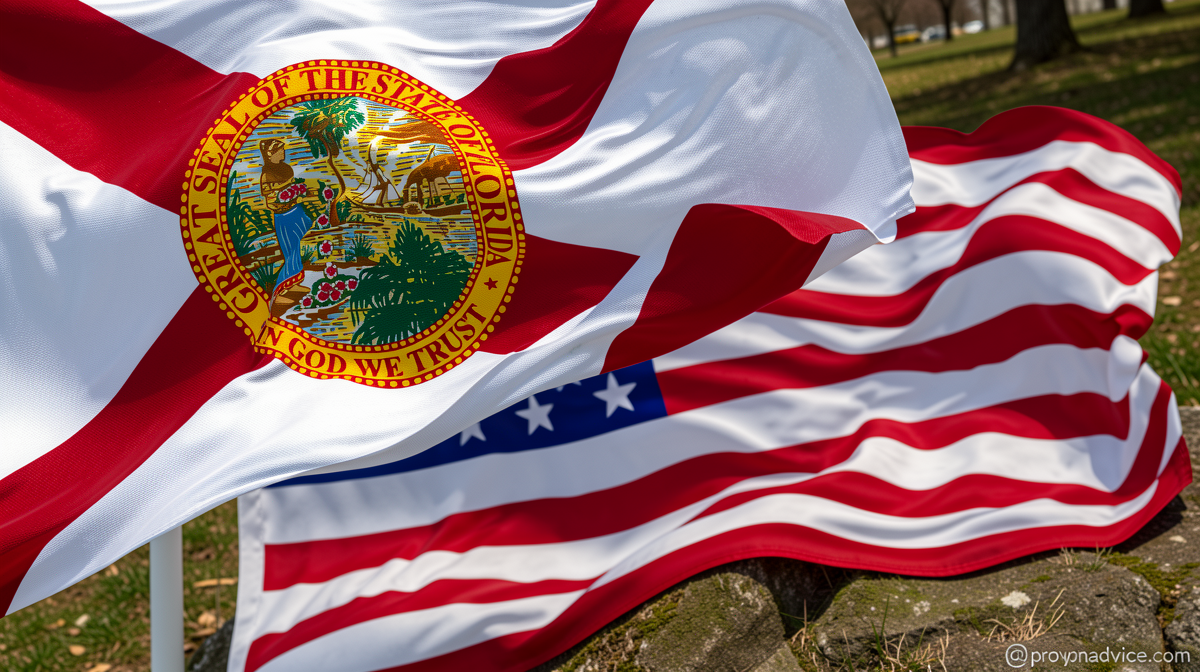
Table of Contents
- Trade War Ripples Reach Florida’s Beaches as Canadian Travelers Stay Home
- Why Canada Is Florida’s Most Critical Foreign Market
- A Pattern Across American Destinations
- Political Friction and Traveler Psychology
- Scale and Perspective: What the Numbers Actually Mean
- Related Reading
- Frequently Asked Questions
Trade War Ripples Reach Florida’s Beaches as Canadian Travelers Stay Home
Provpnadvice.com – The escalating commercial confrontation between Washington and Ottawa is producing an unexpected casualty: the Sunshine State’s tourism revenue stream. Canadian visitors, long the backbone of Florida’s international travel economy, are retreating from the state at an accelerating pace. Data compiled by the state’s tourism marketing arm shows that roughly 1.68 million Canadians set foot in Florida during the first half of 2026 — a figure approximately 270,000 lower than the comparable period a year prior. That represents a 14 percent contraction, following a nearly 7 percent slide already recorded across all of 2025.
The cumulative effect has dragged total visitor numbers in Florida down by 1.4 percent through the first six months of 2026, a notable reversal after the state set an all-time record for annual arrivals in 2025. For a destination whose entire economic identity is built on welcoming outsiders, even a modest percentage dip carries outsized fiscal weight.
A Two-Year Slide, Not a One-Off Blip
The Canadian retreat is not a single-season anomaly. Last year’s roughly 7 percent decline already signaled a shift in traveler sentiment, and the 14 percent drop in the first half of 2026 suggests the trend is steepening rather than stabilizing. Measured against the pre-tension baseline of 2024, Florida welcomed approximately 400,000 fewer Canadian visitors in the first six months of this year than it did in the same window two years ago — before trade hostilities between the two nations intensified following President Trump’s return to the White House in early 2025.
Why Canada Is Florida’s Most Critical Foreign Market
The percentage decline would be less alarming if Canada were a minor contributor to Florida’s visitor mix. In reality, it is the single largest source of international arrivals by a wide margin. Last year, roughly 3.2 million Canadians visited the state, down from approximately 3.4 million in 2024. Those travelers represented about 25 percent of all visitors arriving from outside the United States — more than double the 10 percent share attributed to Brazil, Florida’s second-largest foreign market.
That concentration creates a structural vulnerability. When the largest international cohort shrinks, no other market can absorb the gap quickly enough to offset the revenue loss. Hotels, restaurants, cruise operators, and retail districts along the coast all feel the contraction within weeks of a booking-period dip.
A Pattern Across American Destinations
Florida is not an isolated case. Statistics Canada data indicate that Canadians made roughly 25 percent fewer trips to the United States overall last year and spent approximately $2.3 billion less than the prior year. The geographic spread of the decline is telling:
In Las Vegas, Canadian arrivals fell by more than 17 percent during 2025. New York State recorded an even steeper 26 percent drop. Florida’s percentage decline was comparatively milder, but its absolute numbers remain large enough to register clearly in state-level economic indicators.
The behavioral shift appears to run in two directions simultaneously. Some Canadians are redirecting their vacation budgets toward domestic destinations — the Rockies, the Maritimes, the Great Lakes circuit — while others are turning to European or Asian travel. The net effect is a sustained reduction in cross-border tourism demand that no single marketing campaign can quickly reverse.
Political Friction and Traveler Psychology
The tourism marketing agency has not published a formal explanation for the Canadian drop in its latest estimates. However, the timing aligns closely with a series of escalating diplomatic and trade confrontations that began after Trump resumed office. The most recent flashpoint came this week, when the president signed an executive order renaming Lake Ontario as “Lake America,” a move framed as a response to what he characterized as Canadian exploitation of American trade and defense commitments.
The renaming of a shared waterway is hardly an olive branch to travelers who are already recalibrating their vacation plans around the border.
For millions of Canadians who have historically treated a Florida spring break or a Miami beach weekend as a routine annual ritual, the political temperature between the two countries introduces a layer of friction that did not exist a few years ago. Travel decisions, even leisure ones, are increasingly filtered through the lens of bilateral relations.
Scale and Perspective: What the Numbers Actually Mean
Context matters when interpreting the magnitude of the Canadian dip. More than 90 percent of the 73.5 million visitors who entered Florida in the first half of 2026 came from other parts of the United States. An additional 4.5 million arrived from overseas markets collectively, representing roughly 6 percent of total arrivals. Canadian visitors accounted for the remaining 2.3 percent of the total, down from 2.6 percent over the same period in 2025.
In absolute terms, the state’s tourism economy remains overwhelmingly domestic. Yet the Canadian segment is the largest single foreign cohort, and its sustained contraction — compounded by the fact that these visitors historically spend at higher per-trip levels than many other international markets — represents a meaningful drag on state tax receipts, hotel occupancy rates, and seasonal employment in coastal counties. If the current trajectory holds through the second half of 2026, Florida’s annual visitor count could fail to match last year’s record, marking the first year-over-year decline since the pandemic-era disruptions ended.
For a state whose budget depends heavily on sales taxes generated by transient visitors, the question is no longer whether the Canadian dip will register in fiscal projections. It already has. The open question is whether the trade confrontation that is driving the decline will cool before the next booking season locks in.
Related Reading
Frequently Asked Questions
What is Florida tourism dips as Canadian visitors?
Florida tourism dips as Canadian visitors is the main topic of this guide. The article explains the context, practical details, and next steps readers should understand.
Why does Florida tourism dips as Canadian visitors matter?
Florida tourism dips as Canadian visitors matters because readers are looking for a useful answer, not just a short summary. Good content should match search intent and help them decide what to do next.