State Department official says about 85 Americans still missing after Nepal flash flooding

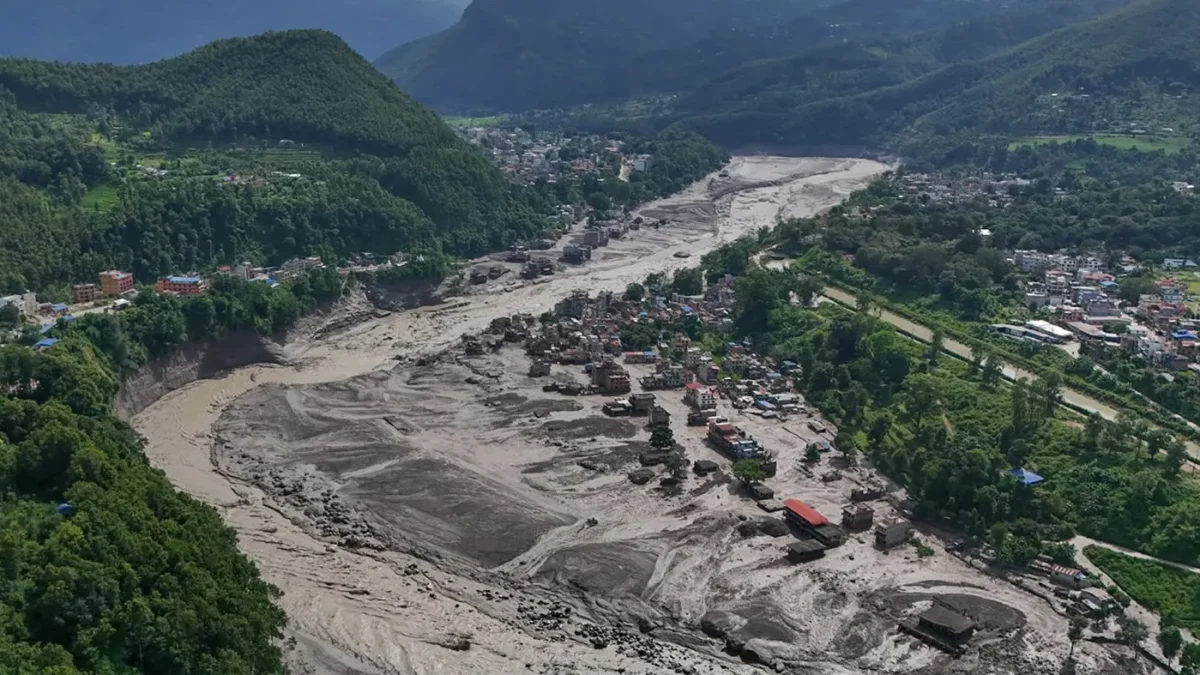
Table of Contents
State Dept Official: About 85 Americans Missing
Provpnadvice.com – A State Department official says about 85 U.S. citizens remain unaccounted for in the wake of a devastating flash flood that ripped through the Nepal-Tibet border corridor. Spokesman Tommy Pigott confirmed the figure on ABC’s “This Week,” adding that nine Americans had already been pulled to safety and that no American deaths had been verified as of Sunday.
“This morning, I can say we now have 85 Americans, approximately, that are unaccounted for. We’ve also now seen nine Americans be safely evacuated,” Pigott told host Martha Raddatz during the broadcast.
How the Flood Unfolded
The Bhotekoshi River—one of the most powerful waterways draining the high Himalaya—broke its banks at roughly 9 a.m. local time on Wednesday morning. Villages, bridges, and road networks on both sides of the border were swallowed within minutes, cutting off the very routes that rescue teams would need. The U.S. Geological Survey later traced the trigger to a glacial collapse near the China-Nepal border at 8:37 a.m., an event that released seismic energy equivalent to a magnitude-5.2 earthquake despite not being a tectonic quake at all.
“This event was initially reported as a magnitude 4.4 earthquake,” the survey noted. “Additional analysis of long period seismic waves indicate that the seismic energy was instead generated by a glacial collapse and debris flow.”
Glacial lake outburst floods are becoming a recurring threat across the range as warming destabilizes ice dams that have held meltwater for centuries. The Bhotekoshi basin, which ultimately feeds the Ganges system, has seen similar failures in prior decades, leaving downstream communities with almost no lead time for evacuation.
Human Toll and U.S. Response
Combined death tolls reported by Nepali and Tibetan authorities on Sunday exceeded 800, with roughly 3,000 people listed as missing across both countries. The State Department official says about 85 Americans were among those unaccounted for, a figure that underscored how densely populated the river valleys remain despite lagging early-warning infrastructure.
Within hours of the flood, the U.S. Embassy in Kathmandu began coordinating with Nepali counterparts to locate stranded travelers. The department also announced a surge of additional personnel to its posts in both Kathmandu and Beijing to strengthen rescue coordination. On the material-aid front, $500,000 in emergency funding was committed through Catholic Relief Services for shelter, relief supplies, and water-sanitation support, and a disaster response adviser was dispatched to the region.
“We have activated from the State Department $3.6 million in emergency humanitarian assistance that includes up to three months of emergency food for up to 10,000 flood-affected households,” Pigott said.
That $3.6 million package signals an expectation of a prolonged recovery: three months of food aid implies officials anticipate disrupted supply chains and agricultural cycles well into the coming season. The State Department official says about 85 Americans were still missing when the larger aid package was announced, reinforcing the urgency of sustained engagement.
Travel Advisory and Registration
During the same appearance, Pigott urged Americans already in—or planning trips to—the Nepal-Tibet border region to enroll in the Smart Traveler Enrollment Program. The free registration lets the department push targeted alerts and maintain contact lists when communications infrastructure is damaged or overwhelmed.
“We know how to contact you,” Pigott emphasized, underscoring the practical value of registration in a post-disaster environment.
Frequently Asked Questions
How many Americans are confirmed missing? As of the Sunday briefing, a State Department official says about 85 U.S. citizens remain unaccounted for, with nine already evacuated and no American fatalities confirmed.
What caused the flood? The U.S. Geological Survey attributes the event to a glacial collapse near the China-Nepal border, releasing enough energy to mimic a magnitude-5.2 seismic signal. It was not a conventional tectonic earthquake.
What aid has the U.S. committed? The department has activated $3.6 million in emergency humanitarian assistance—covering up to three months of food for up to 10,000 households—plus an initial $500,000 through Catholic Relief Services for shelter and sanitation support.
Should travelers register with the State Department? Yes. The Smart Traveler Enrollment Program is free and allows the department to send targeted alerts and maintain contact lists during emergencies, which is critical when local communications are disrupted.