Iran says ‘world approved our victory’ over the US

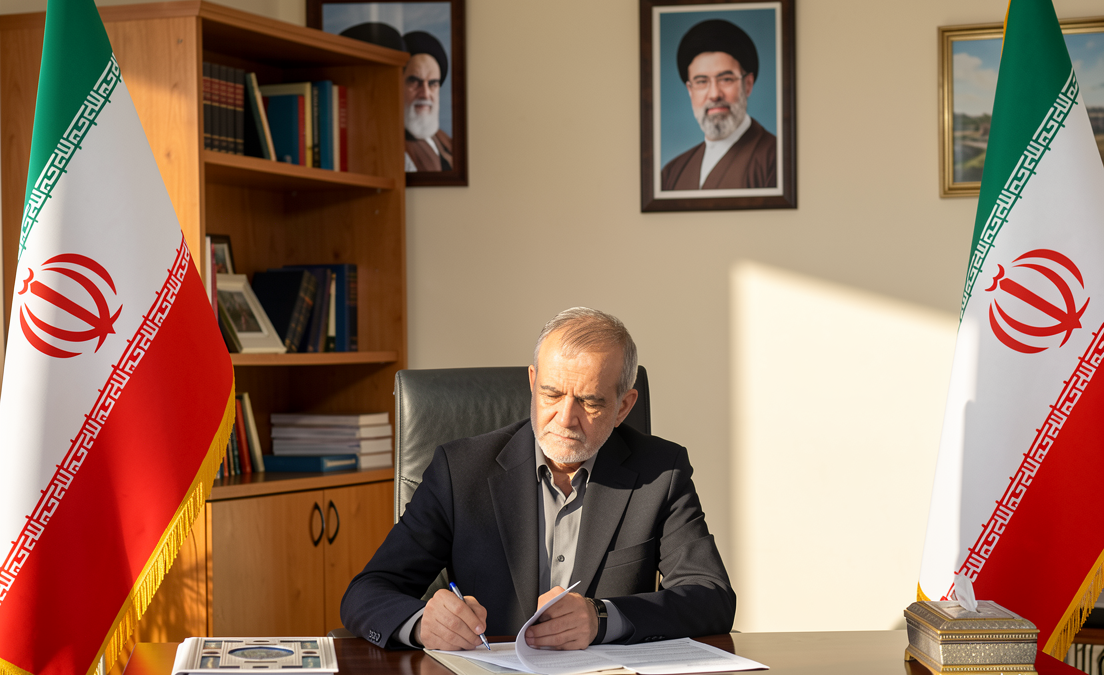
Table of Contents
Tehran Declares Global Endorsement of Its Victory as Washington Prepares Unprecedented Sanctions Package
Provpnadvice.com – Iranian President Masoud Pezeshkian declared on Friday that the armed confrontation between the United States and Iran has reached its conclusion, arguing that international opinion has effectively sided with Tehran. His remarks, broadcast through state channels, landed just days before the Trump administration is set to impose what officials are calling the most sweeping economic restrictions ever directed at the Islamic Republic.
“The entire world approved our victory and the U.S. is hated,” Pezeshkian stated, as carried by the state-run IRNA News Agency.
The timing of the president’s pronouncement is difficult to separate from the escalating economic pressure Washington is assembling. New sanctions measures are expected to be formally announced as early as next week, adding a second layer of coercion to the naval blockade already strangling Iran’s primary export artery.
Trump’s “Economic D-Day” and the Hormuz Gambit
President Trump laid out the administration’s economic strategy on Wednesday, framing the coming sanctions as a decisive blow in what he described as ongoing negotiations aimed at reopening the Strait of Hormuz. In a post on Truth Social, the president enumerated the channels through which Iran allegedly moves money and goods, demanding their immediate cessation.
“Oil smuggling, swap lines, cash transfers, exchange houses, ship registries, front companies — It all needs to stop NOW. You know who you are,” Trump wrote.
He went on to characterize the operation in military-adjacent language, calling for allied cooperation.
“This will be an ECONOMIC D-DAY, and we need all of our Allies to stand with the United States of America to isolate, and defeat, the Iran threat,” the president continued.
The Strait of Hormuz, a narrow waterway roughly 33 nautical miles at its tightest point between Iran’s Qeshm Island and Oman’s Musandam Peninsula, is one of the most consequential chokepoints in global energy logistics. In peacetime, approximately one-fifth of the world’s daily oil consumption transits this passage. Since the outbreak of hostilities, the strait has been effectively shut to commercial shipping owing to Iranian counterstrikes against vessels and a sustained U.S. naval blockade.
Iran and Oman share jurisdiction over the waterway under existing maritime agreements. Yet Trump has publicly threatened to designate the strait as American territory, a claim that would represent a dramatic departure from established norms of international maritime law and has drawn sharp criticism from regional states dependent on free passage.
Bessent Frames a Two-Pronged Economic Assault
Treasury Secretary Scott Bessent is scheduled to present the specifics of the new sanctions regime on Monday. Speaking to CNBC on Thursday, he characterized the combined naval and financial measures as a coordinated strike designed to overwhelm Iran’s fiscal capacity.
“It is a one-two punch. We have the blockade, and we are going to have the toughest sanctions in history,” Bessent told the network. “It is going to work in Iran and we are going to collapse this regime.”
The language of regime collapse marks a notable escalation in tone. Previous U.S. sanctions campaigns against Tehran—dating back to the 1979 hostage crisis and intensifying after the 2015 nuclear deal’s partial unraveling—have typically aimed at constraining Iran’s nuclear program or curbing its regional influence. A stated objective of toppling the government itself would represent the most aggressive economic-warfare posture Washington has adopted toward any single state in decades.
Tehran’s Diplomatic Counter-Narrative
Iranian Foreign Affairs Minister Abbas Araghchi moved quickly to reframe the anticipated penalties as a domestic political maneuver. On Thursday, he suggested the sanctions announcement was designed to divert American public attention from rising household costs and mounting federal debt.
“The so-called ‘Economic D-Day’ is a diversion from America’s own crisis: unprecedented debt & surging interest costs,” Araghchi wrote on social media. “Doubling down on failed policies will only bring further defeat—and enmity of Iranians. US economic terrorism threatens global economy and sovereignty worldwide.”
The minister’s framing echoes a long-standing Iranian diplomatic tactic: casting U.S. financial pressure not as a legitimate instrument of foreign policy but as an act of economic aggression that destabilizes markets beyond the target country. For oil-importing nations in Asia and Europe that rely on Hormuz transit, the closure of the strait and the prospect of secondary sanctions on trading partners create genuine commercial uncertainty, lending some factual basis to Araghchi’s broader claim about global economic spillover.
Whether the coming sanctions package will achieve its stated objective of collapsing the Iranian government—or whether it will, as Tehran predicts, deepen popular resentment and consolidate domestic support around the existing leadership—remains the central question of the next several weeks. The answer will shape not only the trajectory of the current conflict but also the architecture of energy security across the Persian Gulf for years to come.
Related Reading
Frequently Asked Questions
What is Iran says world approved our victory?
Iran says world approved our victory is the main topic of this guide. The article explains the context, practical details, and next steps readers should understand.
Why does Iran says world approved our victory matter?
Iran says world approved our victory matters because readers are looking for a useful answer, not just a short summary. Good content should match search intent and help them decide what to do next.