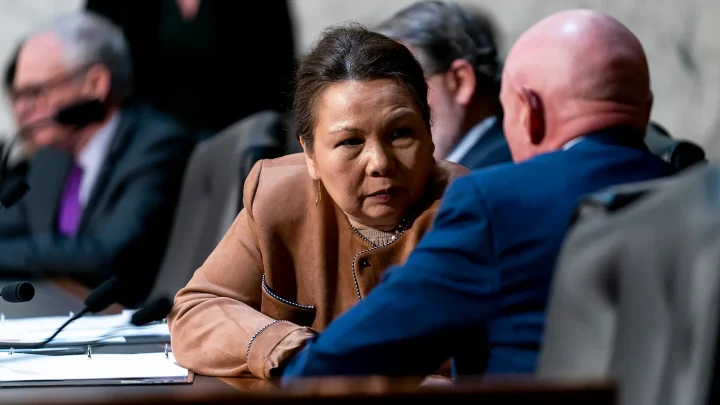
Reports of sexual assault in military dropped for third year in a row: Pentagon

Table of Contents
Military Sexual Assault Reports Fall Third Year Running
Provpnadvice.com – Reports of sexual assault in the military declined for a third consecutive year in 2025, according to a Pentagon report released Friday. The department logged 7,998 such cases last fiscal year, down from 8,195 in 2024. Sexual harassment complaints also edged lower, dropping from 3,014 in 2024 to 2,936 in 2025.
Three-Year Trend and Reporting Breakdown
The downward trajectory stretches back several years: 8,942 cases were recorded in 2022, followed by 8,515 in 2023, then 8,195 in 2024, and finally 7,998 in 2025. Of the most recent total, 5,022 were filed as unrestricted reports — meaning they entered the chain of command and triggered an official investigation, giving the affected service member access to mental-health care and legal counsel. The remaining 2,976 stayed restricted through the close of fiscal 2025.
Under Secretary of Defense for Personnel and Readiness Anthony J. Tata framed the findings in a written statement: “Dignity, respect and discipline are foundational to the warrior ethos and the overall preparedness of the force. Sexual assault and sexual harassment undermine these values, eroding trust and threatening the mission.” He added that the FY 2025 report “underscores our ongoing commitment to maintaining high standards, protecting our people, and building a unified, ready and lethal fighting force.”
Branch-by-Branch Prevalence and Survey Data
Survey estimates showed the Marine Corps carrying the highest share of women reporting unwanted sexual contact at 6.4 percent, ahead of the Navy at 5.1 percent, the Army at 4.5 percent, and the Air Force at 2.8 percent. Among men, the Navy led at 1.5 percent while the Army and Marine Corps each sat at 1 percent.
The Pentagon noted that the estimated prevalence rate for active-duty women fell from 6.8 percent in 2023 to 4.3 percent in 2025, a drop it attributed largely to fewer enlisted women (E1–E4, E5–E9) and junior officers (O1–O3), as well as women aged 35 and younger, indicating past-year unwanted contact. Roughly 1 percent of active-duty men reported such contact in 2025, a slight dip from 1.3 percent in 2023. In absolute terms, about 20,492 active service members — 9,860 women and 10,632 men — experienced unwanted sexual contact last year, compared with 29,061 in 2023.
Reporting behavior improved modestly: roughly one-third of victims came forward last year, up from one-quarter in 2023. The Pentagon said it had “sufficient” evidence to pursue disciplinary action in 1,321 probed cases.
Critics Question Whether the Decline Reflects Real Progress
“A number that falls because people stopped talking is not progress.” — Josh Connolly, Senior Vice President, Protect Our Defenders
Connolly told reporters Friday that he would not accept the Pentagon’s figures at face value. He pointed to recent administrative moves — rolling back whistleblower protections, tightening anonymous-reporting channels, and warnings that those who come forward may face punishment — as reasons survivors are increasingly reluctant to speak up. He urged the public to “talk to those who do report,” noting that many cases stall, documents go missing, and victims lose medical and mental-health coverage along the way.
Outside advocates also highlighted that the 2025 figure of roughly 20,492 affected service members sits nearly 40 percent above the 14,900 recorded in 2016 and is essentially flat with the 20,500 logged in 2018. Early last year the Navy paused its sexual-assault prevention and response training, and Defense Secretary Pete Hegseth announced in October that he would restructure the inspector-general and equal-employment-opportunity offices that had handled anonymous whistleblower complaints.
The annual report was delivered to the Senate and House Armed Services committees and the House and Senate Veterans’ Affairs panels on August 10, as required by Section 1631 of the 2011 Ike Skelton National Defense Authorization Act.
Frequently Asked Questions
What counts as an unrestricted versus a restricted report?
An unrestricted report is filed through the chain of command and initiates a formal investigation, entitling the reporter to mental-health services and legal assistance. A restricted report allows the service member to receive support without triggering an immediate investigation; it may later be converted to unrestricted status.
Why did the Pentagon’s estimated prevalence rate for women drop from 6.8 to 4.3 percent?
The department attributed the statistically significant decline primarily to fewer enlisted women and junior officers, as well as women aged 35 and under, reporting past-year unwanted sexual contact on the annual survey.
What legal requirement drives the annual report to Congress?
Section 1631 of the 2011 Ike Skelton National Defense Authorization Act obligates the Department of Defense to submit an annual report on sexual-assault and sexual-harassment data to both chambers of Congress.