Controversial attorney Ed Martin leaving Justice Department

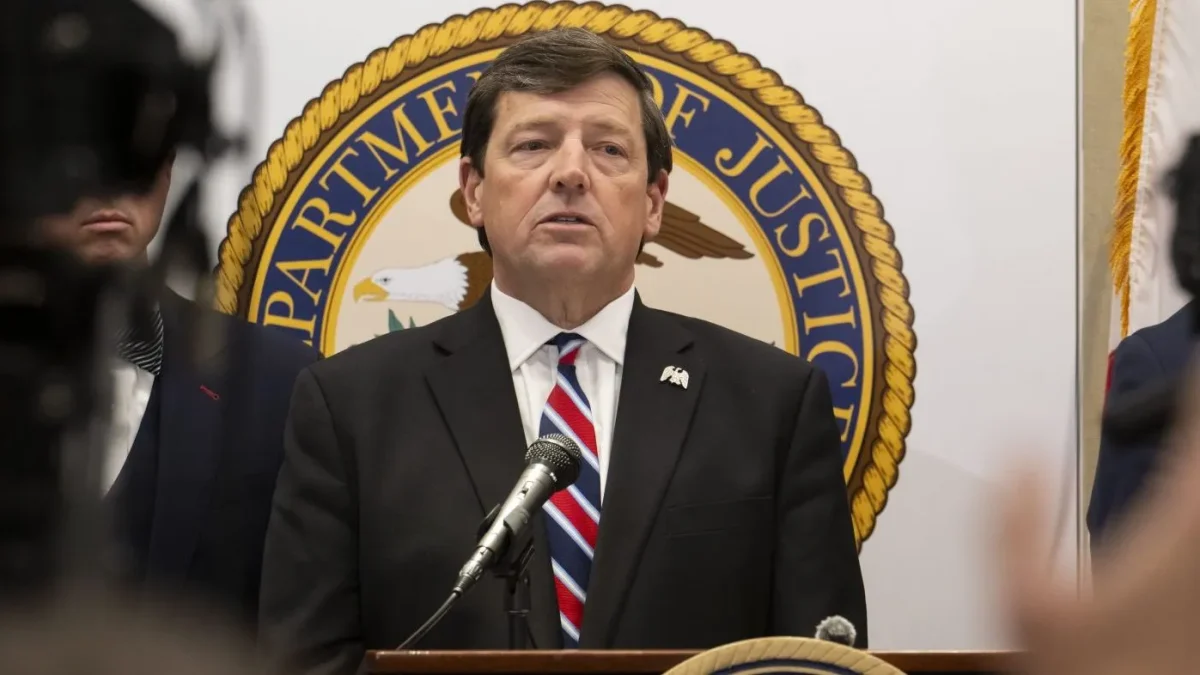
Table of Contents
Ed Martin Exits Justice Department After Turbulent Multi-Role Tenure
Provpnadvice.com – The Justice Department’s most publicly scrutinized figure of the current administration is walking out the door. Ed Martin, who simultaneously held positions overseeing the department’s Weaponization Working Group, the presidential pardon process, and — briefly — the U.S. Attorney’s Office for the District of Columbia, is departing to pursue private legal work aimed at defending what he calls free and fair elections ahead of the 2026 midterms and the 2028 presidential contest.
Martin’s departure, announced by President Trump on Truth Social, closes a chapter marked by ethics probes, congressional letters, and institutional friction that began almost immediately after the administration took office. His tenure compressed into a handful of months what would normally unfold over years of quiet bureaucratic service, and the speed of his rise and the breadth of his mandates made every decision a flashpoint.
Trump’s Farewell and Martin’s Response
“Ed Martin has been with me from the very beginning, and done an incredible job as an Attorney, Director of the Weaponization Working Group, and the United States Attorney for the District of Columbia,” President Trump wrote on Truth Social in announcing the departure.
“Ed is now leaving to go outside to fight Legal Battles for the upcoming Midterm Election, and the Presidential Election of 2028. I know he will do an outstanding job, ensure Free, Fair, and Honest Elections, and strongly advance our Constitutional Rights.”
Martin, for his part, kept his reply brief on the social platform X: “Proud to serve. Fight Fight Fight.”
The D.C. Attorney Nomination That Never Landed
Martin’s original path into the administration ran through a nomination to serve as U.S. attorney for the District of Columbia. That route collapsed when Sen. Thom Tillis, a Republican from North Carolina, withheld his support. The sticking point: Martin had represented numerous clients who stormed the U.S. Capitol on January 6, 2021, raising questions about whether he could impartially prosecute cases in the very district where his former clients had been charged.
While his nomination sat pending, Martin assumed the acting role. In that capacity he moved to dismiss charges against some of those same clients — a step that triggered a formal inquiry by the D.C. Bar, now handled by its Office of Professional Responsibility. Sen. Dick Durbin, the top Democrat on the Senate Judiciary Committee, pressed for a federal ethics investigation in a 2025 letter.
“By not recusing himself from this matter, Mr. Martin created an impermissible conflict of interest and appearance of impropriety by using his new government office to favor his client, whom he was defending from the very charges he sought to dismiss,” Durbin wrote.
Letters, Threats, and Institutional Backlash
In the same compressed window, Martin dispatched letters to two sitting Democratic lawmakers notifying them that their past public remarks were under investigation for alleged threats. Among the recipients was Senate Minority Leader Chuck Schumer of New York. Separately, he sent a letter to Georgetown University warning that the school would be barred from placing interns or attorneys with his office unless it dismantled its diversity, equity, and inclusion policies. He later escalated the message, stating that failure to respond would “bear directly” on the university’s nonprofit tax status. That matter, too, has entered an investigative track.
These episodes compounded the optics problem: a newly installed federal prosecutor appearing to wield the office as leverage over private parties and political opponents within weeks of taking the seat.
The Pardon Desk and the “Pardon Inc.” Report
With the Senate confirmation path foreclosed, Martin was reassigned to a dual role at DOJ that included taking over the pardon office from Liz Oyer, his predecessor, who had been dismissed after declining to recommend restoring gun rights for actor Mel Gibson. Under Martin’s stewardship, Trump granted pardons to a series of individuals who had donated to his campaigns or affiliated entities, or who were otherwise political allies.
On Friday, Rep. Jamie Raskin of Maryland, the top Democrat on the House Judiciary Committee, released a report titled “Pardon Inc.” accusing the president of effectively selling clemency. The panel’s findings drew on specific transactions:
“Mr. Martin has since described his philosophy as ‘No MAGA left behind’ and has used his office to privilege clemency applications from the Oath Keepers, the Proud Boys, and the two men convicted of plotting to kidnap Michigan Governor Gretchen Whitmer,” the panel wrote in its report.
“Convicted investor fraudster Trevor Milton and his wife donated more than $1.8 million to committees supporting Trump before Milton hired two attorneys with direct Trump ties and received a full pardon; tax fraudster Paul Walczak received a pardon 12 days after his mother attended a $1 million-per-plate Trump fundraiser offering face time with the President; and Binance founder Changpeng Zhao hired a longtime friend of Donald Trump, Jr. to lobby for clemency as Binance developed extensive financial ties to the Trump family’s cryptocurrency business before Trump pardoned him,” the report states.
Mortgage Fraud and the Maryland Grand Jury Anomaly
Beyond the pardon desk, Martin also carried a third hat at DOJ: special attorney for mortgage fraud. In that capacity, a federal grand jury was empaneled in Maryland and took the highly unusual step of launching a probe into one of its own prior investigations — specifically, its review of mortgage fraud allegations against Sen. Adam Schiff of California. A subpoena reviewed by The Hill asked a witness whether they had dealt with anyone “claiming to be working for or at the direction” of the Justice Department, including Martin. Other outlets reported that prosecutors were evaluating whether the grand jury’s self-investigation constituted a procedural irregularity.
What Comes Next
Martin’s stated destination is the private bar, where he intends to litigate election-related disputes through the midterms and into the 2028 cycle. For the Justice Department, his exit removes a figure who had become, in the eyes of both allies and critics, a lightning rod for questions about how far a president’s personal network can extend into prosecutorial and clemency decisions. The open inquiries — the D.C. Bar ethics matter, the Georgetown letter investigation, and the congressional scrutiny of pardon patterns — will continue without him at the center of the table.
Related Reading
Frequently Asked Questions
What is Controversial attorney Ed Martin leaving Justice?
Controversial attorney Ed Martin leaving Justice is the main topic of this guide. The article explains the context, practical details, and next steps readers should understand.
Why does Controversial attorney Ed Martin leaving Justice matter?
Controversial attorney Ed Martin leaving Justice matters because readers are looking for a useful answer, not just a short summary. Good content should match search intent and help them decide what to do next.