Kennedy Center delays restoring Trump’s name to front amid legal battle

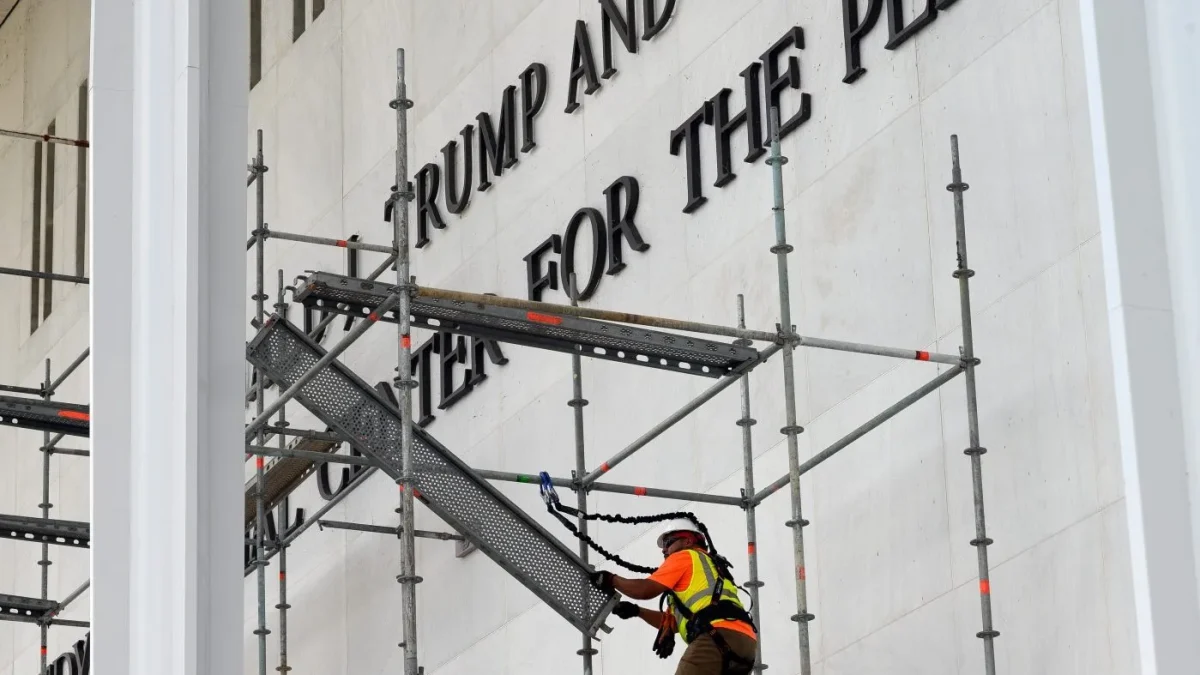
Table of Contents
Kennedy Center Pauses Trump Naming Plan as Federal Court Fight Intensifies
Provpnadvice.com – The iconic performing-arts complex on the Washington, D.C. waterfront will not receive a new presidential inscription before September 8, according to a status report filed late Tuesday. The temporary reprieve comes amid a protracted legal confrontation between a congressional appointee on the center’s board and the Trump-aligned leadership that took control of the institution last year.
The delay, while brief, underscores how deeply entangled the Kennedy Center has become in the broader struggle over presidential influence over federally chartered cultural institutions. What began as a dispute over lettering on a marble facade has evolved into a multi-front judicial battle touching questions of congressional intent, executive authority over nonprofit boards, and the limits of a sitting president’s power to reshape national landmarks.
The Inscription at the Center of the Storm
Last week, the center’s board cast a vote to affix President Donald J. Trump’s name to the building’s exterior once again — a move that came months after a federal judge had already ordered the lettering removed. The proposed facade text reads: “The John F. Kennedy Memorial Center for the Performing Arts Restored and Renovated by President Donald J. Trump.” In addition, the grounds surrounding the complex would be redesignated the “President Donald J. Trump Plaza.”
The center told the court in its Tuesday filing that it would not execute the plan before September 8. It had initially committed to a shorter pause, holding off until August 27, before extending the deadline by roughly two weeks. Notably, the institution declined to pledge that it would wait until Judge Christopher Cooper issues a ruling on the resolution’s legality, according to attorneys representing the plaintiff.
Beatty’s Legal Campaign
Rep. Joyce Beatty (D-Ohio), who sits on the Kennedy Center board ex officio by virtue of her congressional seat, has been the principal litigant challenging the administration’s overhaul of the institution. Listed as a plaintiff in the latest filing, Beatty sought a court order blocking the board’s newest naming resolution before the September 8 deadline lapses.
Her legal team argued that the board is attempting to circumvent an earlier ruling by U.S. District Judge Christopher Cooper, who in May barred the center from adding Trump’s name to what Congress established as a memorial to former President John F. Kennedy. Cooper’s May decision ordered the existing lettering removed and directed that references to the sitting president be scrubbed from the center’s website — a directive the institution complied with.
“The board is trying to get around an earlier ruling,” Beatty’s attorneys argued, asking the court to intervene before September 8.
How the Board Changed Hands
The current dispute is the latest chapter in a sweeping restructuring that began last year. After naming himself chair of the Kennedy Center board, Trump dismissed the existing membership en masse and installed loyalists in their place. That wholesale turnover transformed the institution’s governance almost overnight and set the stage for a series of decisions — from naming conventions to facility operations — that critics say exceed what a presidential chairmanship permits under the center’s congressional charter.
The Kennedy Center was created by an act of Congress in 1958 and opened in 1971 as a permanent tribute to President Kennedy. Its charter designates the building as a memorial, a distinction that Beatty’s attorneys say makes any attempt to overlay a different presidential name a direct conflict with legislative intent. The question of whether a sitting president can effectively rebrand a congressionally chartered memorial has not been squarely resolved by appellate courts, leaving district-level rulings like Cooper’s as the operative boundary.
A Second Front: The Two-Year Closure
The same filing details a parallel legal challenge concerning the center’s planned two-year shutdown for renovations. Last week, the board voted to close the main performance hall while continuing limited programming in other spaces across the campus. Beatty’s attorneys are contesting that vote and have petitioned the court to permit additional discovery into the process by which the closure decision was reached.
A two-year closure of the nation’s premier performing-arts venue would have sweeping implications for artists, ticket holders, and the surrounding D.C. economy. Questions about whether the renovation schedule was driven by genuine structural necessity or by a desire to control the building’s programming during the shutdown period remain unresolved, and the discovery request aims to illuminate the internal deliberations behind the vote.
Broader Implications
The Kennedy Center saga has become a test case for how far a president may reach into the governance of federally chartered cultural institutions. If Cooper’s rulings are ultimately upheld, they would establish that congressional memorials carry naming protections that survive changes in presidential leadership. If the board’s resolutions are permitted to proceed, the precedent could open the door to similar rebranding efforts at other congressionally established landmarks.
For now, the marble facade on the Potomac will remain unchanged through at least September 8. Whether that pause represents a genuine concession to judicial authority or merely a tactical delay before the next round of litigation remains to be seen. The court’s docket, however, suggests the fight is far from over.
Related Reading
Frequently Asked Questions
What is Kennedy Center delays restoring Trump s name?
Kennedy Center delays restoring Trump s name is the main topic of this guide. The article explains the context, practical details, and next steps readers should understand.
Why does Kennedy Center delays restoring Trump s name matter?
Kennedy Center delays restoring Trump s name matters because readers are looking for a useful answer, not just a short summary. Good content should match search intent and help them decide what to do next.