Trump blames Fed board, not Warsh, for rate hikes

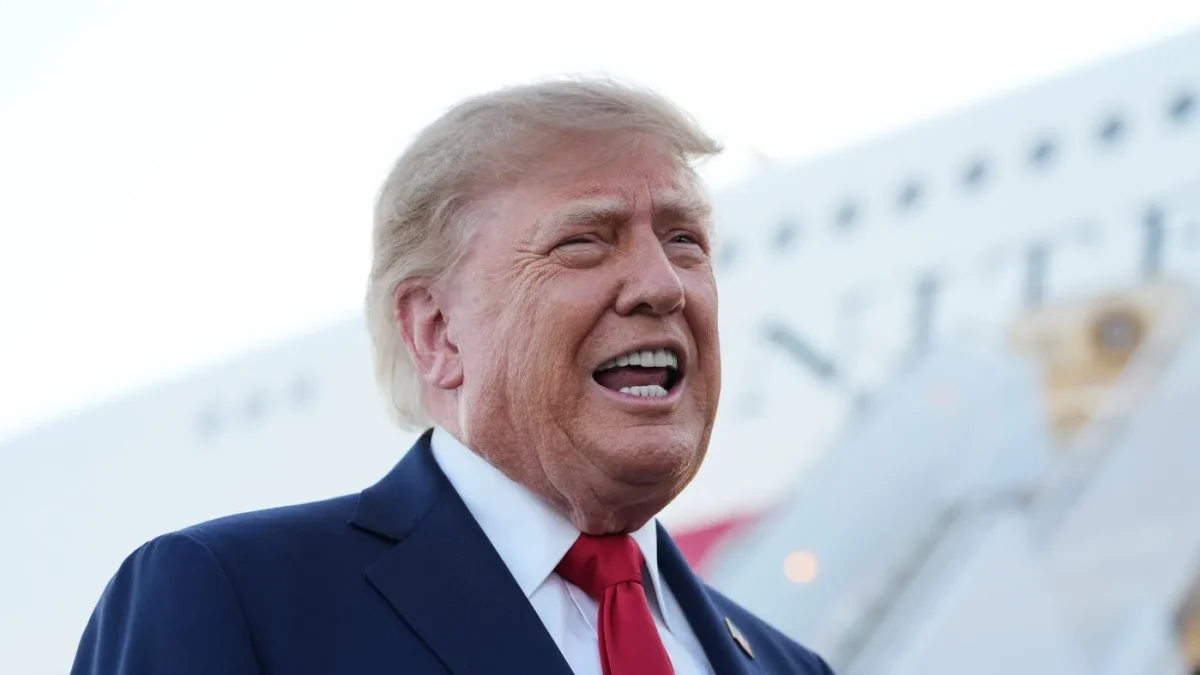
Table of Contents
Trump Criticizes Fed Board After Unanimous Rate Increase
Provpnadvice.com – President Trump directed his frustration over higher interest rates at the Federal Reserve’s board on Wednesday, while offering support for Federal Reserve Chair Kevin Warsh following the central bank’s first rate increase in three years.
The Federal Reserve raised its benchmark interest-rate range to 3.75 percent to 4 percent, a move approved unanimously by the board. The decision places renewed attention on borrowing costs for consumers, businesses and financial markets, particularly as the Fed continues to focus on returning inflation to its 2 percent target.
Speaking with reporters after arriving in North Carolina, Trump argued that Warsh faced a difficult political environment within the central bank. He said the chair was constrained by board members selected by previous decision-makers.
“I’m relying on Kevin, but he’s got a very tough board,” Trump told reporters after landing in North Carolina. “He’s got a board that was put there by a lot of other people.”
Trump said he had advised Warsh that casting a different vote would not have changed the result. He characterized the board as hostile and political, insisting that its members had made the wrong choice by backing an increase in rates.
“I told Kevin, I said, ‘You might as well vote with the board because it’s just not going to matter.’ The board is very hostile,” he continued. “They’re very political. They’re doing the wrong thing. They’re a bunch of politicians.”
Rates Remain a Central Economic Issue
Interest-rate decisions have broad effects because they influence the cost of credit throughout the economy. Higher rates can make mortgages, auto loans, credit-card balances and business financing more expensive, while also increasing returns on some savings products. The Fed uses its rate-setting authority as one of its principal tools for influencing inflation and overall economic activity.
Trump maintained that the latest level was too high, even as he described the country as performing strongly despite the increase. His comments reflected a long-running political argument over how aggressively the Federal Reserve should respond when inflation remains above its stated goal.
“It’s shame because it’s too high an interest rate,” Trump said. “Despite that, the country’s barreled through everything because we’re doing so well. But the interest rates are too high.”
The president had expressed his opposition earlier in a Truth Social post, contending that the United States should have an interest rate of 1 percent or lower because of the country’s credit standing.
“1 percent of less, because we are the Best Credit in the World – BY FAR.”
Trump also tied his argument about rates to trade deficits, saying that ending trade with countries where the United States has a deficit would generate at least $1.5 trillion annually. He argued that the country was carrying nearly every other nation and said that situation could not continue.
“If we stopped Trading with every country that we have a Deficit with, which is most of them, we would make, at least, 1.5 Trillion Dollars a year.”
“LOWER THE INTEREST RATES FOR THE UNITED STATES OF AMERICA, AND FAST!” Trump said.
Fed Cites Inflation Objective
Warsh said the unanimously approved decision was intended to help bring inflation back to the Federal Reserve’s 2 percent objective more quickly. That target is central to the Fed’s effort to maintain stable prices over time, while its broader mandate also includes supporting maximum employment.
Warsh said the decision will “support a timelier return” to the Fed’s 2 percent inflation target.
The unanimous vote gives the decision an added significance in the debate between the White House and the central bank. Trump’s remarks made clear that he does not view Warsh as the principal source of the higher-rate policy, instead placing responsibility on the wider board.
For households and businesses, the immediate question is how the new range will filter through to everyday borrowing and investment decisions. Changes in the federal funds rate do not automatically translate into identical increases for every loan, but they can influence lending rates across the economy. The effect can vary depending on the type of credit, the borrower’s financial profile and the decisions of individual lenders.
The clash also underscores the independence of the Federal Reserve, whose policymakers set monetary policy separately from the White House. Presidents can publicly argue for lower rates or criticize decisions, but the central bank’s board ultimately determines its own votes. With the latest increase approved by every member, the divide between Trump’s preferred approach and the Fed’s inflation-focused rationale is now more visible.
Related Reading
Frequently Asked Questions
What is Trump blames Fed board not Warsh?
Trump blames Fed board not Warsh is the main topic of this guide. The article explains the context, practical details, and next steps readers should understand.
Why does Trump blames Fed board not Warsh matter?
Trump blames Fed board not Warsh matters because readers are looking for a useful answer, not just a short summary. Good content should match search intent and help them decide what to do next.