Lutnick floats new way to add Trump’s name to Kennedy Center

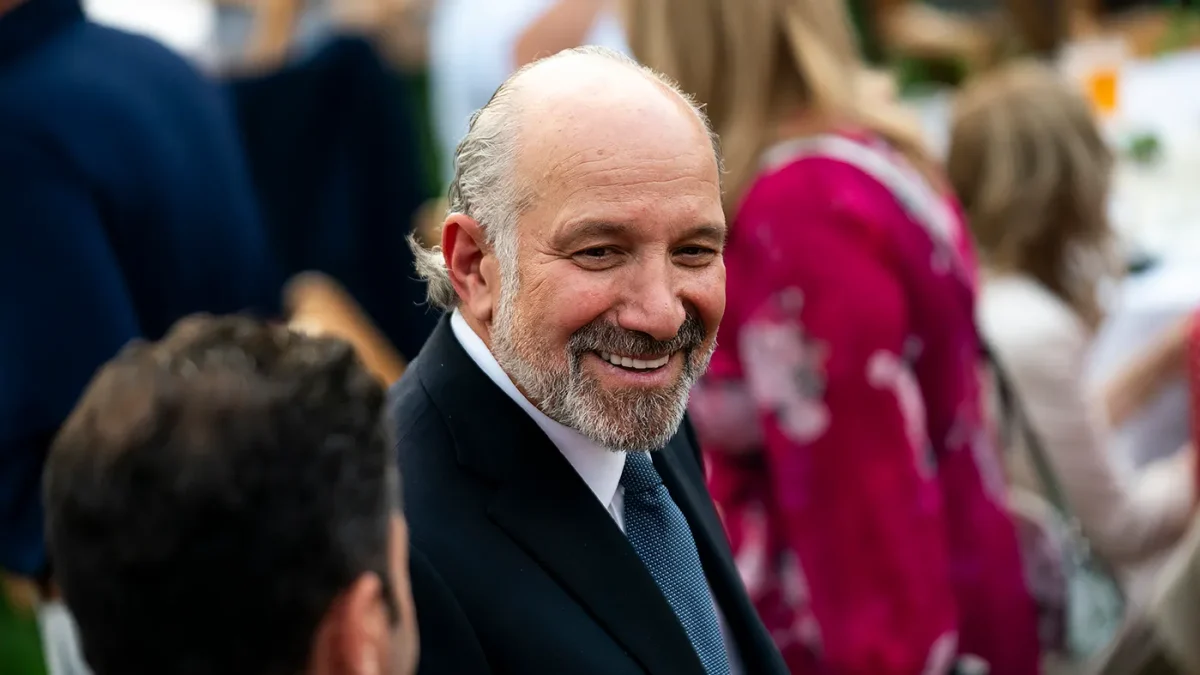
Table of Contents
A $257 Million Fix and a Name on the Marquee: Lutnick’s Kennedy Center Gambit
Provpnadvice.com – The John F. Kennedy Center for the Performing Arts has long occupied a singular place in American cultural life — a marble-and-glass landmark on the Potomac that has hosted presidential inaugurations, Broadway premieres, and decades of national artistic memory. Now that same landmark sits at the center of a fierce political and legal battle over who gets to put their name on its facade, how much money it will take to keep it standing, and whether Congress or a sitting president ultimately controls its identity.
Commerce Secretary Howard Lutnick, speaking to reporters after a Thursday hearing, laid out what he framed as a practical compromise: keep the Kennedy Center’s congressional name intact while appending a line beneath it that credits President Donald Trump for overseeing a sweeping renovation. The proposal, Lutnick explained, would read in full as a subtitle to the institution’s existing title.
“Underneath the name of the building, which will remain the John F. Kennedy Memorial Center for the Performing Arts, Renovated and Restored by President Donald J. Trump.”
The phrasing is deliberately subordinate — Trump’s name would appear as an attribution of restoration work rather than as a replacement of the institution’s identity. Lutnick characterized the move as a way to “acknowledge President Trump” for his administration’s role in the proposed construction project, without formally renaming the center.
The Stakes Behind the Stucco
The naming question is inseparable from the building’s physical condition. Earlier in the week, the Trump administration filed a court document arguing that, absent its recommended construction program, the Kennedy Center’s structural deterioration could force a full demolition. Lutnick did not soften that assessment on Thursday.
“The building is dangerous. People say, ‘oh, don’t overstate that it’s dangerous. Look, there are chunks of concrete falling off the ceiling in the garage.'”
He framed the renovation timeline as a matter of national interest rather than personal aggrandizement, arguing that the speed of execution distinguishes a public service from a vanity project.
“Trump’s ‘doing it for the American people. Because if it takes years to renovate this building and it will take two years to renovate it, he’s not doing it for himself.'”
The administration’s cost estimate for the work stands at $257 million. Lutnick also confirmed that the plan preserves REACH, a newer addition to the Kennedy Center campus, and that it walks back earlier, more radical proposals from within the administration that had contemplated closing the center entirely.
The Legal Wall: A Judge, a Board, and Congress
The naming proposal cannot proceed without clearing a judicial obstacle. In June, U.S. District Judge Christopher Cooper issued a ruling that barred a previous attempt to graft Trump’s name onto the center. His reasoning was straightforward and constitutional in character.
“Congress gave the Kennedy Center its name, and only Congress can change it.”
That ruling created a narrow corridor: the administration cannot simply rename the institution, but it may argue that a subtitle acknowledging restoration work falls outside the scope of a congressional naming act. Lutnick’s Thursday remarks appear designed to thread that needle — keeping the Kennedy name primary while inserting Trump’s as a secondary, descriptive line. Whether a federal judge will accept that distinction remains the central legal question.
DOJ’s Financial Argument
On Monday, Department of Justice attorneys pressed a parallel point in court filings: they contended that the absence of Trump’s name on the center would trigger a cascade of donor withdrawal, stalled fundraising, and halted structural rehabilitation.
“There will simply not be the expertise or funding necessary to rebuild and renovate this decimated structure.”
Lutnick amplified that argument on Thursday, asserting that no other member of the center’s board possesses the capacity to assemble the roughly $500 million in private and public contributions the renovation would require. He positioned Trump’s personal fundraising network as the singular mechanism capable of closing the gap between the $257 million government estimate and the full scope of work needed.
Opposition From Within the Board
Not every voice on the Kennedy Center’s governing body accepts the administration’s framing. Representative Joyce Beatty, a Democrat from Ohio who serves as an ex officio member of the center’s board, has mounted a sustained objection to Trump’s repeated attempts to attach his name to the institution. Beatty has specifically charged that the board — which Trump himself chairs — is engineering a workaround to circumvent Judge Cooper’s June ruling.
Her objection carries institutional weight: as a congressional appointee to the board, she represents the legislative branch’s interest in preserving the center’s congressionally designated identity. The tension she highlights is structural, not merely rhetorical. If the board’s chair simultaneously directs the renovation narrative and votes on naming decisions, questions of conflict of interest and due process become unavoidable.
Why It Matters Beyond the Marquee
The Kennedy Center dispute is, at its core, a test of how much latitude a sitting president holds over the branding of a congressionally chartered cultural institution. The administration’s position rests on two pillars: the building’s genuine structural peril and the claim that only presidential-level fundraising can save it. The opposition rests on a simpler premise — that Congress named the center, and Congress alone can alter that name, regardless of who chairs the board or who controls the renovation budget.
Until a federal judge rules on whether a subtitle constitutes a “change” of name under the statute, the question remains open. What is no longer open is the scale of the physical problem Lutnick described: concrete shedding from ceilings, a two-year renovation window, and a price tag that exceeds a quarter-billion dollars. Whether the solution arrives with a name on the marquee or without one, the building itself will not wait for the litigation to conclude.
Related Reading
Frequently Asked Questions
What is Lutnick floats new way to add Trump?
Lutnick floats new way to add Trump is the main topic of this guide. The article explains the context, practical details, and next steps readers should understand.
Why does Lutnick floats new way to add Trump matter?
Lutnick floats new way to add Trump matters because readers are looking for a useful answer, not just a short summary. Good content should match search intent and help them decide what to do next.