Carney’s ‘Maple MAGA’ moment sends the wrong message on defense

Carney’s ‘Maple MAGA’ Moment Sends the Wrong Message on Defense
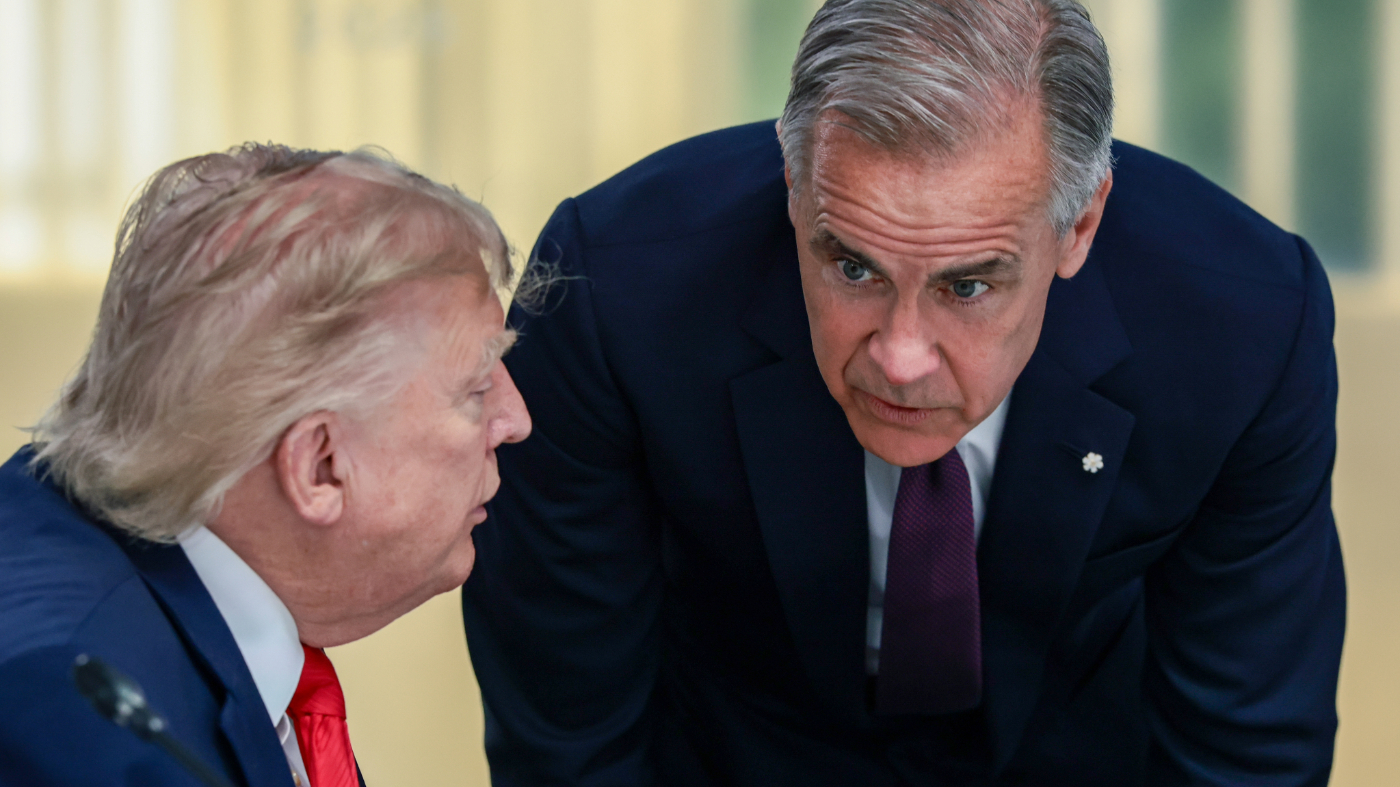
Provpnadvice.com – On May 28, Prime Minister Mark Carney addressed the Economic Club of New York, stating, “Canada Strong will help make America great again.” The remark, a clever repackaging of Donald Trump’s signature slogan, was designed to signal solidarity with the U.S. while subtly aligning Canada’s political stance with Trump’s vision. However, the line quickly became a point of contention, as analysts on both sides of the border interpreted it as a symbolic act that prioritized rhetoric over tangible defense cooperation. The phrase “Maple MAGA” — a nod to Canada’s maple leaf and Trump’s “Make America Great Again” campaign — captured the moment, but it also raised questions about the country’s strategic priorities.
The Saab Decision and a Missed Opportunity
What received less attention was Canada’s prior announcement on May 27, when the Carney administration selected Sweden’s Saab as the preferred supplier for its new Airborne Early Warning and Control (AEW&C) aircraft. This choice bypassed the American alternative, which had been widely expected to secure the contract. The AEW&C system, a critical component of NORAD’s operations, relies heavily on interoperability with U.S. defense infrastructure. By opting for Saab, Canada introduced uncertainty into a relationship that has been the backbone of North American security for decades.
Carney’s office had spent the preceding ten days balancing two competing narratives: one that emphasized Canada’s independence from U.S. influence and another that underscored its commitment to strategic partnership. Yet, the Saab decision appeared to contradict the latter. The timing of the announcement—just a day before Carney’s speech—highlighted a strategic misstep. Choosing a non-American supplier while simultaneously praising Washington’s leadership suggested a government grappling with internal and external pressures, rather than a cohesive defense policy.
The Pentagon’s Pause and Ottawa’s Inconsistency
Just ten days earlier, on May 18, the Pentagon had already signaled its concerns about Canada’s defense posture. Undersecretary of Defense for Policy Elbridge Colby announced a temporary halt to the Permanent Joint Board on Defense (PJBD), the oldest continuous defense consultation mechanism between the U.S. and Canada, established in 1940. The pause was framed as a strategic reassessment, but it carried the weight of a critique: Ottawa’s underinvestment in defense and the growing disconnect between its promises and actions.
Colby’s statement emphasized that the U.S. was not reacting to Carney’s speech or the Saab decision, but to a broader pattern of inconsistency. The Pentagon had already concluded that Canada’s performance in defense matters fell short of its commitments. Carney’s subsequent remarks, therefore, were less about salvaging the relationship and more about sharpening the narrative for domestic audiences. This approach exposed a government that was simultaneously trying to project strength and diplomacy, without reconciling the two objectives.
Political Logic and Strategic Contradictions
Carney’s election in 2021 was largely seen as a referendum on Canada’s willingness to align with Trump’s economic and political demands. Voters had rejected the idea of Canada becoming a subservient partner, and Carney’s campaign promised to challenge that status. Now, with the Saab decision and his speech, he was walking a tightrope: rewarding Trump for his influence while maintaining the appearance of Canadian autonomy.
Washington officials, however, are more concerned with procurement choices than political speeches. They scrutinize actions that shape military capabilities, not just words. The Carney administration’s decision to prioritize Saab over American firms reflected a deliberate strategy to gain political credit for resisting Trump’s tariffs and his characterization of Canada as a “51st state.” Yet, this move also risked undermining the very alliance that has sustained NORAD’s effectiveness for nearly seven decades.
Diversification vs. Contradiction
While diversifying defense suppliers is a prudent move, the Carney government’s approach has veered into contradiction. The rationale for choosing Saab is understandable: no country should rely entirely on a single supplier, especially one whose political mood can influence procurement decisions. However, the timing and context of the choice reveal a more complex issue. By selecting a European supplier just days before a speech that praised Washington, Canada sent conflicting signals to its allies and partners.
NORAD’s success depends on seamless integration between U.S. and Canadian systems. The AEW&C aircraft, for instance, must interface with American radar networks and command structures. When Ottawa shifts its procurement strategy, it forces the Pentagon to reassess assumptions that have held for generations. This is not just a policy decision—it’s a strategic gamble that could weaken the institutional trust underpinning North American defense cooperation.
Broader Implications and a Changing Strategic Landscape
The stakes of this decision have never been higher. Russian military activity in Ukraine and Chinese expansion into the Arctic have transformed the region into a focal point of global competition. NORAD’s modernization efforts, delayed for years, are now critical to maintaining a robust defense posture. In this context, a fragmented supplier network could hinder Canada’s ability to contribute meaningfully to shared security objectives.
Washington’s “Golden Dome” ambitions—referring to its desire to centralize control of defense systems—add another layer of complexity. A unified sensor architecture is essential for tracking threats in the Arctic and beyond, yet Ottawa’s preference for Saab suggests a retreat from this vision. The result is a defense relationship that is no longer defined by mutual trust but by strategic posturing. While Carney’s government may have secured short-term political gains, it has risked long-term collaboration with its closest ally.
Colby’s pause in the PJBD was not just a bureaucratic maneuver—it was a symbolic jab. By halting the forum, the Pentagon underscored its perception of Ottawa’s inconsistency, even as the Canadian government tried to reconcile its actions with its rhetoric. This dynamic is not new in either capital, but the current geopolitical climate has elevated the consequences of such missteps. As Russia and China intensify their influence, the need for a coherent, trust-based defense partnership has never been more urgent.
Carney’s “Maple MAGA” moment encapsulates the tension between political messaging and strategic reality. While his speech aimed to bolster Canada’s image as an independent actor, the Saab decision and the Pentagon’s response reveal a government that is still learning to balance domestic and international priorities. The challenge ahead is not just to choose suppliers wisely, but to ensure that every policy decision reinforces, rather than undermines, the enduring alliance that has protected North America for decades.
“Canada Strong will help make America great again.” — Mark Carney
As the Arctic becomes a new front in global competition and the U.S. seeks to consolidate its defense leadership, Canada’s choices will be scrutinized more than ever. The Carney administration’s ability to navigate this complex landscape will determine whether its rhetoric can translate into lasting strategic partnerships—or if it will be remembered as a government that prioritized optics over outcomes.