US pressure needs to be directed at Russia, not Ukraine

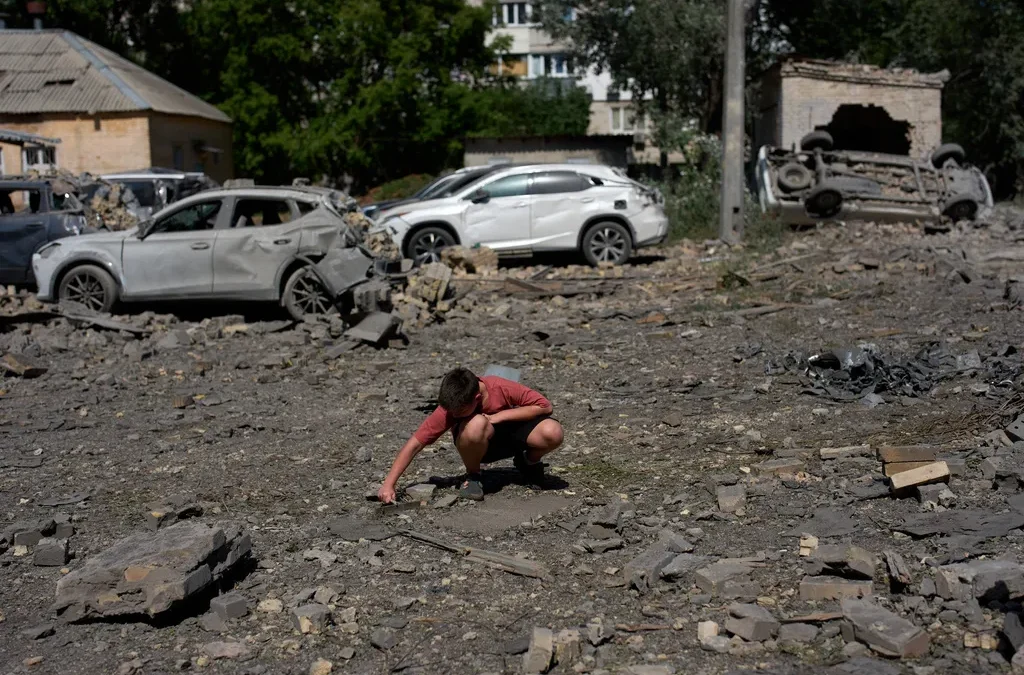
Table of Contents
Washington Must Aim Its Pressure at Moscow, Not Kyiv
Provpnadvice.com – Russian bombardment of Ukrainian cities has intensified once again, killing and wounding civilians in waves while Ukrainian forces answer with precision strikes aimed at Russian military installations and energy infrastructure. In this environment, the United States faces a straightforward question: which side does it stand with? The answer should be unambiguous — alongside Ukraine, against the aggressor that launched a full-scale invasion without justification.
American Companies Under Fire: A Silence That Needs Breaking
Over the past twelve months, Russian missiles and drones have struck facilities owned by American corporations operating inside Ukraine dozens of times. The list of affected companies reads like a roll call of major U.S. industry: Coca-Cola, Boeing, Mondelez, Cargill, and Philip Morris are all named among the targets. Despite repeated pledges to protect American commercial interests abroad, the administration has remained conspicuously quiet on these incidents.
Vice President JD Vance has directed his diplomatic energy toward cautioning Kyiv about how its own strikes might affect Western corporate operations in the region. That instinct is understandable, but it is incomplete. If American businesses are being hit, the administration owes a firm public message to Moscow as well — a clear signal that Washington will not tolerate repeated attacks on U.S. assets on Ukrainian soil.
The Novorossiysk Strike and a Phone Call That Drew Fire
When Ukrainian forces struck the Caspian Pipeline Consortium terminal at the Black Sea port of Novorossiysk, Vance placed a call to President Volodymyr Zelensky on July 31. The purpose, as reported, was to register concern that Ukraine was disrupting oil markets and hurting American companies by targeting tankers carrying crude piped from Kazakhstan to that terminal, where Chevron and ExxonMobil hold ownership stakes.
“Destabilizing oil markets and harming U.S. companies by targeting tankers carrying crude.”
Intervening when American firms come under threat is a legitimate function of government. The problem is consistency. If the White House feels compelled to dial Kyiv over a tanker strike, it should be dialing Moscow with equal — or greater — urgency over the dozens of direct hits on American facilities inside Ukraine. Russia is the party that started this war. The pressure should flow in that direction first.
Accountability for a War of Choice
Vladimir Putin must answer for the deaths and injuries sustained by hundreds of thousands of Ukrainians since the invasion began. He must also answer for the hundreds of billions of dollars in destruction inflicted on Ukraine’s economy — factories, hospitals, schools, and residential blocks reduced to rubble. The toll extends beyond Ukrainian borders: roughly 1.5 million Russian soldiers have been killed or wounded in a conflict that required no external provocation.
Ukrainian strikes on Russian targets are not aggression; they are retaliation for a war Putin initiated and has shown no willingness to conclude. Each successful hit on a Russian logistics hub, air-defense site, or refinery simultaneously degrades Moscow’s capacity to sustain its occupation.
Wildberries and the Domestic Cost of War
Ukrainian forces have recently struck facilities belonging to Wildberries, the Russian e-commerce giant often compared to Amazon, at locations scattered across the country. Ukrainian officials have stated that Wildberries provides logistical support to the Russian military. Beyond the strategic rationale, these strikes deliver to ordinary Russians a measure of what Ukrainian civilians have endured for years: the sound of explosions in neighborhoods that were supposed to be safe.
Odesa, Global Food Markets, and the Strait of Hormuz
Russia has been deliberately targeting Ukrainian ports in the Odesa region, through which Kyiv ships significant volumes of grain, fertilizer, and other agricultural exports. Before the 2022 invasion, Ukraine occupied a formidable position in global agriculture: seventh among wheat producers, sixth for corn, fourth for barley, and second for sunflower oil, according to U.S. Department of Agriculture data cited by analyst Mark Temnycky in Forbes. When Russia effectively shut down those Black Sea ports in 2022, the resulting trade disruption helped push global food prices to record highs.
Now, with continued attacks on Odesa infrastructure coinciding with the closure of the Strait of Hormuz, global commodity markets face compounded stress. If the administration genuinely worries about market turmoil, the logical response is to press Russia to stop bombing Ukrainian export terminals — not to lecture Ukraine about tanker strikes.
The Broader Strategy: Pressure, Aid, and Sanctions
U.S. pressure on Moscow should not be confined to the Black Sea theater. Together with European partners and other allies, Washington should pursue every available lever to compel Putin to halt his aggression and withdraw troops from occupied Ukrainian territory. That means delivering substantial and rapid military assistance to Ukraine, tightening the sanctions regime against Russia, and working toward a military outcome that ends the war on terms that deter future invasions.
The intelligence partnership remains a quiet but vital pillar of that effort. CIA Director John Ratcliffe has overseen continued provision of critical signals intelligence to Ukrainian command. In return, Ukrainian operators supply American analysts with granular battlefield insights into Russian capabilities, tactics, and vulnerabilities — a two-way flow that strengthens both sides.
The calculus is simple. A nation that invaded a neighbor without cause, struck American companies dozens of times, and disabled a major global grain exporter deserves the full weight of American diplomatic, economic, and military pressure. Kyiv, defending its own soil and its own people, deserves support, not second-guessing. Washington’s credibility — and its moral clarity — depend on getting that distinction right.
Related Reading
Frequently Asked Questions
What is US pressure needs to be directed?
US pressure needs to be directed is the main topic of this guide. The article explains the context, practical details, and next steps readers should understand.
Why does US pressure needs to be directed matter?
US pressure needs to be directed matters because readers are looking for a useful answer, not just a short summary. Good content should match search intent and help them decide what to do next.