The war in Cuba has already begun

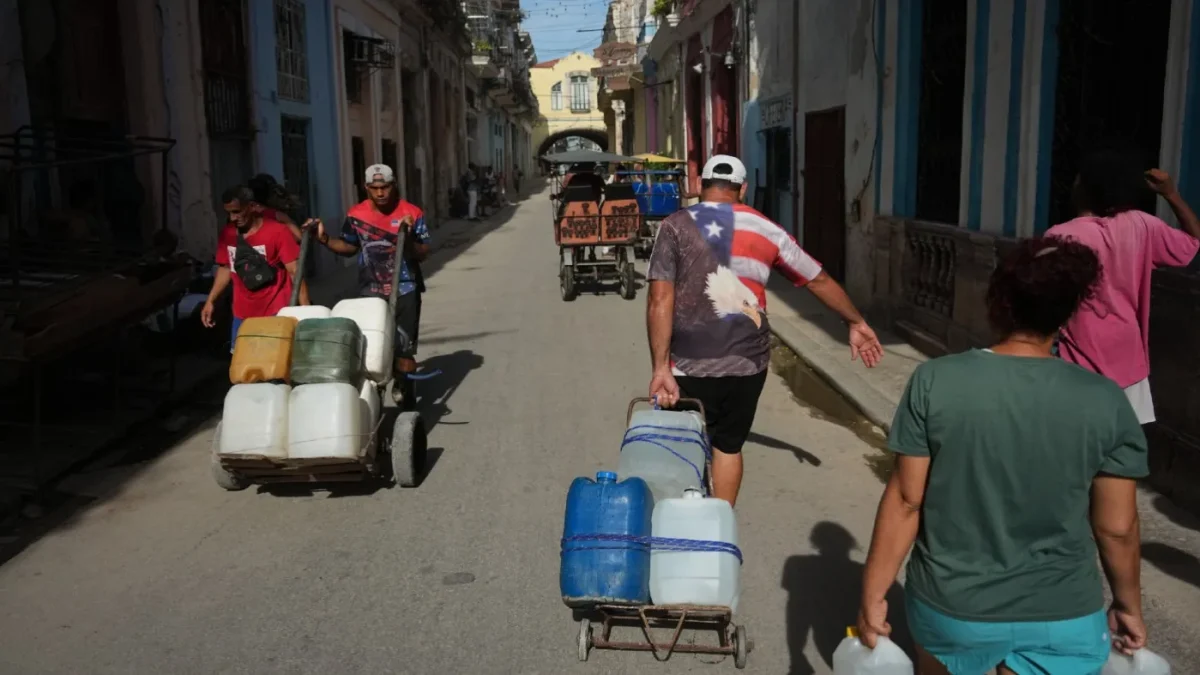
Table of Contents
Congress Faces Critical Moment on Cuba War Powers
Provpnadvice.com – For the more than 9 million residents of Cuba navigating through their sixth island-wide power outage this year, the evidence suggests that American hostility toward the Caribbean nation has already escalated beyond mere rhetoric. The Trump administration’s campaign against Havana extends far beyond diplomatic posturing, manifesting as a comprehensive economic assault that many observers argue constitutes an undeclared conflict.
Over the past seven months, Washington has implemented what amounts to a de facto naval blockade while simultaneously deploying sweeping secondary sanctions that target international corporations doing business with Cuba. Perhaps most significantly, the United States has threatened secondary tariffs against any nation willing to transport fuel to the island—a move that has sent shockwaves through global energy markets and strained relationships with traditional American allies.
The Human Cost of Economic Warfare
The consequences of these measures have been severe and widespread. Medical facilities across Cuba now operate on minimal power reserves, forcing doctors to make difficult decisions about patient care. Food supplies are deteriorating rapidly in ports and refrigeration units that cannot function reliably. Transportation networks have nearly ground to a complete standstill as fuel shortages ripple through the island’s infrastructure.
Most Cubans express growing pessimism about their immediate future, believing conditions will deteriorate further before any meaningful improvement becomes possible. This sentiment has created a sense of urgency that extends beyond domestic politics to encompass questions of American constitutional authority and humanitarian responsibility.
While political commentators continue debating whether Cuba represents President Trump’s next military target, the United States has already begun punishing the Cuban population through economic means. This economic siege affects ordinary citizens indiscriminately—inflicting damage comparable to, and in some cases exceeding, what an ill-advised military intervention might accomplish. Crucially, this economic warfare proceeds without the congressional debate that would be required for formal military action.
A Constitutional Question at Stake
The war powers resolution currently pending before the Senate represents perhaps the most significant opportunity for lawmakers to address this situation. Introduced by Senators Tim Kaine of Virginia, Adam Schiff of California, and Ruben Gallego of Arizona, the legislation seeks to restrain what its proponents describe as reckless regime change ambitions while clearing a path toward genuine diplomatic engagement.
This proposal mirrors a similar measure that narrowly failed in late April, suggesting that congressional interest in reasserting constitutional authority over foreign policy remains strong. The resolution would serve as a commonsense mechanism to prevent further military adventurism—particularly one that might occur right off American shores rather than in distant theaters of conflict.
The political context surrounding this vote carries additional significance. Democratic leadership has reportedly been hesitant to advance a concurrent House initiative designed to protect vulnerable Florida representatives ahead of midterm elections. This hesitation may mean that the Senate vote represents one of the final opportunities for Congress to reclaim its constitutional prerogatives regarding hemispheric affairs before political dynamics shift permanently.
Questioning the Case for Military Action
Administration officials have recently employed what critics describe as disingenuous, inflated, and outdated arguments to build public support for potential military intervention. Secretary of State Marco Rubio has made allegations that Cuba presents an extraordinary and imminent threat to American national security—claims that follow closely on the heels of numerous anonymous intelligence leaks and opaque reports.
These reports have covered a wide range of topics, from Russian and Chinese intelligence installations on the island to Iranian drone acquisitions and Cuba’s alleged sponsorship of international terrorism. Additionally, the State Department released a heavily criticized publication detailing Cuba’s purported influence operations within the United States.
Meanwhile, American military preparations have intensified. Reconnaissance flights have increased around Cuban airspace, scores of new intelligence operatives have been dispatched to the island, and contingency plans have been developed to deploy the 101st Airborne Division if necessary. A criminal indictment has also been issued against former president Raúl Castro, further signaling Washington’s hardening stance.
However, Cuba’s intelligence capabilities, while certainly notable, do not match the superpower characterization offered by Secretary Rubio. Over six decades, the island has failed to persuade successive American administrations to abandon the Cold War-era embargo. More recently, during the past six months alone, Cuba has not convinced even a single ally to risk 30 percent U.S. tariffs by exporting much-needed fuel to the island.
Public Opinion and Strategic Considerations
The American public’s response to potential military engagement in Iran has demonstrated clear reluctance toward another costly, dangerous, and unpopular nation-building endeavor. Such a project would not only place American servicemembers at risk but could also trigger a major refugee crisis just 90 miles from Florida’s coastline. Furthermore, military action might harden Cuba’s siege mentality and reverse bilateral relations to conditions not seen since the early twentieth century.
While Cuba has certainly attempted to cultivate sympathizers within American politics, academia, and civil society, alleged foreign influence activities do not automatically justify unauthorized military operations against sovereign nations. Many observers view these allegations as a flimsy pretext for another war of choice—one that would serve political interests more than strategic necessities.
As conditions on the ground in Cuba grow increasingly untenable, the Cuban people deserve and want meaningful change that politicians on both sides of the Florida Straits have denied them for far too long. Unauthorized American military action, regardless of how targeted or limited, would only postpone that transformation while simultaneously trampling over constitutional principles. For strategic, legal, and humanitarian reasons, such action must be prevented.
Related Reading
Frequently Asked Questions
What is The war in Cuba has already?
The war in Cuba has already is the main topic of this guide. The article explains the context, practical details, and next steps readers should understand.
Why does The war in Cuba has already matter?
The war in Cuba has already matters because readers are looking for a useful answer, not just a short summary. Good content should match search intent and help them decide what to do next.