America’s founding documents are scattered in London. Let’s recover them.

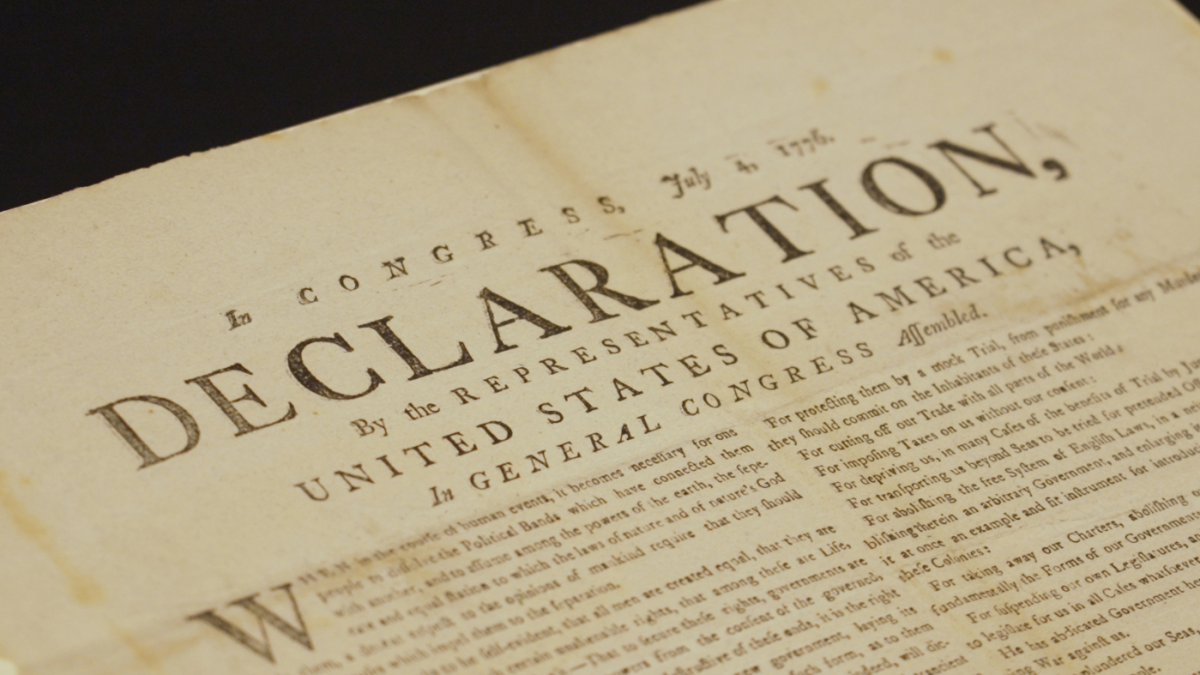
Table of Contents
Four Original Declarations of Independence Rest in Britain—It Is Time to Bring Them Home
Provpnadvice.com – When James Finney-Conlon stood before the British National Archives twelve years ago, a guide presented him with an extraordinary artifact: an original copy of the Declaration of Independence dated July 4, 1776. The docent simply asked whether he wished to hold a tangible piece of American history in his hands. At that moment, Finney-Conlon was participating in a private tour as part of his policy fellowship with the British House of Lords, a position that gave him unique access to documents often hidden from public view.
What the guide omitted—and what remains largely unknown to most Americans—is that the United Kingdom quietly maintains custody of four original copies of the nation’s founding document. Three of these precious manuscripts were removed from American soil without proper consent, leaving them scattered across the Atlantic for centuries.
The Four Original Copies
The British government currently possesses four distinct 1776 copies of the Declaration. Three are classified as Dunlap Broadsides Copies, while the fourth carries the designation of Exeter Print. These documents represent some of the earliest printed versions of the declaration, produced shortly after its adoption by the Continental Congress.
The Exeter Print’s journey to Britain began on December 24, 1776, when the Royal Navy intercepted it concealed within a bundle of letters and ship logs aboard the American privateer vessel Dalton. This discovery came to light only recently, adding a new chapter to the document’s remarkable history of movement and survival.
The Dunlap Broadsides copy that Finney-Conlon held during his visit represented something unique among the four: it was the sole copy to reach London through official British colonial administrative channels. Historical evidence suggests it arrived in the capital during the second week of August 1776. Upon its arrival, Lord Germain personally relayed the news to King George III, who would have received word that his former colonies had formally declared separation.
The remaining copies followed more turbulent paths. One was intercepted during transit, while another was seized through direct military action. To the British government, the declaration functioned as a lengthy “Dear John” letter—a formal notification of permanent separation. To Finney-Conlon, however, these documents represented a missing chapter in American history that deserved to be reunited with the nation they helped create.
A Case for Repatriation
Two hundred fifty years have passed since the American people declared independence from British rule and risked their lives to defend the principles of freedom and taxation with representation. During this quarter-millennium, the United States government has made no public announcement, issued no legal claim, and pursued no diplomatic effort to seek the return of these scattered documents.
Given that America recently celebrated the 250th anniversary of its founding, federal leaders and the U.S. State Department should formally request the return of the missing copies. The timing is particularly significant, as the anniversary provides both a symbolic and practical opportunity to address this historical oversight.
Currently, the United Kingdom displays one of the Dunlap Broadsides copies in an exhibit titled “The Path to American Independence.” Officials also plan to showcase the Exeter Print in the near future, allowing British visitors to view these important artifacts. Meanwhile, one of the Dunlap Broadsides copies sits on temporary loan to the United States for an exhibit at the Philadelphia Museum of the American Revolution.
This particular copy holds special significance. It was intercepted from Jonas Phillips, a prominent merchant and military officer during the Revolutionary War. Notably, the document arrived attached to a letter written in Yiddish, providing additional evidence of the diverse networks through which information traveled during this pivotal period in history.
Historical Context and Future Possibilities
The Dunlap Broadsides were printed on July 4, 1776, by John Dunlap, the official printer of the Continental Congress. Only approximately two hundred copies were produced, making each surviving example increasingly valuable. Many were distributed to colonial assemblies, military commanders, and foreign dignitaries, while others found their way into private collections or were captured during the war.
The British National Archives, located at Kew near London, has maintained these documents for generations without formal claim of ownership or clear documentation of how they arrived in British custody. This ambiguity creates an opportunity for diplomatic engagement that could strengthen Anglo-American relations while honoring American heritage.
Repatriation efforts for cultural artifacts have gained momentum in recent decades, with numerous countries successfully negotiating the return of historical items. The Declaration of Independence copies present a compelling case, given their central role in American identity and the relatively straightforward question of their rightful home.
Finney-Conlon, a public policy professional and writer based in Los Angeles, has advocated for this cause through his research and public commentary. His personal experience holding one of the original documents underscores the emotional connection that Americans feel toward these scattered pieces of their founding story.
As the United States continues to reflect on its 250-year journey, the question remains whether these documents deserve to return to American soil. The answer may lie not only in historical accuracy but also in the symbolic power of bringing home the words that first declared a nation’s independence from the world’s most powerful empire.
Related Reading
Frequently Asked Questions
What is America s founding documents are scattered?
America s founding documents are scattered is the main topic of this guide. The article explains the context, practical details, and next steps readers should understand.
Why does America s founding documents are scattered matter?
America s founding documents are scattered matters because readers are looking for a useful answer, not just a short summary. Good content should match search intent and help them decide what to do next.