Mexico’s mezcal boom is under threat from organized crime

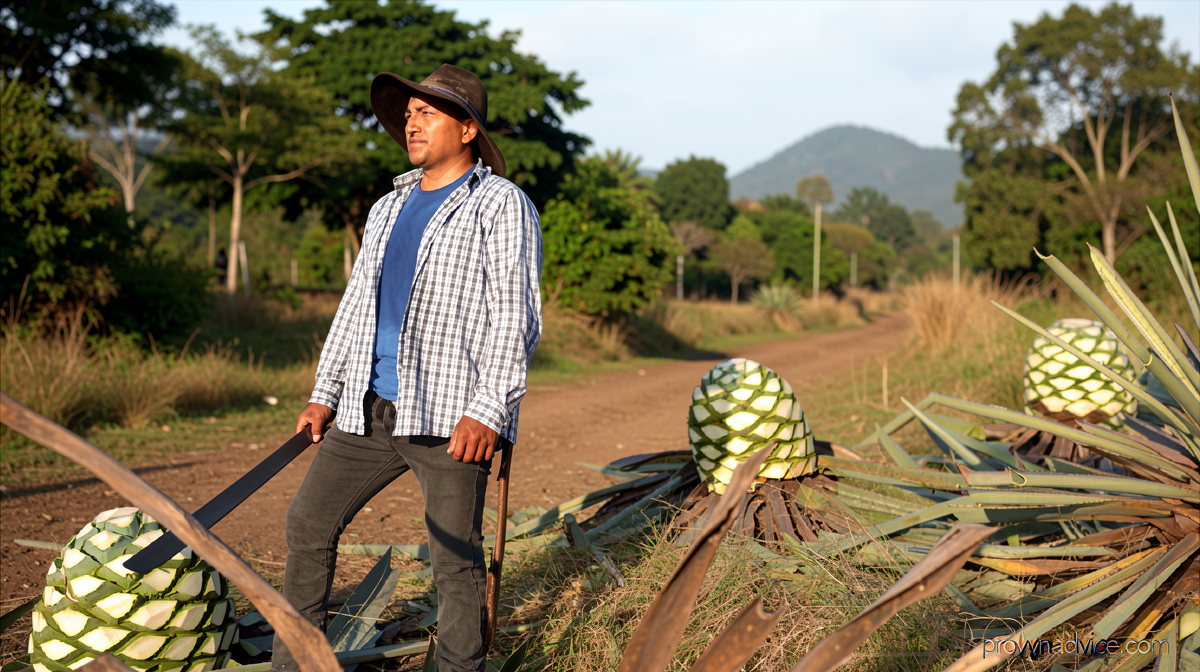
Table of Contents
Mezcal’s Golden Age Faces a Highway Gauntlet of Armed Robbery
Provpnadvice.com – The scent of charred agave drifting from stone-lined pits in the highlands of southern Mexico has become, in recent years, a marker of economic aspiration. Yet the journey that each bottle of mezcal undertakes from those isolated mountain workshops to international markets now threads through some of the most dangerous stretches of highway in the Western Hemisphere. Organized crime syndicates have turned the corridors linking Oaxaca’s rural producers to the northern border into lucrative hunting grounds, and the industry’s rapid expansion has made it an increasingly attractive target.
In 2025, Mexican producers shipped out roughly 7.7 million bottles of mezcal — a figure that dwarfs the output recorded a decade earlier in 2015. The spirit’s global market is projected to surpass the one-billion-dollar threshold by the early 2030s, and American consumers have driven much of that surge. An average of 20,000 trucks crossed from Mexico into the United States during 2025, many of them loaded with agave-based spirits bound for U.S. shelves.
From Stone Oven to Cargo Truck
Unlike tequila, which has largely migrated to large-scale industrial facilities, the overwhelming majority of mezcal still emerges from small, family-run distilleries scattered across Oaxaca’s valleys and ridges. Production relies on low-technology methods: underground earthen ovens heated with wood, and milling stones once pulled by donkeys. The state of Oaxaca accounts for approximately 90 percent of Mexico’s total mezcal output, making the region’s rural economy disproportionately dependent on this single product.
That dependence is acute because Oaxaca ranks as Mexico’s third-poorest state. In 2025, the state attracted only about $5 million in foreign direct investment, a fraction of the record $41 billion that Mexico as a whole drew in that year. For communities in towns like Santiago Matatlan, where a visitor can watch the distillation process firsthand, mezcal represents one of the few viable pathways out of entrenched poverty.
A Highway Corridor Under Siege
Once a batch of bottles leaves the mountain workshop, it must travel more than 750 miles northward to reach the U.S. border. Mexico currently holds the distinction of being the world’s highest-risk country for violent, in-transit cargo truck hijacking. The routes threading from Oaxaca through central Mexico have become the nation’s most perilous logistics arteries.
Specific incidents illustrate the scale of the problem:
In September 2024, an armed crew intercepted a truck loaded with Monte Alban mezcal on the Mexico-Tuxpan highway near the town of Zempoala. In July 2025, a shipment of 9,000 bottles of premium agave spirits — valued at an estimated $1.3 million — was seized in the state of Guanajuato. Just days later, on July 6, hijackers in Hidalgo took a truck carrying 64 tons of bottled alcohol.
These are not isolated events. They reflect a broader pattern in which organized crime groups specializing in cargo theft deliberately seek out food products and beverages that can be quickly resold through informal street markets. The ease of liquidation makes agave spirits particularly appealing targets.
Puebla: The Worst Hotspot
Private-sector logistics analysts now identify the state of Puebla — a critical crossing point for U.S.-bound mezcal leaving Oaxaca — as the single worst hotspot for cargo truck hijacking in the country. Local authorities and residents in small Puebla towns are alleged to cooperate with criminal networks, concealing stolen trucks and merchandise while obstructing police investigations. A comparable pattern of institutional collusion reportedly pervades other states in the ring around Mexico City.
Data compiled in the Mexico Cargo Truck Hijacking Data Portal, maintained by Reliance Partners, indicates that during the first six months of 2026, more than 79 percent of all recorded hijackings occurred in just two states: Mexico State and Puebla, both situated north of Oaxaca in central Mexico. Together, these figures underscore how concentrated the threat has become along the mezcal supply corridor.
Political Dimensions and Institutional Response
The political landscape complicates any straightforward crackdown. President Claudia Sheinbaum, whose administration began in late 2024, has overseen a measurable decline in overall violence across Mexico. However, critics note that her government has moved slowly to examine allegations that members of her own Morena party maintain ties with criminal organizations. The governor of Oaxaca, Soloman Jara Cruz, along with the governors of neighboring Puebla and Mexico State, all belong to Morena — the same party that leads the federal government.
Breaking apart the networks that prey on highway cargo may therefore require not only stronger policing but also scrutiny of elected officials who could be shielding operators. Until that scrutiny materializes, producers in remote mountain towns remain exposed to a risk they did not create and cannot easily insure against.
The scale of daily losses is staggering: goods worth nearly $1 million vanish to cargo robbery in Mexico every single day, and estimates suggest close to 50 trucks are hijacked daily across the country. In June, the Mexican Association of Transport Organizations organized a massive protest demanding federal attention to highway robbery on Mexican roadways.
Mezcal’s rise from a handful of rural stills to a billion-dollar global category is one of Mexico’s most compelling economic stories of the decade. Its continuation depends, in large part, on whether the highways between the agave fields and the border can be made safe enough for the trucks to keep rolling.
For the families in Oaxaca who still tend wood fires and turn milling stones by hand, the question is no longer whether the world wants their product. It is whether the product can survive the journey.
Related Reading
Frequently Asked Questions
What is Mexico s mezcal boom is under?
Mexico s mezcal boom is under is the main topic of this guide. The article explains the context, practical details, and next steps readers should understand.
Why does Mexico s mezcal boom is under matter?
Mexico s mezcal boom is under matters because readers are looking for a useful answer, not just a short summary. Good content should match search intent and help them decide what to do next.