Blue books won’t save our children from AI


Blue Books Won’t Save Our Children from AI
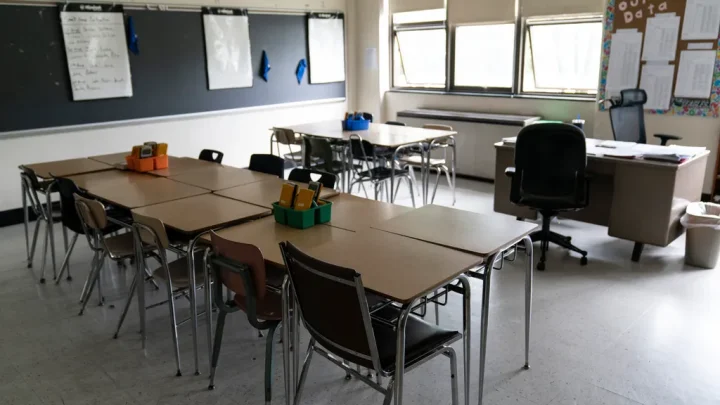
Provpnadvice.com – When my daughters’ teachers transitioned to using only in-class handwritten exams, I initially hailed it as a clever tactic to safeguard education against AI. The shift from digital assessments to traditional blue books seemed like a deliberate effort to preserve the human element in learning. Yet, as I reflect on this change, I’m struck by the growing realization that these paper-based tests may not be enough to shield students from the rapid advancements shaping their academic future.
The Nostalgia of Blue Books
While I appreciate the nostalgic appeal of blue books, their relevance in today’s AI-driven landscape is questionable. These notebooks, once a staple of classroom assessments, create a rare moment where students must rely on their own cognitive abilities without external assistance. However, the question remains: Is this a vital safeguard or a throwback to a bygone era? The answer hinges on how we define the role of public education in an age where knowledge and intelligence are now accessible at our fingertips.
Blue books can reveal whether students are capable of independent thought, but they fail to address a more pressing concern. What is the ultimate goal of public education when every child carries an encyclopedic repository of information in their pocket? This dilemma is at the heart of a national conversation that has gained urgency in the absence of federal oversight. The lack of clear guidelines on AI regulation has left educators and parents to navigate this new reality without a unified strategy.
The 2028 AI Election and Federal Leadership
The 2028 presidential campaign will mark the first time AI becomes a central issue in a national election. It may also be the last opportunity to implement human-centered federal regulations before the technology’s influence becomes irreversible. This moment demands decisive action to protect children, maintain human autonomy, and ensure that AI serves as a tool rather than a dominant force in shaping society.
Such regulations would require reauthorizing the Every Student Succeeds Act (ESSA), which ironically now faces scrutiny for its outdated framework. A modernized version of this law should not only focus on core subjects like reading, math, and science but also emphasize skills like critical thinking, civic engagement, and the ability to collaborate with and challenge intelligent machines. The goal is to reimagine education for an AI-centric world, ensuring students are equipped to thrive beyond mere data recall.
Curriculum and the Evolution of Standards
When I cast my vote in favor of the Common Core Standards in 2010, I believed they would better prepare my daughters for the digital age. At the time, AI was still a concept in science fiction, and the focus was on moving education beyond rote memorization. But now, with AI becoming an integral part of daily life, those standards feel like relics of a previous era.
“Gen Z’s addiction to TikTok and Instagram wasn’t inevitable. It was the result of regulatory laissez faire policymakers who allowed the brains and attention spans of our children to be used as corporate petri dishes.”
As a parent, I’ve witnessed firsthand the insidious effects of social media on young minds, but the consequences of inaction on AI are far more severe. The erosion of attention spans and the prioritization of speed over depth have already transformed how students engage with information. Without intervention, the next generation may graduate into a world where critical thinking is secondary to algorithmic efficiency.
Political Stagnation in the AI Era
Both political parties have struggled to articulate a vision for public education in the context of AI. Republicans have emphasized dismantling the U.S. Department of Education, advocating for a shift toward private school choice. Democrats, meanwhile, have largely defended a bureaucratic system that has yielded stagnant student outcomes over the past decade. This lack of consensus mirrors the broader debate over AI’s role in society, where neither side has yet provided a compelling roadmap for the future.
Historically, education policy has seen decades of bipartisan cooperation, from the Clinton administration’s focus on technology integration to Obama’s support for Common Core. These efforts laid the groundwork for a modern, adaptable system. Yet, today’s political climate is marked by division, with each party prioritizing ideological goals over practical solutions. The result is a system ill-prepared to meet the challenges of an AI-driven economy.
Reimagining Education for Tomorrow
Public education must evolve to meet the demands of a world where AI is no longer a distant possibility but an everyday reality. The shift from blue books to digital tools is inevitable, but the question is how to harness these technologies without compromising the core values of learning. Schools need to teach students not only how to produce answers but also how to formulate insightful questions, a skill increasingly vital in an era of automated information retrieval.
For educators, this means redefining what it means to be “educated.” If the goal is to prepare students for a future where machines handle most tasks, then the emphasis must shift to creativity, ethics, and human connection. AI may streamline processes, but it cannot replace the ability to think critically, empathize with others, or challenge the status quo. These are the qualities that will distinguish successful individuals in an automated world.
The path forward requires a renewed commitment to federal leadership. Only a national framework can address the scale of AI’s impact on education, ensuring that policies align with the needs of students and society. Without such action, the U.S. risks falling behind in a global race to adapt to AI’s transformative power. The next presidential election will be a pivotal moment in this journey, offering a chance to reclaim education’s role as a cornerstone of human development.
As we stand at this crossroads, the urgency to act is clear. The tools of the future are already here, and their influence on education will only grow. By rethinking how we measure learning, how we fund schools, and how we protect students from the pitfalls of unchecked AI, we can ensure that public education remains a force for empowerment rather than a system of passive consumption. The time to reimagine the role of education in an AI era is now—and the stakes could not be higher.