Mullin says ICE ‘only’ deployed at midterm polls if ‘threat’ arises

Mullin Claims ICE Deployment at Midterm Polls Depends on ‘Threat’
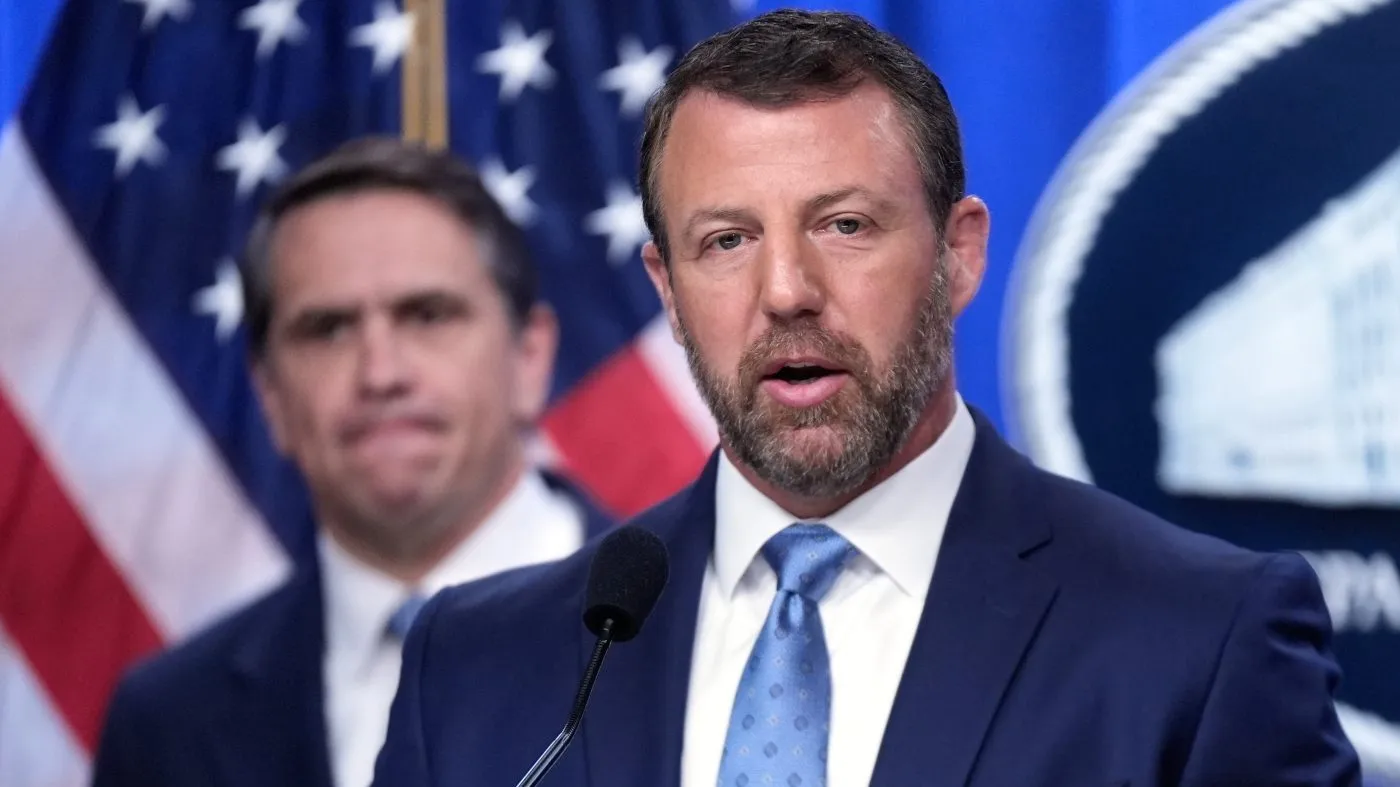
Provpnadvice.com – In a recent development, Department of Homeland Security (DHS) Secretary Markwayne Mullin emphasized that Immigration and Customs Enforcement (ICE) agents would be sent to polling stations during the midterm elections only if a “threat” is identified. This statement came in response to a question posed by Kasie Hunt, a political analyst, during an interview on CNN’s “State of the Union.” Mullin’s remarks have sparked renewed debate over the role of federal immigration authorities in election security.
Context of ICE’s Election Role
The controversy surrounding ICE’s potential involvement in polling places stems from broader concerns about the agency’s activities under President Trump’s administration. Critics argue that ICE’s presence at the polls could deter eligible voters, particularly those from immigrant communities, from participating in the democratic process. Mullin, however, defended the agency’s role, asserting that deployment would be contingent on a genuine security threat.
When Hunt asked if ICE would be at the polls, Mullin clarified that his stance was not to rule out the possibility but to specify the conditions under which it would occur. “What I said is that we would only be there if a threat arises,” he explained, highlighting the importance of situational judgment. This response aims to distinguish ICE’s role in voter enforcement from its primary mission of immigration control.
Clarifying ICE’s Dual Function
“No, keep in mind, why would ICE be there? Because only people that should be voting there is American citizens. There shouldn’t be any immigration enforcement,” Mullin stated, underscoring the focus on ensuring voting rights for U.S. citizens.
Mullin further elaborated that ICE agents are not solely tasked with immigration duties. He pointed to their additional training in special response teams (SRT), which equips them to handle emergencies swiftly. “Our ICE agents are more than just immigration customs enforcement,” he said, emphasizing their readiness to respond to unexpected situations at polling sites.
During the interview, Mullin also stressed that ICE would not act unilaterally. “The only reason why we would be there is not for voter identification. It’d be because law enforcement is needed, and the local law enforcement would be part of that conversation, so we wouldn’t show up on our own,” he added. This approach seeks to integrate federal efforts with state and local authorities, ensuring a coordinated response.
Historical Precedents and Political Context
The discussion around ICE’s role in elections is not new. In February, former White House strategist Steve Bannon suggested that ICE officers should “surround the polls” come November, as part of a strategy to prevent what he called “election theft.” On his “War Room” podcast, Bannon expressed confidence in deploying ICE to safeguard the electoral process, framing it as a necessary measure against voter fraud.
While Bannon’s comments reflect a more aggressive stance, Mullin’s response appears to temper expectations. His emphasis on the need for a “threat” aligns with a more measured approach, which may aim to address public fears about ICE’s influence on voter behavior. This distinction highlights the differing perspectives within the administration on the balance between security and accessibility in the voting process.
The Minneapolis incident, where federal immigration agents killed two U.S. citizens earlier this year, has amplified these concerns. The tragedy drew national attention and fueled accusations that ICE’s operations could target American citizens, particularly in politically charged environments. Mullin’s recent remarks may be an attempt to reassure the public that ICE’s presence at polling places would not mirror the aggressive tactics seen in that case.
Implications for Midterm Elections
As the midterm elections approach, the potential deployment of ICE agents raises questions about their impact on voter participation. While Mullin argues that such action would be justified by a security threat, opponents contend that even the perception of ICE involvement could discourage voters. This tension between security and access underscores the complexity of integrating immigration enforcement with election logistics.
Experts note that the decision to deploy ICE at polling stations may depend on political dynamics. If candidates or parties perceive a threat to the election’s integrity—whether from voter fraud, protests, or other factors—ICE could be mobilized to support law enforcement efforts. However, the agency’s history of controversial actions, including the Minneapolis incident, means any deployment will be closely scrutinized by both voters and critics.
Mullin’s comments also highlight the broader role of the Department of Homeland Security in domestic affairs. By positioning ICE as a versatile force capable of handling emergencies, he aims to reinforce the agency’s readiness to adapt to various challenges. Yet, the question remains: how will this strategy affect the fairness and inclusivity of the election process?
As discussions continue, the public is left to interpret Mullin’s statements in the context of ongoing debates about immigration policy and its intersection with democracy. The midterm elections represent a critical moment for both the administration and the voters, with ICE’s potential involvement serving as a focal point for discussions on federal authority and civic engagement.