US ambassador to India causes diplomatic firestorm with Kashmir comment

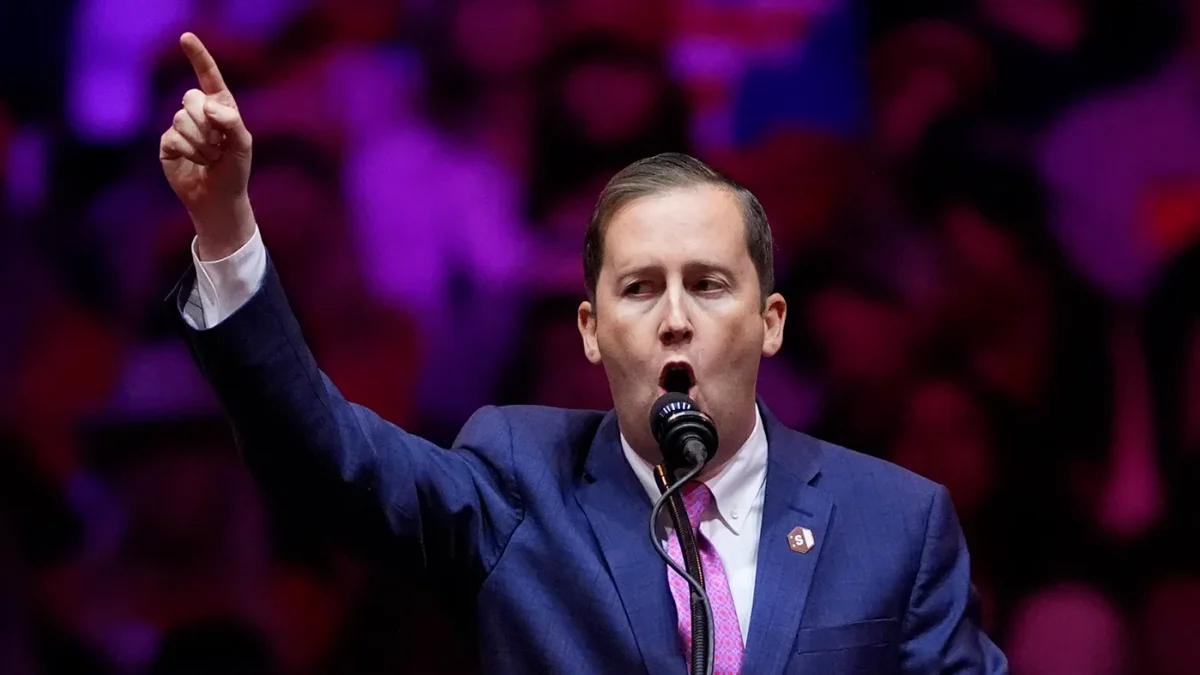
Table of Contents
Ambassador’s Kashmir Remark Triggers Formal Pakistani Protest
Provpnadvice.com – The already fragile diplomatic equilibrium between Washington and Islamabad took a sharp turn this week when Pakistan summoned its top American diplomat to the capital and delivered a formal written protest over remarks made by the United States ambassador to India. Sergio Gor, who heads the American mission in New Delhi, told reporters in Srinagar that Jammu and Kashmir constitutes an “important part of India” — a characterization that Islamabad called factually wrong and diplomatically reckless.
The exchange quickly escalated from a routine press remark into a full-blown diplomatic incident, with Pakistan’s Foreign Ministry issuing a letter that used the language of categorical rejection rather than polite disagreement. The move was notable given that US-Pakistan relations had been on an upward trajectory in recent months, a shift attributed largely to President Trump’s intervention during the India-Pakistan military clash of May 2025 and his subsequent claim of credit for ending that hostilities.
The Remark Itself
Gor made the statement after meeting with Omar Abdullah, the chief minister of Indian-administered Jammu and Kashmir, in the city of Srinagar. Speaking to journalists following the sit-down, the ambassador framed his visit in explicitly territorial terms:
“Everybody here knows I’m the U.S. ambassador to India, and this is an important part of India. And so I’m here visiting for the first time. It is an incredibly beautiful place, and so I’m thrilled to be here, thrilled to see this place.”
He went on to describe the meeting as productive, saying:
“We just had a very good meeting, and we have some follow-ups that we hope to take back to Washington, back to Delhi. but I’m very warm, I’m very cordial, and we look forward to building this relationship forward.”
For a region that both nuclear-armed neighbors claim in full, the phrasing carried weight far beyond its apparent casualness. Kashmir has been the flashpoint of three full-scale wars between India and Pakistan since partition in 1947, and the most recent of those confrontations erupted only weeks before Gor’s visit, in May 2025. The United States has historically maintained a position of formal neutrality on the territorial question, encouraging the two sides to resolve their differences through bilateral channels rather than external adjudication.
Islamabad’s Formal Response
Pakistan’s reaction was swift and pointed. The Foreign Ministry summoned Natalie Baker, the U.S. Charge d’Affaires in Islamabad — the senior-most American diplomat stationed in the country — and handed her a letter that functioned as a formal diplomatic protest.
“Pakistan strongly condemned and categorically rejected the characterisation of Jammu and Kashmir as a ‘part of India,'”
the letter stated. It went further, asserting that the territory remains “an internationally recognised disputed territory, awaiting final disposition in accordance with the relevant UNSC resolutions and the aspirations of the Kashmiri people.” The note also charged that Gor’s words effectively “negated the long-standing and well-documented position of the United States” on the dispute — namely, that Washington should not take sides and should leave resolution to bilateral negotiation between New Delhi and Islamabad.
The letter struck a careful tone of appreciation mixed with firm correction. It acknowledged President Trump’s offer to mediate between the two South Asian powers in the aftermath of what Pakistan termed the Marka-e-Haq episode, while simultaneously urging that American public statements remain aligned with the disputed status of the region. In effect, Islamabad reminded both the ambassador and the president of the neutrality pledge Washington had maintained for decades.
New Delhi’s Side of the Conversation
On the Indian-administered side, Chief Minister Abdullah characterized the talks as forward-looking and practical. He said the discussion carried a “specific focus on what the U.S. can do with Jammu and Kashmir,” signaling an appetite for American engagement in post-conflict reconstruction, investment, or institutional development in the region.
“There are obviously certain legacy issues that over time we will be working to resolve, but we look forward to taking this conversation further,”
Abdullah added, suggesting that the bilateral agenda extends well beyond the immediate aftermath of the May fighting.
Broader Strategic Context
The incident lands at a moment of unusual complexity in Washington’s South Asia calculus. Pakistan has recently played a leading role in months-long multilateral negotiation efforts aimed at ending the U.S.-Iran conflict, giving Islamabad a degree of leverage and goodwill in American policy circles that it has not enjoyed in years. At the same time, New Delhi remains a cornerstone of the Indo-Pacific architecture that the Trump administration has prioritized. Balancing those two relationships — while avoiding the appearance of territorial endorsement toward either claimant — is precisely the tightrope that Gor’s Srinagar comments disrupted.
Whether the protest will produce a formal American correction, a quiet diplomatic footnote, or a longer-running friction point remains to be seen. What is clear is that a single sentence delivered to reporters outside a government building in Srinagar has reopened a question that three wars, dozens of United Nations resolutions, and decades of quiet American neutrality had kept, however imperfectly, off the front page of bilateral diplomacy.
Related Reading
Frequently Asked Questions
What is US ambassador to India causes diplomatic?
US ambassador to India causes diplomatic is the main topic of this guide. The article explains the context, practical details, and next steps readers should understand.
Why does US ambassador to India causes diplomatic matter?
US ambassador to India causes diplomatic matters because readers are looking for a useful answer, not just a short summary. Good content should match search intent and help them decide what to do next.