South Korea hoping for talks after Trump reduces joint military exercises

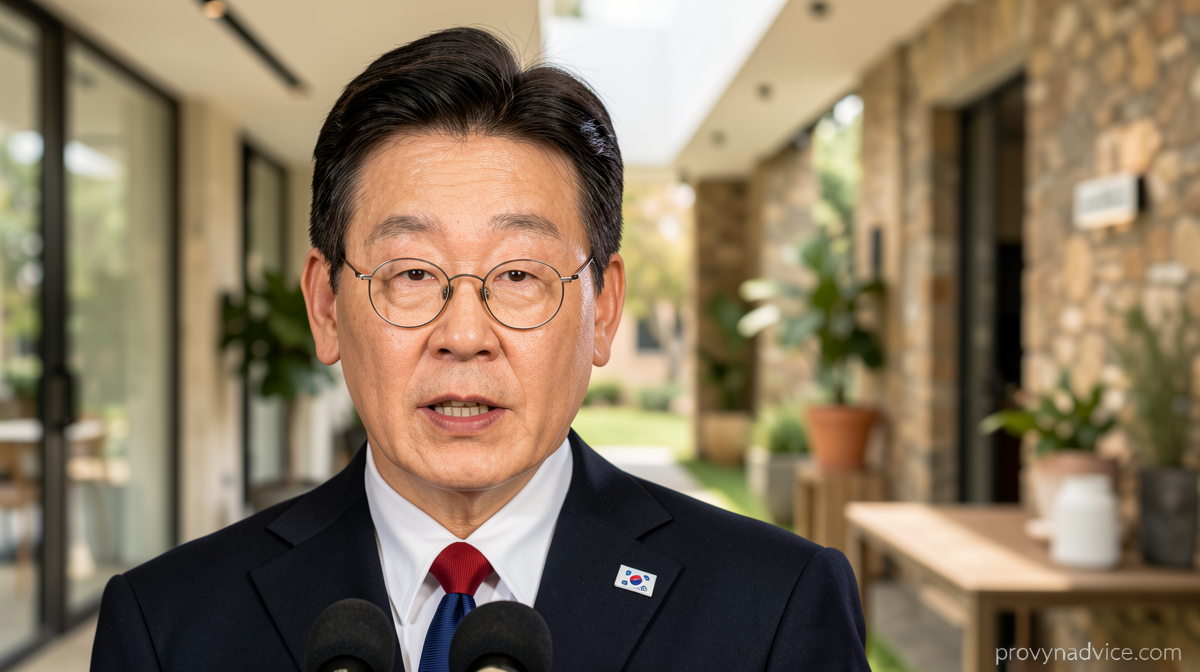
Table of Contents
Seoul Seeks Diplomatic Channel After Trump Orders Scale-Back of Joint Drills
Provpnadvice.com – The decision by President Donald Trump to trim American troop involvement in combined military exercises with South Korea has sent immediate diplomatic ripples across the Korean Peninsula. Announced on Sunday, the order to reduce U.S. participation in the annual Ulchi Freedom Shield drills prompted a swift response from Seoul’s presidential office, which framed the move as an opportunity to open a new dialogue track between Washington and Pyongyang.
The Blue House issued a statement expressing the hope that the personal rapport between the two leaders — Trump and North Korea’s Kim Jong Un — would translate into substantive negotiations between the two Koreas, ultimately advancing peace and stability on the peninsula. The language signaled that Seoul views the exercise reduction not as a weakening of the alliance but as a diplomatic opening to be exploited.
Trump’s Rationale: Cost, Tone, and Personal Chemistry
The president made his case in a Sunday afternoon social media post, arguing that the long-standing commitment to participate in joint drills with South Korea had become counterproductive. He characterized the exercises as expensive — with the United States shouldering much of the financial burden — and, more pointedly, as sending a hostile signal toward a neighbor that, in his assessment, has behaved respectfully throughout his time in office.
“Based on my very good relationship with Kim Jong Un, of North Korea, 1 am not happy with the fact that the United States has, long ago, agreed to participate in Joint Military Exercises with South Korea.”
“These exercises are not only costly, with much of these costs paid for by the United States of America (as usual!), but send a signal that is totally inappropriate and hostile, to a Country that, as long as Donald J. Trump has been President, has been unthreatening and respectful.”
In the same post, Trump also referenced Seoul’s decision not to intervene in the ongoing conflict in Iran, a point that underscores the broader recalibration of alliance dynamics now underway.
The Exercises Themselves: Ulchi Freedom Shield
The annual Ulchi Freedom Shield series kicked off on Monday and is scheduled to run through August 27. The drills emphasize modern warfare scenarios, including cyberattack response, integrated air-and-missile defense, and combined command-and-control operations. For decades, these exercises have served as the principal mechanism through which the U.S.-South Korea alliance tests its readiness to defend the peninsula against a North Korean invasion. Democratic members of South Korea’s National Assembly voiced concern over what they see as a premature withdrawal of American military engagement, arguing that the drills remain essential to deterrence even in periods of diplomatic thaw.
Seoul’s Diplomatic Posture: Pace-Setter, Not Passenger
South Korean officials told domestic media that the government is monitoring Trump’s social media messaging closely and will pursue every available diplomatic avenue. One official described Seoul’s role as that of a “pace-setter” operating in close coordination with Washington, suggesting the administration intends to shape the tempo of any North Korea talks rather than simply react to them.
Separately, Seoul confirmed it is “actively participating” in multilateral discussions aimed at restoring a ceasefire in Iran and safeguarding freedom of navigation through the Strait of Hormuz. That involvement places South Korea at the intersection of two major security files — the Korean Peninsula and the Persian Gulf — and complicates any simple narrative of a bilateral reset between Washington and Pyongyang.
Lee Jae Myung’s Push for a Formal Peace Treaty
Over the same weekend, President Lee Jae Myung publicly articulated his ambition to hold direct talks with North Korea with the goal of formally ending a conflict that has lingered in legal limbo for more than seven decades. His remarks, broadcast nationally, called for the construction of institutional mechanisms to manage tensions, prevent crises, and guard against escalation.
“We must strive to achieve a state of peaceful coexistence that is stable and lacks any grounds for confrontation. We will institute mechanisms for managing tensions and conflicts, along with multiple safeguards for preventing crises and escalation.”
“We will embark on a journey to end war and transform the Korean Peninsula’s unstable armistice into a peace regime. Let’s drop all intentions of threatening one another and initiate dialogue among directly concerned parties in order to conclude this long war.”
Why the Armistice Still Matters
The Korean War’s active fighting ceased on July 27, 1953, when the Korean Armistice Agreement was signed at Panmunjom. Unlike a peace treaty, an armistice merely halts hostilities; it does not resolve sovereignty disputes, normalize diplomatic relations, or establish permanent borders. Because no peace treaty was ever concluded, the two Koreas remain, in strict legal terms, at war. That technicality has practical consequences: it keeps the peninsula under a permanent state of military alert, sustains the rationale for a large U.S. force presence, and complicates any normalization of trade, travel, or investment between the two sides.
Lee’s stated objective — converting the armistice into a durable peace regime — would require not only inter-Korean negotiations but also the consent of the original signatories, including the United States and China. Trump’s willingness to reduce the scale of joint exercises may be read in Seoul as a signal that Washington is prepared to create the diplomatic space such negotiations require, even as the alliance’s military backbone remains intact.
Implications for the Alliance and Regional Security
For South Korea’s domestic political establishment, the exercise reduction raises questions about burden-sharing, deterrence credibility, and the sequencing of diplomacy versus defense. Democratic lawmakers who criticized the pullback framed their objections in terms of alliance solidarity, warning that visible reductions in combined training could embolden Pyongyang to test the limits of the U.S. commitment. Conservative commentators, by contrast, have long argued that the exercises’ signaling value to North Korea is overstated and that genuine peace requires exactly the kind of de-escalatory posture Trump is now adopting.
The coming weeks will test whether Seoul can convert the diplomatic window into concrete inter-Korean talks without eroding the military foundations of its own defense. The answer will shape not only the peninsula’s trajectory but also the broader architecture of U.S. engagement in East Asia at a moment when the administration is simultaneously recalibrating its posture toward Iran, the Strait of Hormuz, and multiple other theaters.
Related Reading
Frequently Asked Questions
What is South Korea hoping for talks after?
South Korea hoping for talks after is the main topic of this guide. The article explains the context, practical details, and next steps readers should understand.
Why does South Korea hoping for talks after matter?
South Korea hoping for talks after matters because readers are looking for a useful answer, not just a short summary. Good content should match search intent and help them decide what to do next.