Carney’s Euro trip inflames Trump tensions

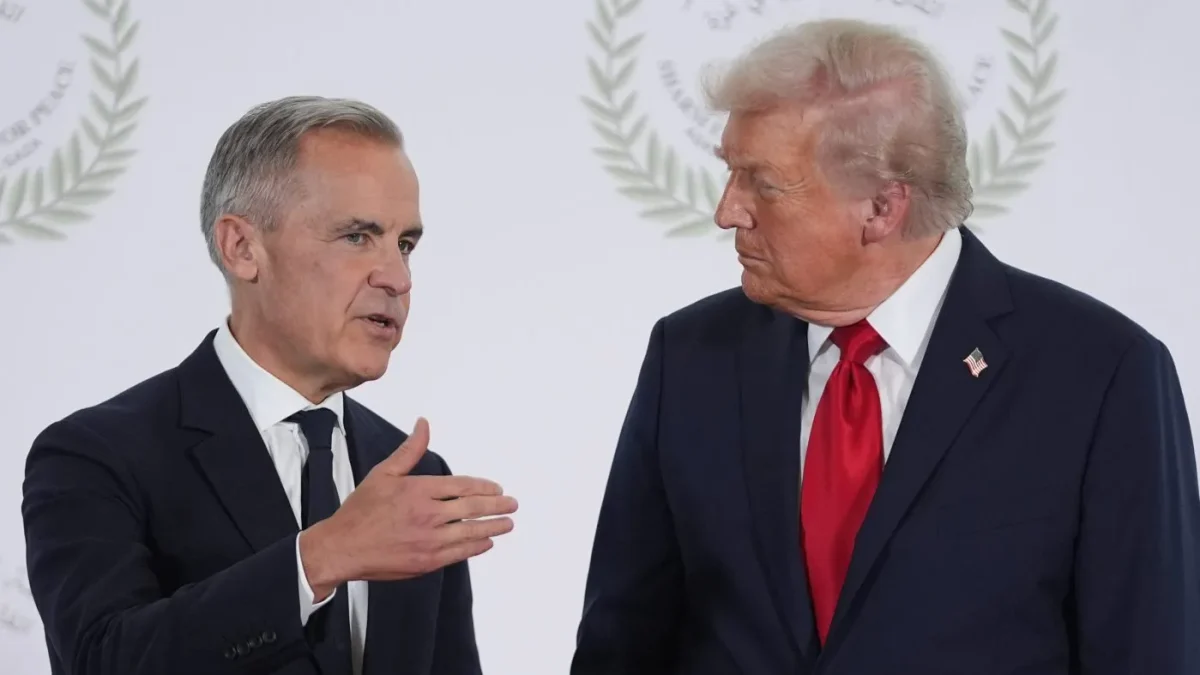
Table of Contents
Canada’s EU Outreach Deepens Strain With Washington
Provpnadvice.com – Canadian Prime Minister Mark Carney’s push for closer ties with the European Union has added a new flashpoint to an already difficult relationship between Canada and the United States. During a prominent European visit this week, Carney embraced the prospect of broader cooperation with the bloc while stressing that Canada is not pursuing full EU membership.
The diplomatic effort comes as tensions with President Trump have grown over tariffs, trade disputes and Trump’s repeated comments about Canada becoming the 51st state. Trump has also drawn criticism in Canada after referring to Lake Ontario as “Lake America.”
On Wednesday, Trump warned that a proposed arrangement giving Canada associate status with the EU could be treated as a hostile move. He said the United States could impose substantial tariffs or reduce trade with Europe if the plan moved forward with what he viewed as unfriendly intent.
“If they do that, if I think it’s at all a hostile act, I will put very serious tariffs or stop trading with Europe on many things,” Trump told reporters.
European Commission President Ursula von der Leyen has raised the idea of a new associate-member category for Canada. The concept has not yet been fully defined, and leaders from Canada and the EU are expected to explore a deeper partnership when they meet in Montreal at the end of October.
Carney Seeks Trade and Defense Resilience
Speaking before the European Parliament on Thursday, Carney welcomed the discussion but drew a clear distinction between greater integration and joining the European Union. His focus is on expanding cooperation in areas including trade and defense, with the goal of making both Canada and Europe less vulnerable to pressure from outside powers.
“We do not seek power to dominate others,” Carney said. “On the contrary, we are pursuing resilience so that no one can control our open markets, impair our sovereignty, threaten our territorial integrity, or undermine our freedoms, our democracies, our rule of law.”
His remarks reflect a broader effort to diversify Canada’s international relationships at a time when its closest historic partnership is under unusual strain. Canada and the United States share one of the world’s most extensive trade relationships, along with deep defense, cultural and family ties. That long-standing connection has made the current friction especially consequential for communities and businesses on both sides of the border.
Carney has presented the moment as a geopolitical adjustment rather than a complete departure from the United States. He has continued to describe America as an essential Canadian partner even while seeking stronger links elsewhere. The EU, with its large market and shared emphasis on democratic institutions and the rule of law, offers Canada a natural venue for that outreach.
Imran Bayoumi, deputy director at the Atlantic Council, said uncertainty originating in the United States is a key reason Canada is exploring additional partnerships. He also pointed to the wider security environment facing democratic countries.
“I think the Trump driver is the main one, but I think there’s also a recognition that it’s a more dangerous geopolitical world,” Bayoumi said. “Canadian foreign policy is still rooted in a values-based approach and I’m not sure it can be said that the U.S. has that same outlook right now, so I think trying to meet the EU on that same plane is important to Canadians.”
Border Communities Feel the Effects
The dispute is not limited to national capitals. Tariffs and political tension have influenced consumer choices and travel habits, with some Canadians reconsidering purchases of American products and trips to the United States. Those decisions can have a direct impact on border communities that depend on routine cross-border spending.
Sen. Tina Smith, a Minnesota Democrat, said it is understandable that Canada and the EU would look for ways to develop their relationship. Minnesota has a particular stake in preserving strong commercial ties because Canada is the state’s largest export market.
“It’s understandable to me that the EU and Canada would look for ways that they can start to build relationships,” Smith said. “You start to want to find new friends.”
Sen. Gary Peters, a Michigan Democrat, described the effect on local businesses near the Canadian border. Restaurants and stores that once welcomed regular Canadian visitors are seeing fewer of those customers, he said.
“We had a lot of Canadians that come across the border to go to restaurants and shop, they don’t do that now,” Peters said. “They’re like, ‘I’m not going to go across to America.’ So, it’s really sad, and for us too to have to deal with that. So hopefully, we’ll get through it. I think it’s a good friendship. It’ll last, but it’s certainly being strained.”
For residents in regions connected by daily commerce, tourism and family relationships, the diplomatic dispute has become more than an abstract policy debate. Even small changes in travel or purchasing patterns can matter to towns whose economies have long relied on open movement across the border.
Calls for a Durable Resolution
Some Republicans also emphasized the importance of repairing the relationship. Sen. Mike Rounds, a South Dakota Republican, characterized the EU proposal as a signal of Canadian frustration with the United States, rather than an immediate transformation of Canada’s geopolitical position.
“They’re just trying to irritate the United States. They’re just sending a message that they know that Canada is not happy with us,” Rounds said of the EU. “I think it’s unfortunate that that happens, but it’s one more way in which Canada can express their hurt.”
Rounds said tariffs can serve a purpose, but argued that the eventual objective should be a stronger relationship between allies.
“They’re our friends, they’re our allies, and I think the bottom line is, you need to get results at some point,” Rounds said of Canada. “Tariffs have a place, but the end result should be a better relationship when we’re all done.”
Trump, meanwhile, has criticized Canada as a trade partner and expressed skepticism that it will gain associate status with the EU. His warning to Europe suggests that an effort intended to broaden Canadian options could become another point of contention in transatlantic trade relations.
The October meeting in Montreal may offer a clearer picture of what an enhanced Canada-EU arrangement would involve. Until then, Carney’s European outreach illustrates the pressure on a decades-old North American alliance: Canada is seeking greater resilience and more partners, while many officials in both countries continue to argue that the U.S.-Canada relationship remains too important to let the current dispute define its future.
Related Reading
Frequently Asked Questions
What is Carney s Euro trip inflames Trump?
Carney s Euro trip inflames Trump is the main topic of this guide. The article explains the context, practical details, and next steps readers should understand.
Why does Carney s Euro trip inflames Trump matter?
Carney s Euro trip inflames Trump matters because readers are looking for a useful answer, not just a short summary. Good content should match search intent and help them decide what to do next.