Speaker Johnson says he will push SAVE America Act through reconciliation 3.0

Speaker Johnson Announces Push for SAVE America Act via Reconciliation 3.0
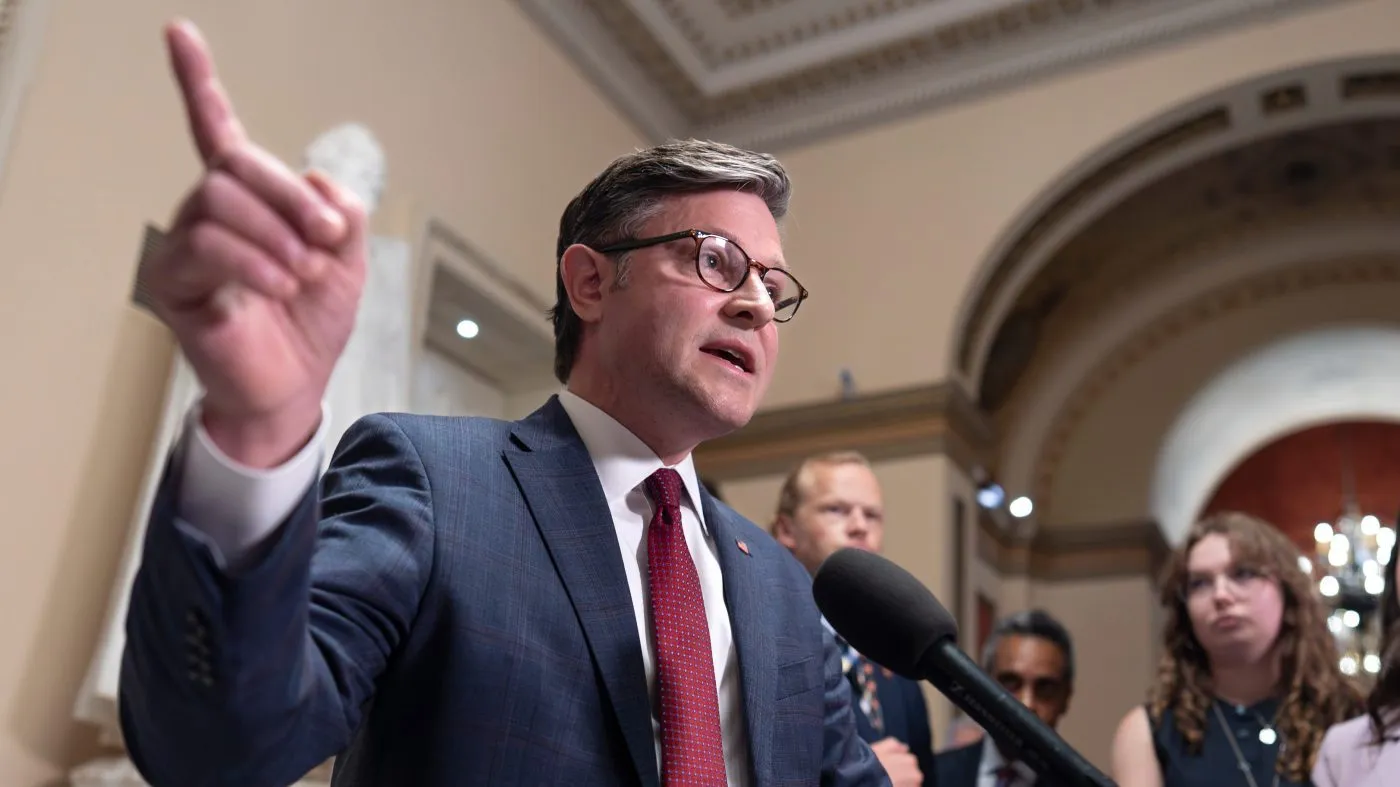
Provpnadvice.com – On Wednesday, House Speaker Mike Johnson (R-La.) announced his intent to advance the Safeguard American Voter Eligibility (SAVE America) Act through a third budget reconciliation bill, marking a pivotal moment in the ongoing legislative effort to secure voter ID requirements for federal elections. The act, which has faced significant hurdles in the Senate, is now positioned as a potential vehicle for passage under the reconciliation process, a procedural tool that allows Republicans to bypass the filibuster. Johnson emphasized this strategy during a press briefing, underscoring the urgency of the measure and the need for party unity.
Context of Trump’s Withdrawal from Bipartisan Housing Deal
Johnson’s announcement followed President Donald Trump’s decision to cancel a signing ceremony for a comprehensive bipartisan housing package. Trump has made it clear that he will not finalize the legislation until the Senate approves the SAVE America Act, a move that highlights the president’s alignment with the Republican push for stricter voting regulations. The housing bill, which aimed to address affordability and infrastructure concerns, now hangs in limbo as the administration focuses on advancing the voter eligibility law.
The SAVE America Act mandates that voters provide proof of citizenship when registering to participate in federal elections. Additionally, it requires the presentation of a government-issued photo ID to cast a ballot, a provision designed to prevent voter fraud. These requirements have been a central focus of the Republican Party’s efforts to bolster election integrity, though critics argue they could disproportionately impact minority and low-income voters.
Senate Resistance and Byrd Rule Challenges
Despite passing the House, the SAVE America Act has stalled in the Senate, where Democrats have vowed to block its progress. The bill lacks the necessary support to override a filibuster, as it currently requires a 60-vote majority for passage. Senate Majority Leader John Thune (R-S.D.), a key Republican figure, has consistently dismissed calls to eliminate or reform the filibuster, emphasizing its role as a safeguard for minority representation.
The Senate parliamentarian’s earlier ruling further complicates the bill’s prospects. The decision stated that the SAVE America Act does not satisfy the Byrd Rule’s criteria for inclusion in a budget reconciliation package. The Byrd Rule, which dictates that reconciliation bills must primarily address budgetary issues, has become a focal point of debate. Critics argue that the act’s provisions, while related to elections, may not align closely enough with the budgetary focus required for reconciliation, thereby limiting its chances of passage.
Johnson’s Reconciliation Strategy and Presidential Support
During the press briefing, Johnson elaborated on the reconciliation plan, describing it as a critical pathway to enact the SAVE America Act. He highlighted the need for a grant program that links voter ID requirements to federal funding, enabling states to implement the policy with financial support. This approach, Johnson explained, would make the act more palatable to Democratic-led states that have yet to fully embrace election integrity measures.
“The only path, I think, to get that done, because you’re never going to get seven Democrats to join 53 Republicans in the Senate to do that … you have to put it on a reconciliation bill. We believe that if you create a grant program that ties it to reconciling the budget, and you allow blue states, if they come to their senses and they want to avail themselves of election integrity proposals and ideas and policies, they can draw down from a federal fund, and use those funds. We’re willing to invest heavily in that, and House Republicans will put together a reconciliation bill, reconciliation 3.0, that will have that,” Johnson said.
Johnson also recounted his conversation with President Trump, detailing how the president has expressed confidence in the reconciliation strategy. “I talked the president through that in detail this morning, as I have in the past, and he said, ‘Can we do it?’ I said, ‘We can, if the Republicans will stand together.’ We’re on the line right now to defend it. So that’s what we’re going to do. The president said, ‘I want to see some progress on it.’ I said, ‘I’d love to show it to you,'” he added.
With the reconciliation plan now in motion, Johnson is expected to convene meetings with House Republicans to outline potential provisions for the third iteration of the budget reconciliation bill. These discussions will likely involve bipartisan compromises or strategic adjustments to address concerns about the act’s compatibility with the reconciliation process. The timing of this effort is crucial, as the legislative calendar tightens and the pressure to pass significant measures mounts.
Supporter Concerns and Political Implications
While the reconciliation strategy has gained traction among many Republicans, even its conservative backers have raised questions about the act’s inclusion in the package. Rep. Anna Paulina Luna (R-Fla.), a vocal supporter of the SAVE America Act, expressed skepticism about the approach. “The save America act cannot be placed in reconciliation, and I’m not drinking the Kool-Aid. Neither should you,” she wrote on the social platform X.
Luna’s critique reflects broader concerns within the party about the potential dilution of the act’s impact if it is bundled with other budgetary measures. She argued that the reconciliation process might weaken the bill’s focus on election integrity, making it less effective as a standalone policy. This sentiment underscores the tension between procedural efficiency and substantive goals within the Republican leadership.
Johnson, however, remains resolute in his belief that reconciliation 3.0 is the best avenue to secure the act’s passage. He has framed the effort as a necessary compromise to achieve the party’s legislative priorities, even if it means navigating the complexities of the Byrd Rule. The success of this strategy will depend on the ability of House Republicans to rally behind the measure and coordinate with Senate leaders to overcome procedural barriers.
As the reconciliation process unfolds, the SAVE America Act has become a symbol of the broader ideological divide in Congress. While it is championed by conservatives as a safeguard against voter fraud, its supporters must also contend with the political risks of pushing it through a fast-tracked process. The act’s fate will ultimately hinge on the willingness of Senate Democrats to either compromise or find alternative pathways to address their concerns about its impact on voting rights.
Legislative Timeline and Next Steps
With the House set to draft the third reconciliation bill, the focus shifts to crafting a package that can secure the necessary bipartisan support. Johnson’s team is reportedly working to refine the legislation, ensuring it aligns with the budgetary requirements while maintaining its core provisions. The timeline for introducing the bill is tight, as the reconciliation process requires rapid legislative action to meet procedural deadlines.
Analysts note that the reconciliation strategy could set a precedent for future legislation, demonstrating the Republicans’ commitment to using procedural tools to advance their priorities. However, it also risks alienating moderate lawmakers who may view the act as a partisan maneuver. The outcome of this effort will have far-reaching implications for the balance of power in Congress and the future of election laws in the United States.
As the debate continues, the SAVE America Act remains a focal point of the Republican agenda, with Speaker Johnson positioning it as a critical test of party cohesion. Whether this approach will succeed or face further setbacks depends on the interplay between procedural mechanics, political strategy, and the evolving landscape of congressional priorities. The coming weeks will be decisive in shaping the act’s trajectory and its impact on the nation’s electoral framework.