House to vote on short-term spy powers extension Thursday amid Pulte clash

House to Vote on Short-Term Spy Powers Extension Thursday Amid Pulte Controversy
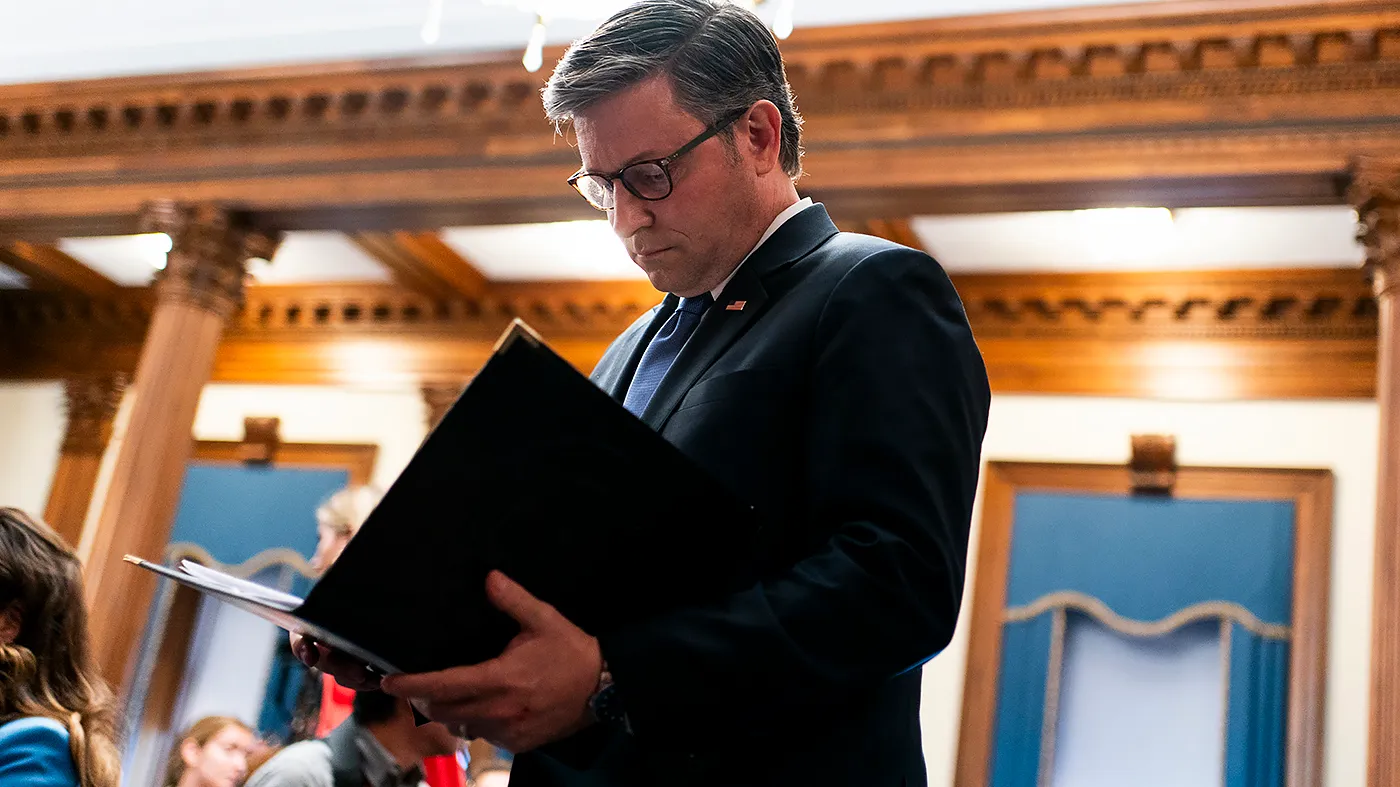
Provpnadvice.com – On Thursday, the House of Representatives is set to take up a vote on a short-term extension of the nation’s foreign surveillance authorities under Section 702 of the Foreign Intelligence Surveillance Act (FISA). This procedural move comes as tensions rise over President Donald Trump’s decision to appoint Bill Pulte as the acting director of national intelligence (DNI), a choice that has sparked significant debate within the Democratic Party. Speaker Mike Johnson (R-La.) confirmed the impending vote, emphasizing the urgency of maintaining the current surveillance framework before its expiration.
The Senate’s earlier rejection of a similar extension has amplified the House’s role in resolving the issue. Despite efforts by Senate leaders to expedite the measure through a fast-track process, Democrats largely opposed the proposal, citing concerns over the implications of Pulte’s nomination. Johnson criticized the Senate’s stance during a press briefing on Wednesday, accusing them of prioritizing political maneuvering over national security.
“Democrats in the Senate are playing political games right now with the lives of Americans. It’s a very dangerous situation,” Johnson stated, underscoring his frustration with the Senate’s delay in approving the necessary provisions.
Section 702 of FISA, which governs the collection of foreign intelligence information through electronic surveillance, is set to expire on Friday. This provision grants the government the authority to monitor non-U.S. citizens abroad, allowing for the gathering of data that can be critical in counterterrorism efforts. However, critics, including many in the Democratic Party, argue that the current system poses risks to the privacy of American citizens, as their communications with foreign targets can be inadvertently intercepted.
The controversy surrounding Pulte has complicated the legislative process. The former head of the Federal Housing Finance Administration, Pulte has been accused of targeting political opponents of President Trump by referring them for criminal investigations related to mortgage fraud. His lack of formal national security experience has further fueled skepticism about his suitability for the DNI role. Johnson highlighted that the Senate is still deliberating on a unanimous consent request to fast-track the extension, a process that would allow the measure to bypass additional debate before the deadline.
“We’re not having a great amount of confidence that they’re going to be able to get that done,” Johnson explained, noting that the House would step in to ensure the surveillance powers remain in effect. The House plans to introduce a short-term extension to July 2, aligning with the President’s request to maintain the tool until a permanent solution is reached.
The House’s proposed extension will utilize a fast-track procedure known as a suspension of the rules, requiring a two-thirds majority to pass. This method is intended to expedite legislation, but it will necessitate substantial support from Democratic members, who have shown reluctance to approve the measure while Pulte holds the acting position. House Minority Leader Hakeem Jeffries (D-N.Y.) has already signaled his opposition, stating that the extension will not pass unless Pulte is replaced.
Democratic Resistance to Pulte’s Nomination
Jeffries and other Democratic leaders argue that Pulte’s tenure as acting DNI is a temporary fix that risks undermining the integrity of the intelligence community. They contend that his appointment has become a focal point of partisan conflict, with critics labeling him as a political appointee rather than a qualified official. Jim Himes (D-Conn.), the ranking member of the House Intelligence Committee, echoed these concerns, noting that his Senate counterpart, Mark Warner (D-Va.), has been aligned with the Democratic strategy to block the extension.
“Look, let’s do a short term, but this is, you know, one day under Bill Pulte is one day too many,” Himes remarked, highlighting the urgency for a more permanent solution. “This guy is a disaster, and so that’s where we are. There’s one easy way out, which is the president nominates somebody who can be confirmed, and then we’re all back in business, having a good conversation rather than stupid conversation,” he added.
Himes’ comments reflect a broader sentiment among Democrats that the current extension is insufficient without addressing Pulte’s qualifications. The House has previously sent a longer-term bill in April that included proposed reforms to FISA 702, aiming to strengthen oversight and limit data collection on American citizens. However, the Senate has yet to finalize adjustments to that bill, leaving the House to act independently.
President Trump’s mixed messages on Pulte’s timeline have added to the uncertainty. While he initially accelerated the process, stating that Pulte would assume the DNI role starting on June 19, Trump has also suggested that the appointment will be temporary. This ambiguity has allowed critics to argue that the extension is a stopgap measure, with no clear plan for a permanent replacement.
The Broader Implications of FISA 702
FISA 702 has long been a cornerstone of U.S. intelligence operations, enabling the collection of foreign intelligence without the need for individual warrants. Proponents highlight its effectiveness in tracking global threats, while opponents warn of potential overreach and the risk of American citizens’ data being accessed without sufficient safeguards. The upcoming vote represents a critical juncture in maintaining this balance, with lawmakers divided on the best path forward.
Johnson defended the necessity of the extension, citing the importance of FISA 702 in national security. “It’d be a very dangerous time to allow us to not have that important national security tool,” he said, referencing the upcoming FIFA World Cup and American 250 events as reasons for the urgency. These events, he argued, underscore the need for uninterrupted surveillance capabilities to monitor potential threats.
Meanwhile, the Senate’s delayed action has created a bottleneck in the legislative process. With the expiration date looming, the House is poised to take the lead in keeping the surveillance authority active. However, without a resolution on Pulte’s nomination, the extension may not garner the bipartisan support required to pass.
Analysts suggest that the House’s decision to move forward with a short-term extension could be seen as a compromise, allowing the government to maintain its surveillance powers while the Senate works on refining the proposal. Yet, the partisan divide over Pulte’s appointment remains a key obstacle, with Democrats insisting that a replacement must be named before any agreement can be reached.
As the Thursday vote approaches, the focus shifts to whether the House can secure enough support to pass the measure. The outcome may not only determine the fate of FISA 702 but also signal the broader dynamics of how the legislative branch will navigate the intersection of national security and political strategy in the coming weeks.