Canadian wildfire smoke triggers air quality alerts for millions: What to know

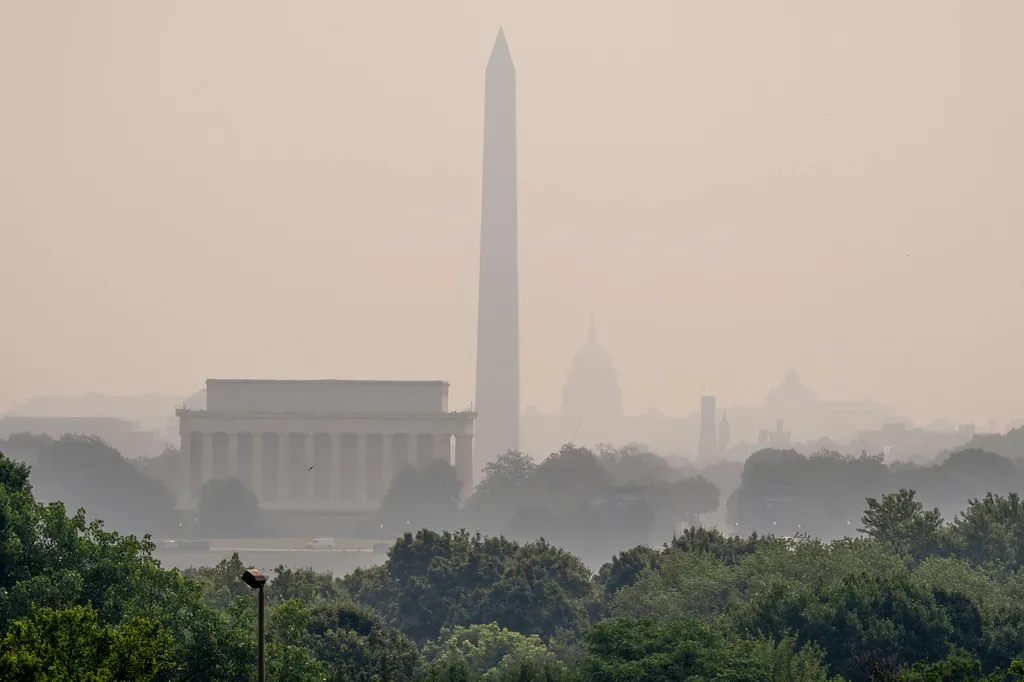
Millions Face Air Quality Warnings as Canadian Wildfire Smoke Sweeps Across United States
Provpnadvice.com – Over 100 million people across the United States are currently living under air quality warnings as dense smoke from Canadian wildfires and northern Minnesota blazes settles over numerous regions. These airborne microscopic particles pose significant health threats to populations breathing the contaminated atmosphere.
Widespread Impact on Major Metropolitan Areas
Changing wind patterns have transported thick atmospheric haze into prominent metropolitan centers spanning the Great Lakes region, the Northeast corridor, and the Mid-Atlantic states. This pollution has dramatically reduced visibility, cast unusual tints across the sky, and elevated pollution measurements into unhealthy and occasionally hazardous classifications.
City officials spanning from Chicago through New York to Washington, D.C. have issued recommendations encouraging citizens to reduce outdoor exposure or utilize protective masks during periods of peak contamination. The smoke originates from ongoing wildfires that have consumed Canadian provinces for multiple consecutive days.
Fire Activity Across Canada
According to the most recent data from the Canadian Interagency Forest Fire Centre, which operates from Winnipeg, there were 949 active fires recorded as of Saturday afternoon. These blazes spanned nine of Canada’s ten provinces and three of its territories, with only one province remaining fire-free.
Ontario and the Northwest Territories contain the majority of this fire activity, together representing more than one-third of all active flames. Quebec, Manitoba, and British Columbia are also experiencing significant fire clusters across their landscapes.
Prince Edward Island stands as the sole Canadian province without active wildfires. This island territory, covering approximately 2,187 square miles, sits off the eastern coasts of both Nova Scotia and New Brunswick.
Many of these fires rage through remote, densely forested regions where access remains challenging and containment efforts prove difficult. A combination of dry plant material, sustained high temperatures, drought conditions, and lightning strikes has created ideal circumstances for rapid fire ignition and expansion.
Human Communities Affected
The fires have already consumed nearly 3 million hectares as they advance through the Canadian landscape. Among the devastation, an entire Indigenous community in northwestern Ontario has been completely destroyed.
More than two dozen members of the Namaygoosisagagun First Nation, alternatively called the Collins First Nation, were compelled to evacuate by boat on Monday when flames rapidly approached their settlement.
“I’ve never seen a fire that big. It was angry. It was moving fast. The wind really did not help,” Miiyah Paavola, the 15-year-old daughter of Chief Helen Paavola, explained to the Canadian Broadcasting Corporation.
The broadcasting outlet reported that by Thursday, more than twelve additional Ontario communities faced mandatory evacuation directives.
Understanding the Health Risks
Of the approximately 950 active fires, fewer than 20 percent have been classified by the CIFFC as either “under control” or “being held.” More than 200 fires remain completely “out of control” with expectations that they will continue burning, while the remaining fires are out of control but under active monitoring.
Additionally, over a dozen active fires exist in northeastern Minnesota, having consumed an estimated 77,000 acres within and surrounding the Superior National Forest and Boundary Waters Canoe Area Wilderness, according to regional media coverage.
Air quality warnings activate when concentrations of fine particulate matter, designated as PM 2.5, reach levels sufficient to create health concerns. These microscopic particles, generated in substantial quantities by wildfire smoke, measure thirty times smaller than the thickness of a single human hair and can penetrate deeply into lung tissue.
The concentration of particulate matter represents one of the primary factors determining the Air Quality Index, the Environmental Protection Agency’s measurement system for air cleanliness. The AQI utilizes six color-coded categories, each representing specific value ranges that indicate varying levels of health concern.
Readings of 50 or below indicate good air quality with minimal to no human health risk. However, as measurements increase, so do potential health dangers.
Current levels across the United States have spanned from Yellow, representing moderate pollution potentially harmful to sensitive individuals, through Red and Purple categories, which signal increased risk for everyone, particularly those with pre-existing medical conditions.
Air quality conditions prove most severe in and around Lake Superior, which borders both Canada and the United States. The region experienced hazardous pollution levels earlier this week, resulting in extended air quality warnings.
“The impacts of the Canadian wildfires are causing great concern and harm across the United States,” EPA Administrator Lee Zeldin stated in an official declaration.
“EPA will do everything in the agency’s authority to continue to protect human health and the environment throughout this event,” he continued. “Providing clean air for all Americans remains a top priority of the Trump EPA.”
Scientific research has consistently demonstrated the connection between prolonged exposure to wildfire particulate matter and respiratory complications, cardiovascular issues, and other health concerns, particularly among vulnerable populations including children, elderly individuals, and those with pre-existing conditions.