Navy awarded $22.9B contract to Raytheon to accelerate Tomahawk missile production

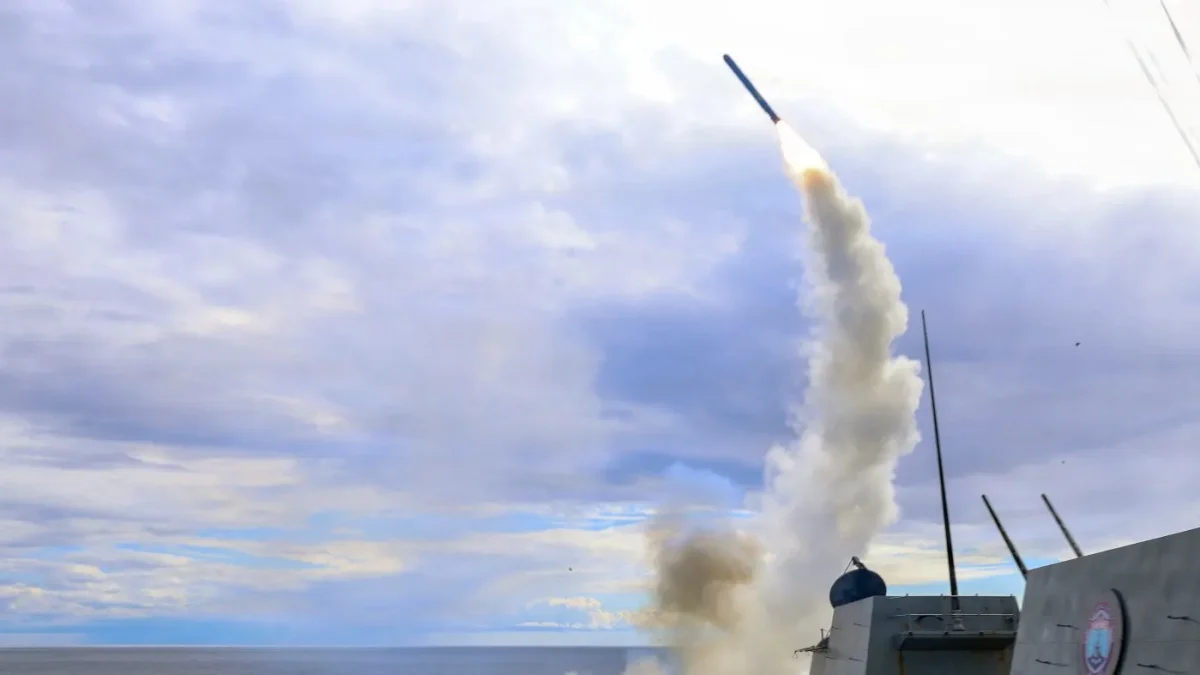
Table of Contents
Raytheon to Scale Tomahawk Output Past 1,000 Per Year Under $22.9 Billion Navy Deal
Provpnadvice.com – The U.S. Navy has moved to dramatically expand its long-range strike capability by awarding Raytheon a seven-year, $22.9 billion contract that will push annual Tomahawk cruise missile production from roughly 60 units to more than 1,000. Acting Navy Secretary Hung Cao made the announcement Monday, framing the deal as a direct response to the munitions drain that followed more than six months of sustained airstrikes against Iran.
The Tomahawk has long served as the backbone of American naval strike power. Capable of hitting targets hundreds of miles from a ship while keeping sailors out of the kill zone, the missile underpins carrier task-force operations, land-attack missions, and layered deterrence across every ocean theater. Scaling its output by an order of magnitude represents one of the largest single-weapon procurement commitments in recent memory.
Official Framing: Rebuilding the Industrial Base
In a written statement accompanying the announcement, the Navy described the contract as a measure that “reinforces the Department’s commitment to rebuilding the defense industrial base and ensuring Navy and Marine Corps forces remain equipped with the advanced weapons required to maintain maritime superiority.” The department emphasized that shortening procurement lead times would feed directly into what it calls “rapid capability fielding goals” across the Defense Department.
“By working closely with industry to expand the capacity of our munitions industrial base, the Department is utilizing every available tool to meet the demands of current operations, guaranteeing our naval and joint forces have the lethal firepower they need to deter aggression and protect the homeland,” Cao said.
Raytheon’s Investment Commitment
Raytheon, which currently produces approximately 60 Tomahawks annually, said the new agreement authorizes a step-change in output. Phil Jasper, the company’s president, characterized the missile as the Navy’s single most critical strike asset and outlined the scale of capital and labor investment required to close the gap between current and surging demand.
“Tomahawk is the Navy’s most important strike weapon, able to target hostile forces hundreds of miles away without ever risking the lives of our sailors,” Jasper said. “We are making significant investments in our workforce, technology, supply chain and we facilities to dramatically boost production capacity and meet surging demand.”
The jump from 60 to over 1,000 units per year implies a roughly seventeen-fold increase in throughput. Achieving that within a seven-year window will require new assembly lines, expanded supplier networks for guidance components, warheads, and airframes, and a substantially larger skilled workforce. Industry analysts have noted that Tomahawk production has been constrained for years by limited dedicated factory capacity, making the scale of this contract unprecedented for a single-weapon line.
The Broader Munitions Crunch
The Tomahawk deal arrives against a backdrop of severe inventory depletion across the U.S. military’s long-range strike and air-defense arsenals. Multiple reporting outlets have described the supply of premium long-range missiles and interceptors as nearly exhausted after the extended campaign against Iran, a condition that has reportedly constrained President Trump’s willingness to authorize further major combat operations.
The Army’s surface-to-surface inventory — comprising Army Tactical Missile Systems (ATACMS) and Precision Strike Missiles (PrSM), each costing more than $1 million — has been drawn down to what was described as “virtually all” spent. On the air-defense side, terminal high altitude area defense (THAAD) interceptors have been expended at roughly the 80 percent mark, while Patriot interceptor stocks stand at approximately half their pre-conflict levels.
In response, the Pentagon has announced parallel agreements with Lockheed Martin and Northrop Grumman aimed at tripling and quadrupling production of Patriot Advanced Capability-3 (PAC-3) interceptors and THAAD interceptor components. Together with the Raytheon contract, these deals constitute the largest coordinated munitions-industrial expansion since the post-Cold War drawdown era.
Congressional Scrutiny and Transparency Demands
Not all members of Congress accepted the administration’s narrative at face value. On Sunday, Representative Don Bacon, a Republican from Nebraska, voiced alarm that the president himself had appeared unaware of the depth of the shortage. Speaking on CBS News’s “Face the Nation” with host Ed O’Keefe, Bacon said:
“I do have concerns that the president said he was not aware that we had a shortage of weapons like cruise missiles and Patriots. That’s not a good … thing.”
Bacon indicated that lawmakers would press for greater transparency once they return from recess on August 31. He framed the issue not merely as a logistics problem but as a question of wartime management, noting that the combination of depleted stocks and the president’s claimed ignorance raised what he called “a concern” about how the conflict has been conducted.
The congressional push for disclosure arrives at a moment when the industrial expansion now underway will require sustained appropriations through at least the early 2030s. Whether the scale of the Raytheon contract — and its sister agreements with Lockheed and Northrop — can be funded, staffed, and delivered on schedule will shape both the Navy’s near-term operational posture and the broader debate over how quickly the United States can reconstitute the munitions stockpiles that sustained months of high-tempo strikes.
Related Reading
Frequently Asked Questions
What is Navy awarded 22 9B contract to Raytheon?
Navy awarded 22 9B contract to Raytheon is the main topic of this guide. The article explains the context, practical details, and next steps readers should understand.
Why does Navy awarded 22 9B contract to Raytheon matter?
Navy awarded 22 9B contract to Raytheon matters because readers are looking for a useful answer, not just a short summary. Good content should match search intent and help them decide what to do next.