El-Sayed says he has ‘no plans’ to campaign with Piker

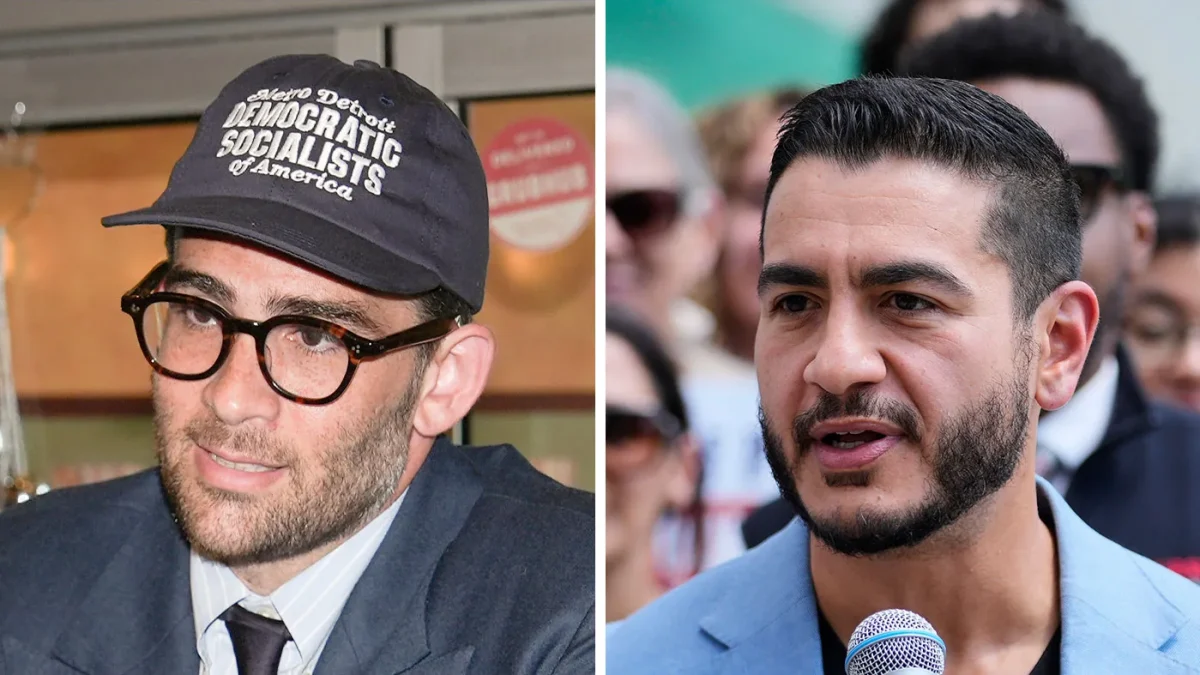
Table of Contents
Michigan Senate Candidate El-Sayed Draws a Hard Line Against Streamer Piker’s Role in His Campaign
Provpnadvice.com – Abdul El-Sayed, the Democratic nominee seeking to fill the Michigan Senate seat vacated by departing Sen. Gary Peters (D-Mich.), has made clear that he intends to run his campaign on the issues voters care about daily — not on the viral moments generated by internet personalities. Speaking in the Detroit suburbs during a sit-down interview, El-Sayed flatly denied that left-wing commentator and streamer Hasan Piker would have any role in his general-election effort against former Rep. Mike Rogers (R-Mich.).
“Most people are a lot more worried about things like, what are you going to do about my groceries? What are you going to do about my healthcare? What are you going to do about the fact that I cannot afford [to enroll] my kid in baseball, even though my kid’s a really great baseball player?”
El-Sayed framed the controversy around Piker as a distraction from the economic anxieties that dominate Michigan households. He dismissed the notion that his race could be reduced to a spectacle built around a content creator based in Los Angeles.
“Those are the things I’m talking about, and the effort to make this race about a streamer in LA [Los Angeles] is actually kind of laughable.”
The Remarks That Sparked the Backlash
The friction between El-Sayed’s campaign and Piker’s online commentary traces back to a livestream in which Piker, who commands roughly 1.7 million followers on the social platform X, addressed the relationship between American Jews and the Israeli government. While conceding that Jewish Americans do not uniformly back Israeli policy, Piker argued that organized Jewish bodies reinforce a perception of monolithic loyalty to Israel.
“If Jews in America keep putting this idea out there that they are singularly invested in Israel, eventually someone is going to come around and take action, not against the state of Israel, mind you, but against American Jews.”
During that segment, Piker displayed a photograph of Michigan state Sen. Jeremy Moss (D) alongside a list of Moss’s campaign contributions from donors he labeled “pro-Israel.” Moss, who is Jewish and has spoken in broad support of Israel, is himself running for Congress to succeed Rep. Haley Stevens (D-Mich.) — the very candidate El-Sayed defeated in the Democratic Senate primary earlier this month. The overlap made the moment particularly pointed for Michigan Democrats.
Democratic Leaders Respond
The comments triggered a wave of condemnation from across the Democratic establishment. House Minority Leader Hakeem Jeffries (D-N.Y.) took to X on Monday to call the framing “dangerous and antisemitic.”
“The malicious claim that American Jews are inviting violence against themselves is dangerous and antisemitic. There is zero justification for threats against the safety of our Jewish brothers and sisters at a moment of rising hate.”
“We will fight the cancer of antisemitism with the fierce urgency of now.”
The breadth of the response — spanning senior congressional leaders and party operatives — signaled that even within the progressive wing of the party, Piker’s phrasing crossed a line many considered non-negotiable. For a Senate candidate still consolidating his base after a primary victory, the episode posed an awkward alignment problem: Piker had been visible on El-Sayed’s trail during the primary season, continuing a pattern of the streamer lending his platform to left-leaning candidates nationwide.
El-Sayed’s Own Statement
El-Sayed did not leave the disagreement implicit. In a written statement issued Monday, he stated his belief that every American should be free to advocate for causes without fearing physical harm, and he singled out communities with histories of intimidation for particular protection.
“This is particularly true for communities that have been intimidated for their beliefs in the past. My commitment to Jewish safety is the same as my commitment to the safety of my own daughters. Antisemitism is a scourge, and we need to address it in all its forms. And I stand against any rhetoric that puts the community at risk.”
The reference to his daughters gave the statement a personal register uncommon in campaign communications, and it positioned El-Sayed as aligned with the party’s mainstream on Jewish safety while still courting the progressive voters who turned out for him in the primary.
Context: The Poll Numbers Behind the Debate
The broader question Piker raised — how American Jews relate to Israeli policy — is not purely rhetorical. A June survey conducted by The Associated Press-NORC Center for Public Affairs Research found that 40 percent of religious Jews described themselves as very or extremely emotionally attached to Israel, compared with 11 percent of secular Jews. That gap underscores why the topic remains politically charged: the experience of “Jewish institutions” Piker referenced does not map neatly onto the full spectrum of American Jewish life, yet the perception of uniformity persists in public discourse.
What Comes Next for the Michigan Race
With the general election now the focus, El-Sayed faces the task of translating primary momentum into a statewide win against Rogers, a former congressman and former Army colonel who will likely frame the contest as a choice between experience and ideology. The Piker episode, while brief in the news cycle, illustrates the tightrope El-Sayed must walk: maintaining credibility with the progressive base that powered his primary upset while reassuring moderate and suburban voters that his campaign will not be derailed by online controversies. His insistence that the race belongs to questions of grocery prices, healthcare access, and youth sports costs is, in practical terms, a statement about where he intends to spend his remaining campaign energy — and a signal that he will not let a single livestream clip define his message heading into November.
Related Reading
Frequently Asked Questions
What is El Sayed says he has no plans?
El Sayed says he has no plans is the main topic of this guide. The article explains the context, practical details, and next steps readers should understand.
Why does El Sayed says he has no plans matter?
El Sayed says he has no plans matters because readers are looking for a useful answer, not just a short summary. Good content should match search intent and help them decide what to do next.