Canada rejects US terms for trade deal as 50 percent tariffs take effect

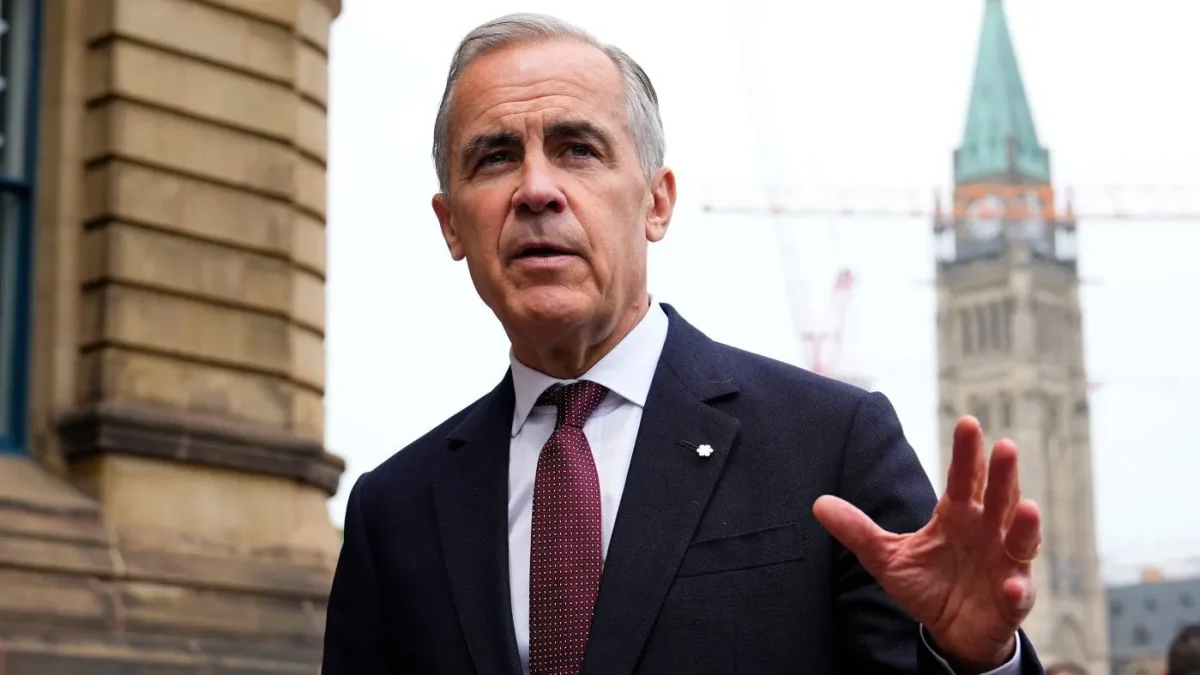
Table of Contents
Canada Walks Away From U.S. Trade Talks as 50-Percent Tariffs Loom
Provpnadvice.com – Hours before a fresh wave of American tariffs was scheduled to hit Canadian exports, Prime Minister Mark Carney ordered his country’s trade negotiators out of the room and back to Ottawa. The abrupt suspension, announced Friday evening via a social media statement, ended weeks of high-stakes negotiations over what Washington proposed as a 50 percent levy on more than $20 billion in Canadian goods.
The move marks a sharp escalation in a trade relationship that has already been strained by the Trump administration’s broader campaign to renegotiate bilateral and multilateral agreements on terms it deems favorable to American producers. For decades, Canada and the United States have shared the world’s largest bilateral trade corridor, underpinned by the United States–Mexico–Canada Agreement (USMCA), which replaced NAFTA in 2020. Carney framed the new tariff schedule as a direct breach of that framework, describing the measures as being in “direct violation” of the free trade pact binding Washington, Mexico City, and Ottawa.
What the Tariffs Would Cover
The proposed duties, initially slated to take effect on Wednesday before being pushed to Friday, would reach across a wide swath of Canadian exports. Among the products named in the tariff schedule are wine, hockey sticks, cement, and plywood — categories that span luxury consumer goods, industrial inputs, and niche sporting equipment. Collectively, the affected shipments represent over $20 billion in annual Canadian trade flow, a figure that touches manufacturers in Ontario, Quebec, British Columbia, and the Atlantic provinces.
For Canadian producers, the prospect of a 50 percent surcharge on goods entering the largest single market in North America is not a marginal cost adjustment; it is an existential pricing question. Many of the affected sectors operate on thin margins and depend on scale economies that a tariff of that magnitude would effectively sever.
Ottawa’s Response: Matching and Protecting
In his Friday evening statement, Carney pledged that Canada would “match those tariffs dollar for dollar,” signaling a tit-for-tat retaliatory posture rather than a unilateral concession. He also promised that the government would table “additional measures” in the coming days to cushion the blow for workers and small business owners who stand to lose revenue overnight.
“As a result, this evening, I have decided to suspend trade negotiations with the U.S. and have directed Canada’s negotiators to return to Ottawa.”
The prime minister acknowledged that Canadian negotiators had achieved “significant progress” during the weeks of talks, but judged the outcome insufficient. In his words, the gains had “not been enough to meet our objectives for Canadians.” He credited his team for working “in good faith” and “up until the very last minute,” while faulting Washington for introducing late-stage modifications to its proposal.
“However, last-minute changes in the U.S. proposed terms were unfair, uneconomic, and called into question the reliability of any deal.”
Washington Pushes Back
U.S. Trade Representative Jamieson Greer responded within hours, publishing a statement on his official social media account that cast the breakdown as a Canadian failure of nerve. Greer argued that Washington had extended what he characterized as the most favorable market access package available to any major exporter, and that Ottawa’s shifting positions had destabilized a fragile compromise.
“Despite the U.S. offer to Canada to receive the best treatment of any major exporter to our market, new demands and walk backs of other commitments by Canada have upended the careful balance reached in the past days.”
Greer labeled the episode a “missed opportunity” for a deeper bilateral partnership, a framing that places the diplomatic cost squarely on the Canadian side of the ledger.
A Relationship Under Structural Stress
The tariff standoff is not occurring in a vacuum. President Trump has repeatedly floated the notion that Canada should be absorbed as a “51st state,” and has addressed Carney in public remarks as the “future governor of Canada.” Those comments, however theatrical, have landed in a political environment where Canadian public opinion already tracks American policy with a degree of anxiety unusual for a country of roughly 41 million people.
Carney acknowledged that backdrop explicitly. He wrote that his negotiators had “worked in that context,” and that the government had internalized a fundamental shift in American trade posture well before most of the public had.
“We have recognized from the beginning that America has changed, and that we will not return to our old relationship.”
“Our government understood, before many, that America is altering all its trade relationships. Putting tariffs on its closest allies and charging access for its vast market.”
Broader Implications
The suspension of talks leaves both capitals without a negotiated framework for the tariff categories now in play. For Canadian exporters, the immediate risk is a pricing shock that could force factory closures or workforce reductions in sectors from viticulture to building materials. For U.S. importers and downstream manufacturers that rely on Canadian inputs — particularly in construction, automotive, and energy — the added cost layer complicates supply chains that have been integrated across the border for generations.
For the USMCA itself, the episode raises a question the pact’s architects never anticipated: whether a member state can unilaterally impose duties of this magnitude on another member without triggering the agreement’s dispute-settlement machinery. Mexico, the pact’s third pillar, has watched the Canada–U.S. friction with particular interest, given that its own trade talks with Washington remain in flux.
Whether Ottawa and Washington return to the negotiating table, and on what terms, will shape the next chapter of North American economic integration. What is clear from Friday evening’s decision is that Carney judged the current American offer unacceptable, and that Canada would rather absorb the tariff impact than sign a deal it views as structurally unfair. The next move, in both capitals, will determine whether this episode becomes a brief diplomatic rupture or the opening of a longer trade war between the continent’s two largest economies.
Related Reading
Frequently Asked Questions
What is Canada rejects US terms for trade?
Canada rejects US terms for trade is the main topic of this guide. The article explains the context, practical details, and next steps readers should understand.
Why does Canada rejects US terms for trade matter?
Canada rejects US terms for trade matters because readers are looking for a useful answer, not just a short summary. Good content should match search intent and help them decide what to do next.