Support for businesses taking public stances on issues drops: Gallup


Table of Contents
Public Support for Corporate Advocacy Slips as Political Pressures Grow
Provpnadvice.com – Americans are becoming less enthusiastic about companies weighing in publicly on major social and political issues, even as prominent executives strengthen their relationships with President Trump during his second term. A new annual survey from Gallup and Bentley University found that 47 percent of respondents believe businesses should take positions on current events.
That figure is four percentage points lower than the 51 percent recorded in 2025, although it remains above the 38 percent measured in 2024. The latest result places the country close to the middle of the range seen since the question was first asked, with 53 percent saying companies should avoid making public statements on topical matters.
The survey included 3,270 adults and was conducted in May as part of the annual Business in Society study. Its margin of sampling error is 2.4 percentage points.
Partisan Views Remain Far Apart
Political identity continues to strongly influence whether people want businesses to engage in public debates. Nearly two-thirds of Democrats, or 62 percent, said companies should speak out on current events. Support was notably lower among independents, at 45 percent, and fewer than three in 10 Republicans shared that view.
The gap highlights the difficult environment facing national brands. A public statement intended to appeal to one group of customers can alienate another, particularly when a company operates across regions with sharply different political cultures. Businesses must also weigh employee expectations, investor concerns, customer reactions and the possibility that silence itself will be interpreted as a statement.
For consumers, the issue is not simply whether a company has values. Businesses regularly make decisions that affect employees, customers, suppliers and communities. The survey instead points to disagreement over whether corporations should explicitly enter public conversations that are not directly tied to their products or operations.
Younger Adults More Open to Corporate Statements
Age also plays an important role in public attitudes. Six in 10 adults between 18 and 29 said companies should take public positions on issues. Support declined in every older age category, reaching 38 percent among respondents age 60 and older.
This difference may matter for companies planning long-term brand strategies. Younger consumers and workers have often encountered corporate messages about social issues, workplace policies and public affairs throughout their adult lives. Older Americans, by contrast, were less likely to support companies speaking publicly, suggesting that a single communications approach may not resonate equally across generations.
The survey does not mean that all younger adults expect every business to comment on every event. Rather, it shows that younger respondents are more receptive overall to companies using their public platforms, while older adults are more inclined to favor restraint.
Employees Prefer More Distance From Workplace Messaging
Workers showed even greater hesitation when the question turned to their own employers. Fifty-six percent of employees said their company should not communicate a public stance to them on current issues.
Even so, employee resistance has eased somewhat from the previous year. In 2025, six in 10 employees said they wanted their employer to remain silent. The shift suggests that workplace audiences may be slightly more open to hearing a company position than they were a year earlier, while still favoring a limited role for employer messaging.
That distinction is significant for managers. A public announcement directed at customers is different from an internal message sent to employees, who may feel more directly affected by the organization’s culture and policies. Employers considering public engagement must account for the fact that their workforce may not share a common political outlook.
Corporate Leaders Build Ties With Trump
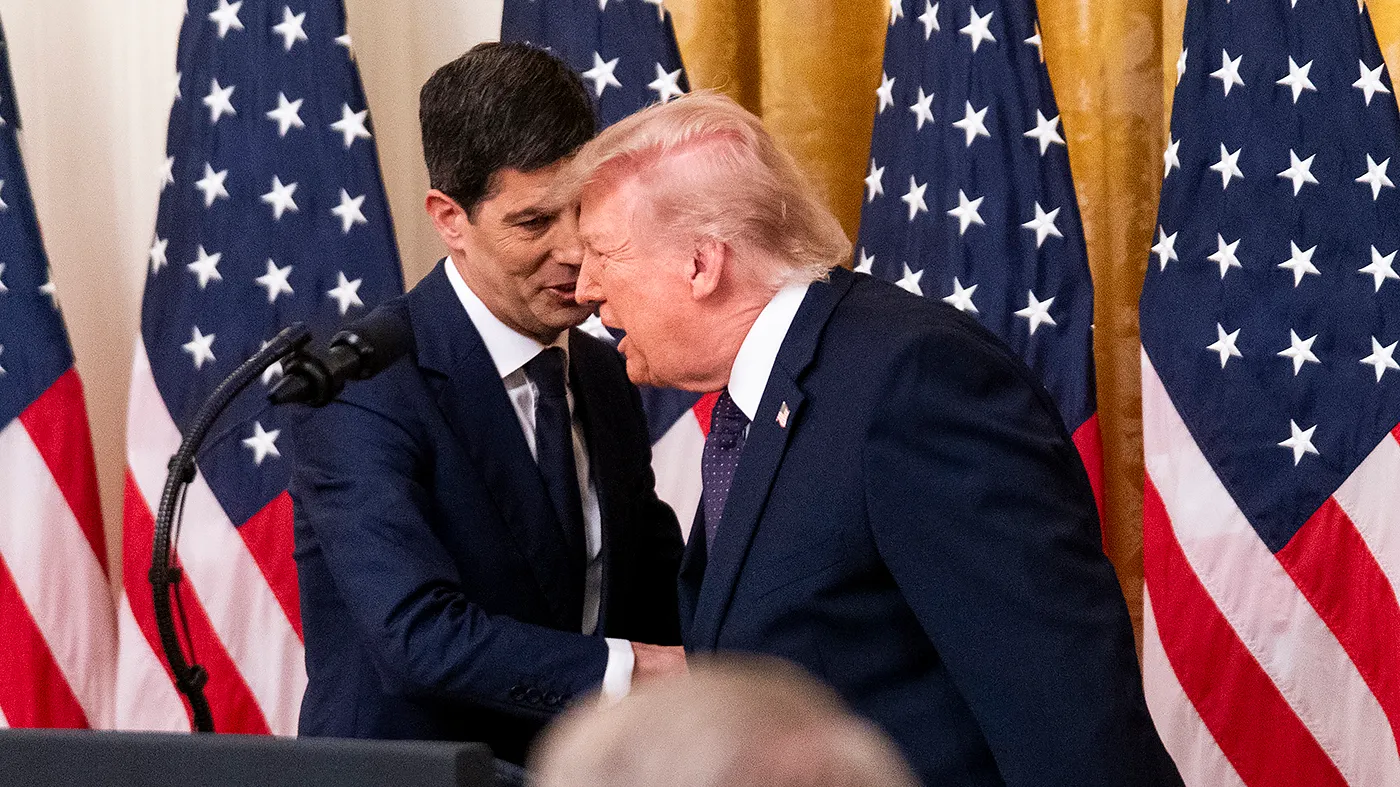
The changing public mood comes as major technology leaders have sought closer connections with Trump. Amazon founder Jeff Bezos, Meta chief executive Mark Zuckerberg and Nvidia chief executive Jensen Huang attended a state dinner hosted by Trump last week for Chinese President Xi Jinping.
The relationship between large companies and the administration has also drawn attention through financial support for presidential initiatives. In June, Citizens for Responsibility and Ethics in Washington said that 15 companies had given to at least three of Trump’s projects. The group named Amazon, Coinbase, Meta, Lockheed Martin and Mastercard among those contributors.
Such activity illustrates why corporate political involvement can extend beyond a formal public statement. Businesses may interact with government through executive meetings, industry discussions, investments, donations, regulatory advocacy and international events. Consumers may view those choices through the same lens they use when judging whether a company should speak out on current affairs.
A Delicate Choice for Businesses
The latest findings show no clear national consensus. Support for business advocacy remains substantial, but a narrow majority prefers companies not to take public stands. The response can vary sharply depending on a person’s political affiliation, age and relationship to the company involved.
For businesses, the practical challenge is deciding when public engagement is closely connected to their responsibilities and when it may create unnecessary division. The survey suggests that many Americans still want companies to focus primarily on their core role, while a sizable minority expects them to participate in broader public life.
As political and social debates continue to shape consumer behavior and workplace culture, corporate leaders will face continued pressure from both sides: demands to speak up and demands to stay out of the conversation.
Related Reading
Frequently Asked Questions
What is Support for businesses taking public stances?
Support for businesses taking public stances is the main topic of this guide. The article explains the context, practical details, and next steps readers should understand.
Why does Support for businesses taking public stances matter?
Support for businesses taking public stances matters because readers are looking for a useful answer, not just a short summary. Good content should match search intent and help them decide what to do next.