Trump doubles down on California comments: ‘Let them hit San Diego, let them hit Los Angeles’

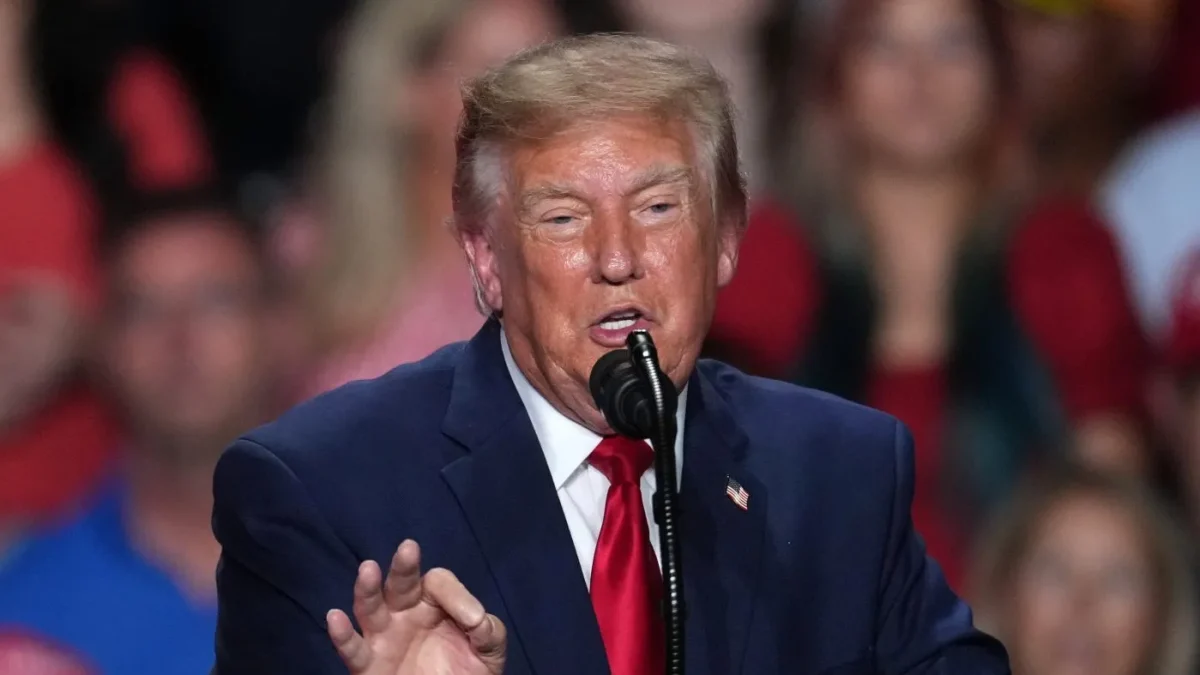
Table of Contents
Trump Reiterates Warning About Potential Threats to California Cities
Provpnadvice.com – President Trump returned to his remarks about the possibility of Iranian attacks on California during a Wednesday campaign rally in San Antonio, Texas, arguing that the United States would prevent any such danger from becoming reality.
Addressing supporters, Trump used Los Angeles and San Diego as examples while describing what he said could have occurred if Iran had been allowed to develop greater military power. His comments followed criticism from California officials after similar remarks at a Nebraska rally on Monday.
“You want to see trauma? You want to see problems?”
Trump told the Texas audience that a missile striking either city would create a devastating situation. He framed the scenario as a warning about the consequences of failing to stop Iran from becoming a nuclear-capable power.
“Let them hit San Diego. Let them hit Los Angeles.”
He then emphasized that his administration would not permit that outcome, saying the country would face serious disruption if such threats were left unanswered.
“We’re not going to let that happen.”
California Officials Respond Sharply
The earlier Nebraska comments drew immediate condemnation from leaders in California, where the prospect of major cities being invoked in discussions of missile threats prompted political and public-safety concerns.
Gov. Gavin Newsom, a Democrat, responded Tuesday by calling Trump “mentally ill” and urging use of the 25th Amendment. The amendment contains provisions that can address presidential inability to carry out the duties of office, though its application requires action by the vice president and members of the Cabinet, with a potential role for Congress.
Los Angeles Mayor Karen Bass, also a Democrat, said the language was dangerous and could put public safety at risk. San Diego Mayor Todd Gloria said his city should not be treated as “collateral damage.”
The reaction underscored the sensitivity of naming specific American communities when discussing international conflict. Los Angeles is the nation’s second-largest city and a major center for commerce, culture and transportation. San Diego, located near the U.S.-Mexico border, is home to significant military activity and a large civilian population. References to either city can therefore carry weight well beyond a campaign rally.
White House Defends the President’s Meaning
The White House rejected the criticism, saying Trump’s words had been interpreted without the context of his broader argument. Communications director Steven Cheung wrote on X that the reaction from news media did not reflect what the president was trying to convey.
“The media freakout over President Trump’s comments is not rooted in reality.”
Cheung said Trump was warning that U.S. cities could have faced danger if a nuclear Iran had not been stopped. He portrayed the president’s position as one centered on deterrence and national security rather than a prediction that an attack was imminent.
“America is safer because of the President.”
In the same response, Cheung asserted that Iran had no nuclear capability, navy, air force or money. The White House’s defense focused on the claim that Iran’s ability to threaten the United States had been sharply constrained.
A Dispute Over Language and Consequences
The disagreement illustrates how political figures can reach very different conclusions from the same remarks. Trump and his administration presented the California references as a hypothetical warning meant to support a tougher approach toward Iran. California officials instead viewed the statements as inflammatory, particularly because they singled out two highly populated cities.
For residents of Los Angeles and San Diego, the debate involves more than campaign rhetoric. Public comments involving missiles, nuclear weapons or threats against American cities can create anxiety even when officials describe the scenario as hypothetical. They can also raise questions about whether there is an immediate danger, whether emergency agencies have received new information, and how local leaders are communicating with the public.
Nothing in the exchange indicated that Trump or the White House described a specific imminent threat to either city. Rather, the dispute centered on the language used to explain a broader foreign-policy argument involving Iran and U.S. security.
Trump’s decision to repeat the examples in San Antonio showed that he was not retreating from the point after the initial backlash. Instead, he intensified his emphasis on the potential consequences he believes the country avoided. His critics, meanwhile, maintained that the framing itself was harmful and inappropriate.
The episode leaves both sides focused on competing messages: Trump’s allies argue that his comments highlight strength and deterrence, while California Democrats argue that elected leaders should speak about threats to American communities with greater care. As the political debate continues, the central facts remain that Trump invoked Los Angeles and San Diego as hypothetical targets, state and city officials forcefully objected, and the White House insisted the remarks were being misunderstood.
Related Reading
Frequently Asked Questions
What is Trump doubles down on California comments?
Trump doubles down on California comments is the main topic of this guide. The article explains the context, practical details, and next steps readers should understand.
Why does Trump doubles down on California comments matter?
Trump doubles down on California comments matters because readers are looking for a useful answer, not just a short summary. Good content should match search intent and help them decide what to do next.