NAACP sues to block Trump administration from sending armed agents to polls

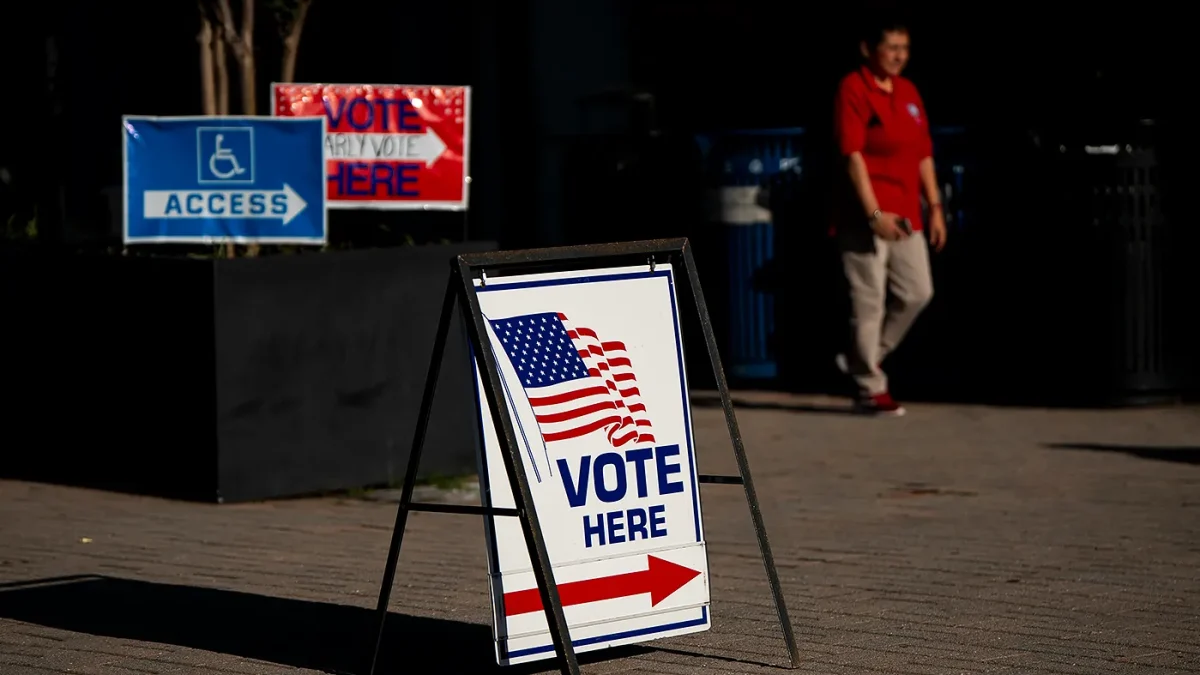
Table of Contents
Civil Rights Groups Challenge Potential Federal Presence at Polling Places
Provpnadvice.com – The NAACP and a coalition of civil rights organizations have asked a federal court to stop the Trump administration from deploying armed federal agents near polling locations before November’s midterm elections. The suit, filed Friday, raises concerns that a visible law-enforcement presence could discourage voters, volunteers and community groups from participating in the election.
The legal action targets the Department of Homeland Security, Immigration and Customs Enforcement, the Department of Justice, the FBI and several officials in the Trump administration. The plaintiffs want the court to prevent federal agencies from using agents in ways they say could unlawfully frighten people who are voting, encouraging others to vote or helping administer elections.
“Defendants’ statements and actions have made voters… afraid of appearing at polling places, helping others vote, serving as election volunteers, and advocating for their political beliefs and preferred candidates,”
the NAACP’s attorneys wrote in their filing.
Concerns About Voter Intimidation
The group of plaintiffs includes the National Urban League, the American Federation of Teachers and other organizations. They argue that armed federal officers at or around voting sites could make people fear surveillance, harassment or physical harm for taking part in the democratic process.
For many voters, the concern is not limited to the act of casting a ballot. Election workers, volunteers who assist voters, and advocates who promote candidates or ballot issues could also reconsider whether it is safe to participate if agents are stationed nearby. The lawsuit frames those effects as a threat to participation throughout the election process, from registration through ballot counting.
The complaint also invokes the Voting Rights Act, which bars intimidation, threats and coercion, including attempted intimidation, at every stage of voting. The plaintiffs contend that a federal deployment designed or used in a way that deters participation would violate those protections.
The case points to an incident in Lee County, Florida, where officers established an immigration checkpoint along a principal route leading to a precinct serving a largely Black and Latino population. The organizations cite that example as part of their concern that enforcement activity near election sites can affect whether eligible residents feel able to vote.
Federal Officials Describe a Limited Role
Federal officials have denied that their agencies intend to conduct election-related operations at polling locations. A Justice Department spokesperson said Friday that the department had never stated it would send federal law-enforcement personnel to polling sites and called claims to the contrary “fearmongering.”
A DHS spokesperson also rejected allegations of racial profiling.
“Allegations that DHS law enforcement engages in ‘racial profiling’ are disgusting, reckless, and categorically FALSE,”
the spokesperson said, adding that immigration enforcement is based on whether someone is in the country illegally, rather than on race, skin color or ethnicity.
The spokesperson said ICE was not planning operations that target polling locations. At the same time, the statement said that if a current public-safety threat endangered a polling site, an arrest could result from an intelligence-based enforcement operation.
During his confirmation hearing earlier this year, DHS Secretary Markwayne Mullin similarly said officers would only be present because of a specific threat, not to intimidate voters.
“The only reason why my officers would be there is if there was a specific threat for them to be there, not for intimidation.”
FBI Director Kash Patel faced questions from Democratic senators this week about whether the bureau would send agents to voting sites if President Trump requested it. Patel acknowledged awareness of laws limiting the presence of armed officers or troops at polling places, but said the FBI could act if there had been a legal violation.
“The FBI will follow the law. If there’s a reason to go there because there’s been a violation of law, we will,”
Patel said.
A Dispute Rooted in Election Access
The lawsuit places the present dispute in the longer history of federal involvement in voting rights. Its lawyers drew a connection to the Reconstruction era after the Civil War, when political and legal efforts were used to restrict the civic participation of formerly enslaved people.
“Fearmongering about ‘illegal voting’ is the modern version of the racist narratives that were used to justify poll taxes, literacy tests, and arbitrary ‘character’ assessments for generations,”
the attorneys argued.
The case is not the only legal challenge involving federal law enforcement and voting sites. Earlier this month, the city of Denver filed a separate suit seeking to prevent ICE officers from patrolling around polling places. That litigation relies on a different federal statute addressing the presence of troops at the polls.
Federal election monitoring itself is not unusual. The Justice Department assigned election monitors during recent primaries, including South Carolina’s Republican runoff and elections in Rhode Island. Those monitors are generally personnel from the department’s Civil Rights Division, whose role differs from armed enforcement activity.
The legal fight arrives after President Trump said in August that he did not rule out declaring a national-security emergency and federalizing control over the midterm elections. When asked about that prospect, he said “that stranger things have happened.”
The court’s eventual response could help define how far federal agencies may go in citing public safety or alleged election-law violations near voting locations. For voters, election workers and advocacy organizations, the central question is whether security actions can be separated clearly enough from conduct that could make people think twice before exercising the right to vote.
Related Reading
Frequently Asked Questions
What is NAACP sues to block Trump administration?
NAACP sues to block Trump administration is the main topic of this guide. The article explains the context, practical details, and next steps readers should understand.
Why does NAACP sues to block Trump administration matter?
NAACP sues to block Trump administration matters because readers are looking for a useful answer, not just a short summary. Good content should match search intent and help them decide what to do next.