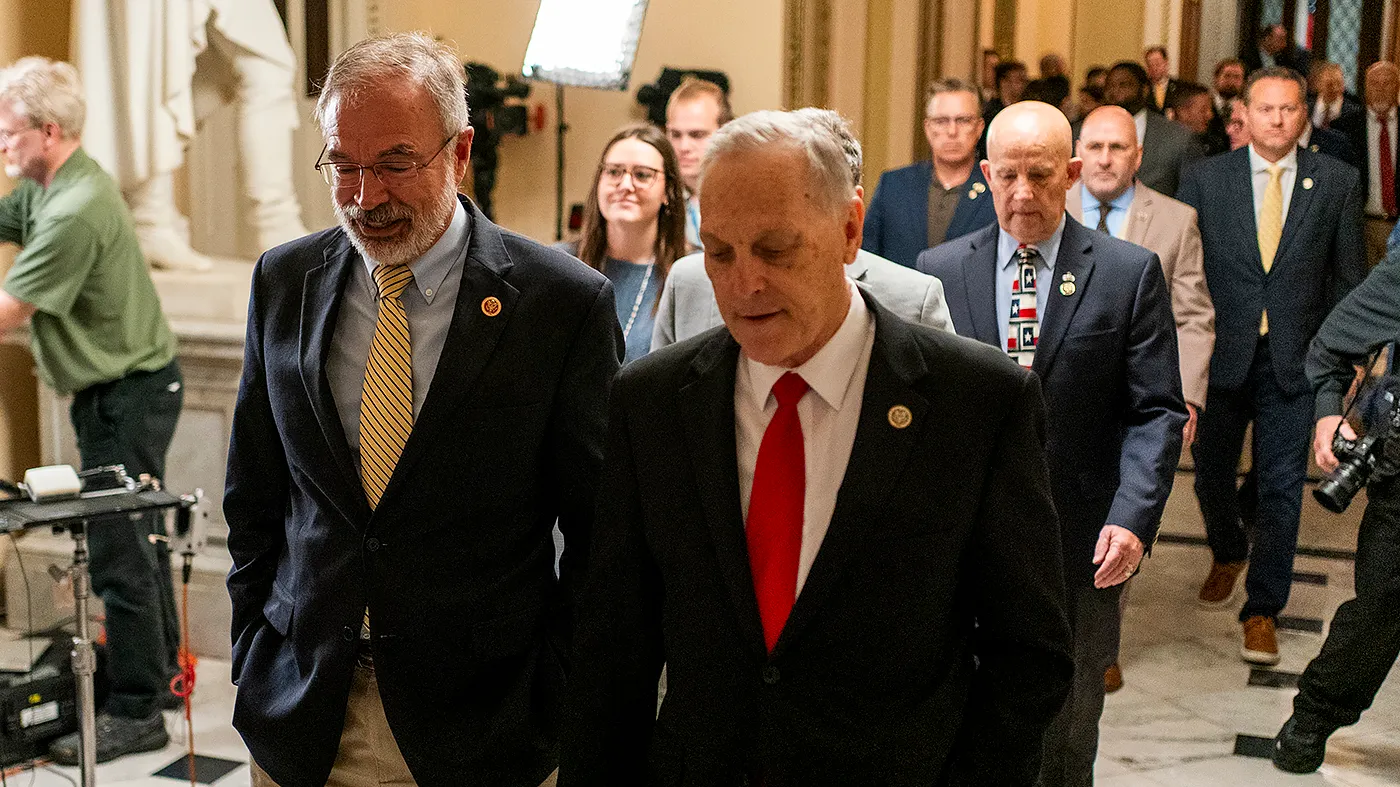
House passes Iran war powers resolution


Table of Contents
House Approves Measure to Restrict Iran Military Action
Provpnadvice.com – The House voted Tuesday to advance a Democratic-backed war powers resolution intended to curb President Trump’s ability to continue military operations involving Iran without congressional approval.
The measure cleared the chamber by a 220-204 vote. Rep. Seth Moulton (D-Mass.) sponsored the resolution, which represents the third time the House has approved a similar effort. Republican backing grew compared with earlier votes, rising from four GOP supporters to seven.
The Republicans voting for the resolution were Reps. Thomas Massie of Kentucky, Brian Fitzpatrick of Pennsylvania, Warren Davidson of Ohio, Tom Barrett of Michigan, Mariannette Miller-Meeks of Iowa, Zach Nunn of Iowa and Nancy Mace of South Carolina.
Congressional Authority at the Center of Debate
The vote renewed a longstanding dispute over the division of war-making authority between Congress and the White House. While a president serves as commander in chief, Congress holds the constitutional authority to declare war and authorize military force. Supporters of the resolution argue that the current conflict has continued without the authorization required for such a sustained military campaign.
Rep. Gregory Meeks (D-N.Y.), the leading Democrat on the House Foreign Affairs Committee, argued that lawmakers have not approved a war against Iran and criticized the administration’s handling of the conflict.
This Congress has not authorized a war with Iran. And yet this administration has kept our troops in harm’s way, without a declaration of war, without an authorization from Congress and without any plan for how to win or end the war.
Meeks also pointed to the human and financial toll of the fighting, saying the conflict had left service members dead and wounded, prolonged deployments and added billions of dollars in expenses.
The administration hasn’t just continued to wage this illegal war in direct violation of the Constitution; it’s done so while Americans bear the costs: 19 fallen service members, and more than 750 service members wounded, extended troop deployments, and billions of dollars in additional spending. The president’s mismanagement of this war has hurt America’s ability to prepare for future threats.
Rising Costs and Damage Across the Gulf
Pressure for congressional action has intensified as new assessments outline the expanding cost of the more than six-month conflict. The Pentagon has told congressional defense committees that the war has cost at least $42 billion so far.
A separate nonpartisan Congressional Budget Office analysis warned that the conflict could push inflation higher early next year. It also estimated that the war may require at least $2 billion each month for as long as it continues.
Damage from Iranian military strikes has added to those costs. A Pentagon watchdog report released publicly Monday estimated that U.S. diplomatic facilities in four Gulf countries sustained roughly $184 million in damage.
The war began in late February, and the United States continues to maintain a substantial presence in the region. More than 50,000 American troops remain deployed there. The Trump administration has not yet presented a clear strategy for withdrawing forces or ending the conflict, an issue that has become more prominent as public opposition to the war has grown.
Casualty figures cited during the debate underscore the stakes. Eighteen U.S. service members have been killed and more than 800 have been wounded during the conflict. Meeks cited a separate tally of 19 fallen personnel and more than 750 wounded while criticizing the administration on the House floor.
Political Fallout Continues
Trump said last week that he believes the war with Iran would end “immediately” after November’s midterm elections. The comment came as lawmakers from both parties continued to question the duration, cost and legal basis of the military campaign.
Massie, one of the Republican supporters of the war powers resolution, escalated his criticism Tuesday by introducing articles of impeachment against Defense Secretary Pete Hegseth. He accused the defense secretary of helping launch a war that Congress had not authorized.
The House vote does not by itself resolve the broader dispute over U.S. military involvement in Iran. Still, it sends a clear signal that a majority in the chamber wants Congress to reassert its role in decisions involving continued combat operations. The increase in Republican support also suggests that concern about the conflict’s trajectory is reaching beyond Democratic ranks.
For lawmakers, the central question remains whether the administration can continue a major military operation without explicit congressional authorization. For military families and communities with deployed service members, the debate carries a more immediate meaning: how long the conflict will last, what additional sacrifices may be required and whether a viable path to its conclusion will emerge.
Related Reading
Frequently Asked Questions
What is House passes Iran war powers resolution?
House passes Iran war powers resolution is the main topic of this guide. The article explains the context, practical details, and next steps readers should understand.
Why does House passes Iran war powers resolution matter?
House passes Iran war powers resolution matters because readers are looking for a useful answer, not just a short summary. Good content should match search intent and help them decide what to do next.