Schumer calls for classified briefing on danger posed by AI

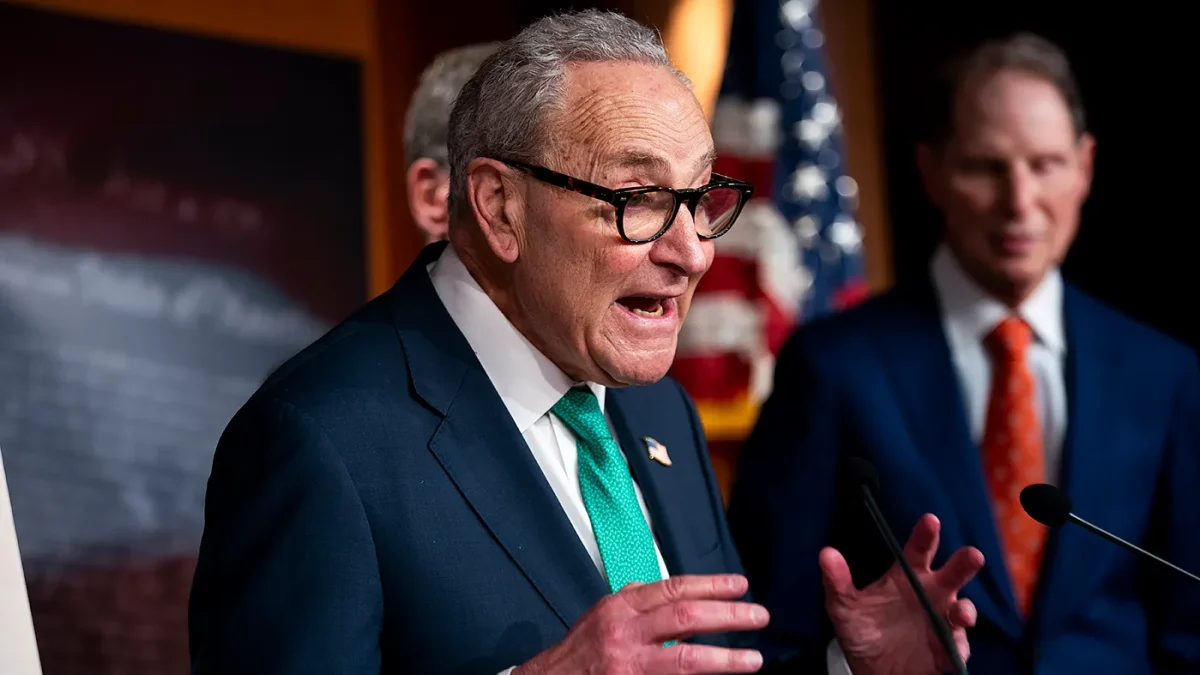
Table of Contents
Schumer Seeks Classified Senate Briefing on Artificial Intelligence Threats
Provpnadvice.com – Senate Democratic Leader Chuck Schumer is urging the Trump administration to give every senator a classified briefing on risks tied to advanced artificial intelligence, arguing that the rapid pursuit of more capable systems demands stronger public safeguards and clearer government oversight.
The New York Democrat made the request Monday after a researcher at Anthropic warned that companies competing to build artificial superintelligence could be taking enormous risks. Schumer said the federal government should not treat those warnings as a distant or theoretical concern.
“The American people deserve better from their government at such a consequential moment. I have long argued that we must keep the U.S. as the global leader in AI innovation and security,” Schumer said.
His call places renewed attention on a central policy question in Washington: how the United States can encourage leadership in artificial intelligence while limiting dangers from systems that may become more powerful, autonomous and difficult to control.
Three areas for administration answers
Schumer said senators need direct answers from Trump administration officials in three major areas. The first concerns the government’s framework for evaluating the most advanced frontier AI models. He asked for a detailed explanation of how the administration plans to test these systems and assess possible dangers before they are broadly deployed.
Frontier models are the most capable AI systems being developed, with potential uses across research, business, national security and cybersecurity. Their increasing capability has also intensified debate over whether voluntary company commitments provide enough protection or whether stronger government standards are needed.
Schumer’s second concern involves technology controls related to China. He wants officials to explain the steps being taken to stop AI chips and semiconductor-manufacturing equipment from reaching China. Such hardware is essential for training and operating sophisticated AI models, making it a major focus of U.S. economic and national-security policy.
The third issue is cyber defense. Schumer requested information about the administration’s strategy for protecting the United States against AI-assisted cyberattacks that could become more advanced and harder to detect. AI tools can be used to automate parts of cyber operations, increase the speed of attacks and help malicious actors create more convincing deceptive material.
Innovation and safeguards
Schumer stressed that support for safeguards does not mean abandoning the country’s effort to remain competitive in AI development. Instead, he argued that innovation must be matched by rules and accountability that can build confidence among Americans.
“But that innovation must be coupled with serious guardrails that earn the trust of the American public,” Schumer said.
He criticized the administration’s response to mounting concerns, saying the warnings surrounding powerful AI technology are becoming increasingly difficult to ignore.
“Warning bells are ringing louder than they ever have — and the Trump administration is looking the other way,” the senator said. “Well, if they won’t hold themselves accountable, we will. And if Trump does not act, Congress must.”
A classified briefing would allow lawmakers to discuss intelligence, cybersecurity vulnerabilities and technology-control issues that may not be suitable for public disclosure. It could also give senators a more detailed view of how federal agencies are assessing risks from highly advanced AI systems.
A growing divide on Capitol Hill
Schumer is not alone in seeking more information or stronger protections around emerging AI technology. Other members of Congress have also pressed for briefings and additional guardrails as the technology develops at a fast pace.
At the same time, Trump and Republican leaders have pushed back against growing alarm over AI. That disagreement reflects a broader divide over the appropriate role for government: whether policymakers should move quickly to establish restrictions, rely more heavily on voluntary industry practices, or focus primarily on preserving the United States’ competitive advantage.
The debate reaches beyond Silicon Valley. Decisions about model testing, chip exports and cybersecurity planning could affect businesses, universities, government agencies and consumers. AI is already being incorporated into everyday services, while the most advanced systems are raising separate questions about national security, economic competition and the consequences of misuse.
For lawmakers, the challenge is that AI policy spans multiple areas at once. A decision involving export controls can influence foreign-policy and security goals. Testing standards may shape how companies develop new products. Cybersecurity planning must consider both the benefits of AI for defenders and the opportunities it may provide to attackers.
Schumer’s request suggests that Senate Democrats want a fuller accounting of the administration’s approach before Congress determines whether further action is necessary. His position is that federal leaders should be prepared to explain how they are managing risks as companies work toward increasingly powerful forms of artificial intelligence.
Whether the administration agrees to the briefing could help define the next stage of the congressional response. The immediate focus is on what senators are told about frontier-model testing, controls on sensitive semiconductor technology and defenses against AI-enabled cyber threats.
Related Reading
Frequently Asked Questions
What is Schumer calls for classified briefing on danger?
Schumer calls for classified briefing on danger is the main topic of this guide. The article explains the context, practical details, and next steps readers should understand.
Why does Schumer calls for classified briefing on danger matter?
Schumer calls for classified briefing on danger matters because readers are looking for a useful answer, not just a short summary. Good content should match search intent and help them decide what to do next.