Chuck Edwards writes letter defending himself against sexual harassment allegations

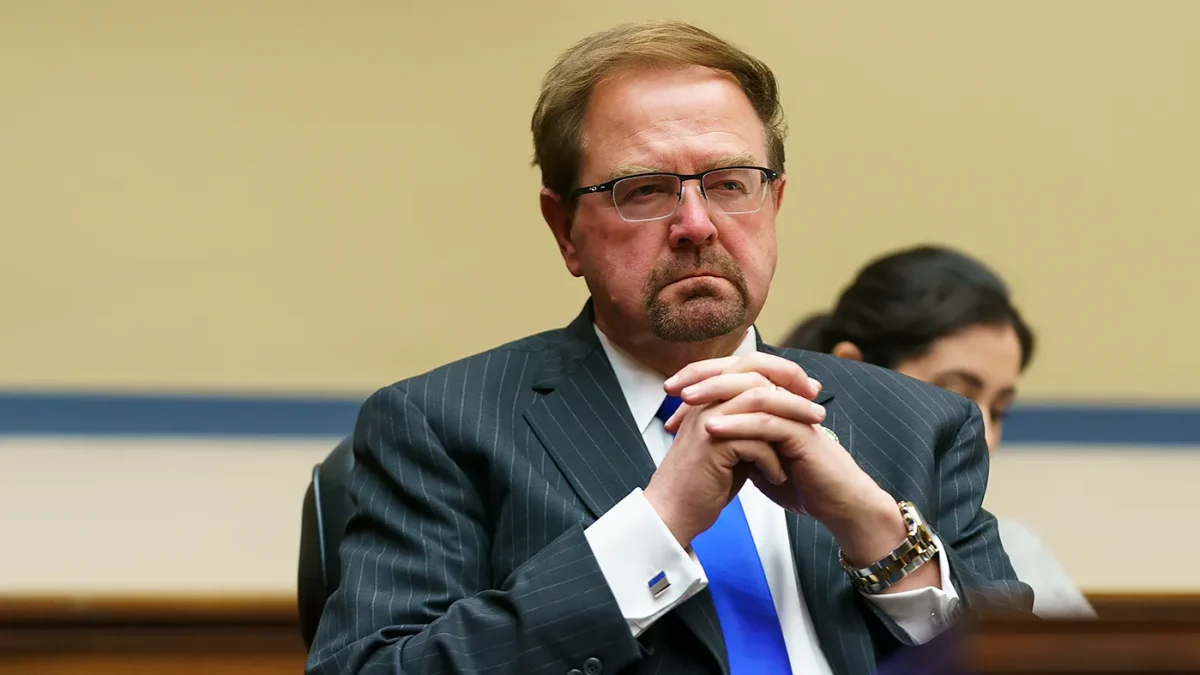
Table of Contents
Chuck Edwards Writes Letter Defending Himself
Provpnadvice.com – With a full-House censure vote on the calendar as soon as next week, North Carolina Representative Chuck Edwards (R) has responded to the House Ethics Committee’s findings with a detailed written rebuttal. The committee concluded that Edwards engaged in “persistent unprofessional and inappropriate conduct” toward two younger female members of his congressional staff. In his letter, Edwards writes letter defending his record by arguing the committee stitched together ordinary workplace interactions and assigned them the most damaging reading available.
What the Ethics Committee Found
Investigators reviewed roughly 1,500 pages of documentary material and interviewed 16 witnesses before issuing their determination. The underlying complaints described a pattern that included lavish gifts, jewelry, a New York City trip to see “Hamilton,” late-night personal texts, comments about the staffers’ physical appearance, and an original poem recited at a going-away party. The committee explicitly stated it found no evidence of explicit sexual activity or quid pro quo propositions. Its narrower finding was nonetheless serious: the aggregate conduct violated House standards governing sexual harassment and created a hostile work environment for the two women.
Edwards’ Written Rebuttal
Edwards’ central argument is structural. He contends that no single item in the report independently constituted prohibited conduct, yet the committee grouped those items together and applied the most adverse interpretation to each, producing a conclusion far more severe than any individual fact warranted. He presses the point with pointed language:
“An affectionate friendship is not a sexual proposition. A gift is not sexual misconduct. A compliment is not sexual misconduct. Poetry is not sexual misconduct.”
He extends the logic to everyday collegiality, warning that without bright-line rules, permissible behavior can be recharacterized as evidence of wrongdoing simply by accumulating enough examples and attributing an improper motive to each one. “Ten permissible acts do not become misconduct merely because they are placed together in ten paragraphs,” he writes.
The Gift-Exchange Argument
To illustrate his point, Edwards details a two-way flow of presents between himself and staff of both genders. He lists items he gave male and female staffers—olive oil, cookware, rum, Kennedy Center tickets, even a handgun—and items staffers gave him, including a custom NFL jersey, bourbon and whiskey, throw blankets, whiskey glasses, a taxidermy animal, a planned skydiving trip, and wall plaques. His implication: the committee scrutinized exchanges with female staffers while treating identical exchanges with male staffers as unremarkable, constructing a gendered narrative from what he characterizes as routine collegiality.
Political Consequences
The allegations have already altered Edwards’ political trajectory. Earlier this month he withdrew his bid for reelection in North Carolina’s 11th Congressional District, citing the sexual-assault allegations that preceded the ethics investigation. The district’s Republican committee subsequently selected State Representative Jennifer Balkcom (R-N.C.) to fill the vacancy on the ballot. Edwards, now a lame-duck member awaiting the censure vote, has urged colleagues to weigh whether the report presents affirmative evidence of misconduct or an inferential narrative built from ambiguous interactions.
Frequently Asked Questions
What is the House censure vote regarding Chuck Edwards?
Censure is the most severe House disciplinary measure short of expulsion. The full chamber is expected to vote on a resolution censuring Edwards as soon as next week, based on the Ethics Committee’s report finding his conduct violated House sexual-harassment standards.
Did the Ethics Committee find evidence of sexual assault?
No. The committee stated it did not find evidence of explicit sexual activity or quid pro quo propositions. Its finding was that the aggregate pattern of conduct created a hostile work environment and violated House standards governing sexual harassment.
Who will replace Edwards on the ballot in North Carolina’s 11th District?
State Representative Jennifer Balkcom (R-N.C.) was tapped by the district’s Republican committee to fill the vacancy after Edwards withdrew his reelection bid earlier this month.