Ontario’s Ford warns US power could be cut as he trades insults with Trump

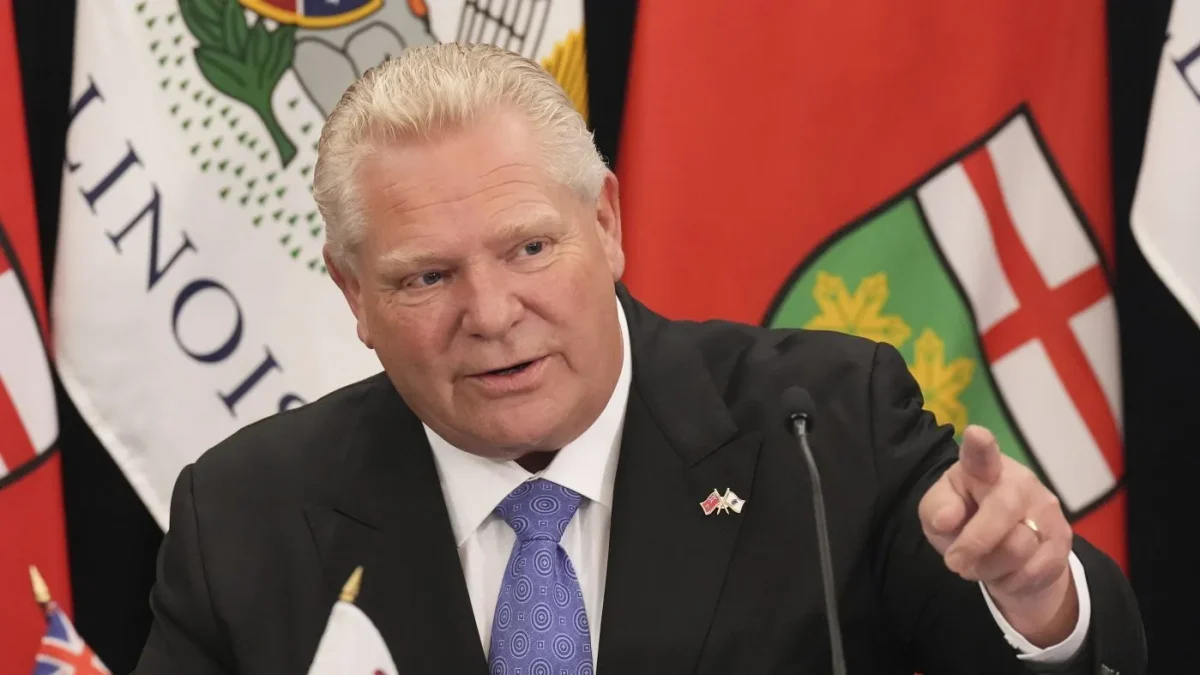
Table of Contents
Ontario Premier Threatens to Sever Power Links to Three U.S. States as Trade Clash Escalates
Provpnadvice.com – The second public round of the Canada–United States trade confrontation has taken on a new and tangible dimension: electricity. Ontario Premier Doug Ford declared on Monday that the province is prepared to shut off its cross-border power exports to American states, a move that would directly affect roughly 1.5 million U.S. households and commercial operations. The threat lands amid a sharp deterioration in bilateral relations following what Ford described as the collapse of trade negotiations and the imposition of steep new tariffs by the White House.
“Everything Is on the Table”
Speaking at a Monday press conference, Ford made clear that no retaliatory option has been ruled out. He framed the province’s leverage in blunt, consumer-facing terms:
“We power 1.5 million homes and businesses. Everything’s on the table. I’ll do whatever it takes.”
The remark was aimed squarely at the administration of President Donald Trump, which has moved to impose a 50 percent tariff on approximately $20 billion in Canadian goods. Ottawa had already signaled it would answer with its own retaliatory tariffs before Ford layered on the energy threat and floated the additional idea of restricting American access to Canada’s critical minerals — a sector that includes lithium, cobalt, nickel, and rare-earth elements essential to battery manufacturing, electronics, and defense production.
A Grid That Crosses the Border
Ontario’s electricity infrastructure is physically wired into the grids of Michigan, New York, and Minnesota. Transmission lines carry power southward across the border on a continuous basis, meaning that a provincial decision to curtail exports would not be a symbolic gesture but an operational change felt within hours by American utilities and end users. Ford is not new to this kind of pressure tactic. During the previous round of trade friction last year, he issued a similar warning about cutting power to U.S. states. That episode was ultimately defused when he sat down with Commerce Secretary Howard Lutnick for bilateral talks, and tensions cooled without a formal power shutdown.
The current episode, however, carries a different weight. The tariff level Trump has announced — half again as high as the 25 percent rate that triggered last year’s standoff — has raised the stakes considerably. For Ontario, which generates a large share of its electricity from hydroelectric dams in the Niagara River basin and from nuclear plants at Darlington and Pickering, the export revenue from American states represents a meaningful slice of provincial utility income. Cutting that flow would also shift load onto domestic consumers, potentially raising electricity bills within Ontario itself.
Trump Fires Back on Truth Social
The president did not let the threat sit unanswered. On his social platform Truth Social, Trump turned the exchange into a personal jab, referring to Ford as the
“overall unimpressive brother of the late, great, Rob Ford.”
Rob Ford, Doug’s older brother, served on Toronto city council and later as mayor of the city before his death in 2024. The president then broadened his critique, accusing Canada of suffering from
“bad leadership”
that he attributed primarily to Prime Minister Mark Carney and to what he labeled
“Flunky Ford.”
Trump urged both men to
“fall in line.”
Ford’s reply, delivered with characteristic bluntness, was a single expletive-laced sentence:
“Kiss my a–.”
The exchange underscores how quickly a policy dispute over tariffs and mineral access can devolve into a personal feud between two leaders who share a 5,500-mile border and a combined GDP exceeding $20 trillion.
Opposition Demands Answers in Parliament
Back in Ottawa, Conservative Party leader and opposition leader Pierre Poilievre called for a more measured approach. In a Monday post on the social platform X, he argued that Canadian politicians should avoid inflammatory rhetoric while dealing with the Trump administration.
“As Canadians are vulnerable to an escalating trade war with the United States, Parliament must be reconvened. Canadians deserve answers on how trade talks collapsed, what tariffs will cost their families, and how their jobs will be protected.”
Poilievre’s intervention highlights a domestic political fault line: while the governing Liberal government and provincial premiers like Ford adopt a confrontational posture, the opposition insists that the economic exposure of ordinary households — particularly in export-dependent sectors such as automotive manufacturing, forestry, and agriculture — demands transparency and parliamentary oversight rather than rhetorical escalation.
What Comes Next
For now, no formal notice of interruption has been filed with American grid operators, and Ontario’s electricity exports continue to flow south. But the threat itself reshapes the negotiating calculus. U.S. utilities in Michigan, New York, and Minnesota now face the prospect of losing a reliable, low-carbon supply of hydro and nuclear power at precisely the moment when domestic generation costs are rising. Canadian exporters, meanwhile, must weigh the tariff exposure on $20 billion of goods against the political risk of a prolonged standoff. And American consumers in those three states may soon find their electricity bills and supply reliability entangled in a dispute that began, formally, over steel, aluminum, lumber, and digital services — but has now reached the wires themselves.
Related Reading
Frequently Asked Questions
What is Ontario s Ford warns US power?
Ontario s Ford warns US power is the main topic of this guide. The article explains the context, practical details, and next steps readers should understand.
Why does Ontario s Ford warns US power matter?
Ontario s Ford warns US power matters because readers are looking for a useful answer, not just a short summary. Good content should match search intent and help them decide what to do next.