US Postal Service issues rule to tighten requirements for mail-in voting despite courts looking to block

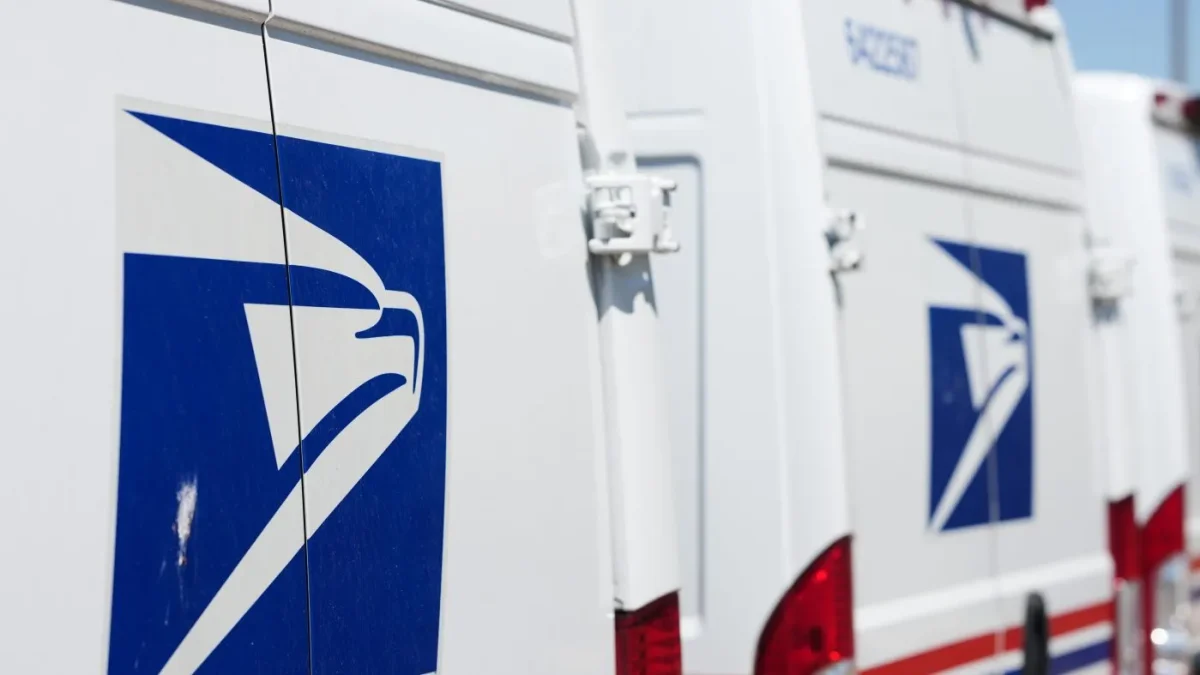
Table of Contents
USPS Moves to Gate Mail-In Ballots Behind Citizenship Verification Ahead of 2026 Midterms
Provpnadvice.com – With fewer than ninety days separating the country from the November 3, 2026 midterm elections, the United States Postal Service has unveiled a sweeping new framework that would condition the delivery of absentee and mail-in ballots on states first furnishing verified lists of citizens eligible to vote. The move, announced Friday, tracks closely with a March executive order signed by President Donald Trump that sought to impose federal citizenship checks on the mail-ballot pipeline — an order that a federal judge subsequently invalidated.
The timing places the policy squarely in the crosshairs of election administrators, state election boards, and voting-rights advocates who warn that last-minute procedural shifts can disrupt ballot processing at precisely the moment counties are finalizing mailing schedules.
A 95-Page Blueprint for Conditional Ballot Delivery
USPS detailed its approach in a 95-page internal report that had not been made public at the time of the announcement but was scheduled for formal publication on August 26. The document lays out how the postal service intends to handle the distribution of mail-in ballots for the upcoming midterms.
Under the proposed regime, each state would receive a sixty-day window before Election Day to inform USPS whether it plans to transmit a roster of eligible voters drawn from citizenship records. Only after such a list is received would the postal service proceed to dispatch mail-in or absentee ballots to residents of that state. In effect, the policy converts the act of mailing a ballot from an automatic administrative function into one contingent on a prior federal-eligibility screening step.
The structure mirrors the language of Trump’s March directive, which instructed states to compile and submit lists of qualified citizens as a prerequisite for their voters to receive ballots through the mail. Although a court later vacated that executive order, the postal service’s new guidelines appear to preserve its operative mechanism in operational form.
Court Pushback and the White House Response
In June, Postmaster General David Steiner told senators on the floor of the Senate that he intended to honor the president’s directive, framing the requirement as a safeguard:
“the right ballots are going to the right people.”
Two months later, U.S. District Judge Indira Talwani issued a ruling seeking to block nationwide enforcement of the order. She argued that implementing the citizenship-list requirement so close to Election Day would generate avoidable confusion and chaos in already-pressured election offices. Her opinion carried an urgent tone given the compressed timeline:
“That it is now less than 90 days before the November 3, 2026 midterm elections underscores the critical need for an injunction to prevent Defendants from changing election rules on the eve of the election.”
The White House did not retreat. Spokesperson Lauren Bis told reporters that the administration would press forward:
“will continue lawfully enacting the agenda President Trump was elected to enact – which includes the safety and security of American elections.”
The exchange underscores a broader tension in the current administration’s approach to election administration: executive-level intervention in processes traditionally governed by state and local election officials, met by judicial resistance and institutional pushback from postal and election agencies.
Trump’s Longstanding Skepticism of Mail Ballots
President Trump has repeatedly characterized mail-in voting as a conduit for widespread voter fraud, a claim that has drawn scrutiny from election researchers and nonpartisan watchdogs who have found no evidence of systemic fraud at the scale he describes. His criticism intensified in late June when the Supreme Court upheld the principle that a mail ballot postmarked by Election Day remains valid even if it arrives at the county office afterward. Trump dismissed the ruling as a
“tremendous loss in the Supreme Court.”
The statistical backdrop makes the stakes tangible. A June report from the U.S. Election Assistance Commission found that nearly one-third of ballots cast in the 2024 general election arrived by mail. Specifically, mail ballots accounted for 30.3 percent of total votes cast that cycle — a figure well above pre-pandemic norms, when mail voting was far less prevalent outside a handful of states.
SAVE America Act and the National-Emergency Gambit
During an August interview, Trump floated the possibility of declaring a national emergency should the Senate fail to pass the Safeguard American Voter Eligibility (SAVE America) Act. That proposed federal statute would require voters to present proof of citizenship at registration and a government-issued photo identification at the polling place. He stopped short of a direct commitment, offering instead:
“Let me just say that stranger things have happened, OK? I’ll leave it at that.”
The SAVE America Act has not cleared the Senate, and a national-emergency declaration tied to election administration would be an unprecedented step, raising questions about separation of powers and the scope of executive authority over state-run elections.
What Comes Next
For state election officials, the immediate question is whether to comply with the sixty-day notification window or await further judicial guidance. For voters in states that rely heavily on mail ballots — a category that includes much of the West, the Mountain West, and several northern states — any disruption to ballot mailing schedules could compress the already-tight timeline between ballot issuance and return deadlines. The interplay between the postal service’s new operational rules, the court injunction, and potential legislative action on SAVE America will shape the procedural landscape in which roughly one in three American voters may cast their ballot by mail this November.
Related Reading
Frequently Asked Questions
What is US Postal Service issues rule to tighten?
US Postal Service issues rule to tighten is the main topic of this guide. The article explains the context, practical details, and next steps readers should understand.
Why does US Postal Service issues rule to tighten matter?
US Postal Service issues rule to tighten matters because readers are looking for a useful answer, not just a short summary. Good content should match search intent and help them decide what to do next.