Rising data center backlash shakes up midterm races

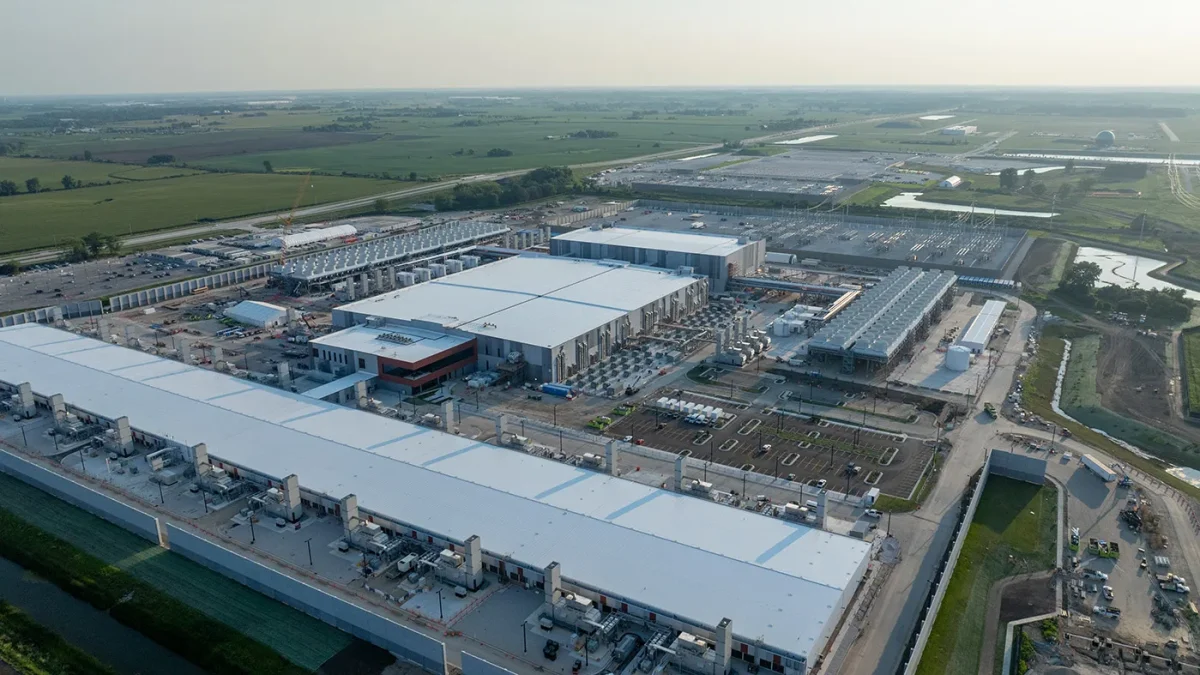
Table of Contents
AI Infrastructure Backlash Reshapes Swing-State Politics Ahead of Midterms
Provpnadvice.com – A quiet but accelerating revolt against the sprawling buildout of artificial-intelligence data centers is now rewriting campaign strategy across three pivotal battleground states. Candidates who once courted hyperscale computing projects are scrambling to signal toughness on the issue, while their opponents seize on past endorsements as evidence of corporate capture. The shift reflects a broader public mood: voters increasingly view the energy-hungry, water-intensive facilities powering large language models not as economic boons but as threats to local utility bills, municipal water supplies, and neighborhood character.
The Numbers Behind the Anger
Large language models and generative-AI workloads demand enormous sustained computing capacity, which in turn drives electricity consumption into the hundreds of megawatts per site and pulls substantial volumes of water for cooling loops. Tech firms have announced dozens of new construction projects across the Midwest and Northeast to meet that demand. Yet a Fox News poll released in late July captured the electorate’s growing unease: 70 percent of respondents said they oppose siting a new data center in their own community to support AI, and 78 percent favored slowing construction so that environmental and community concerns could be addressed first.
That polling signal has landed with force in campaign offices. The political calculus that once made welcoming a hyperscale campus a virtue now reads as a liability, and both parties are recalibrating their messaging within weeks of each other.
Pennsylvania: A Governor Walks Back a $20 Billion Welcome
Governor Josh Shapiro (D) spent much of last year championing data-center investment as a pillar of state competitiveness. He publicly celebrated Amazon’s decision to commit $20 billion to two facilities in the Keystone State, framing AI as
“yet another national security issue that Pennsylvania can lead on.”
At the time, his administration also extended the company what was described as “exclusive early access” to a fast-track permitting program, an arrangement documented in a memo bearing a non-disclosure label. That posture has now been inverted. On Tuesday, Shapiro signed an executive order mandating that developers execute consent orders agreeing to bear the full electricity costs associated with their projects and to obtain local-government approval before breaking ground. The order simultaneously bars both existing and future data-center proposals from participating in the state’s expedited-permitting track.
The governor framed the reversal in blunt terms:
“I’ve heard loud and clear from the people of Pennsylvania as I’ve traveled our Commonwealth, and I’m here to say that we will not be bullied by developers and bulldozed by the lawyers working for these big tech companies.”
He added that since the Amazon announcement, “we’ve seen an unacceptable number of speculative proposals for data centers swamp our Commonwealth,” suggesting the order was a response to a sudden flood of applications rather than a single corporate deal.
The move has given Shapiro’s gubernatorial opponent, state treasurer Stacy Garrity (R), fresh ammunition. In a campaign advertisement, Garrity accused the governor of capitulating to Big Tech, declaring
“Shapiro sold us out.”
Shapiro’s team fired back in its own spot, branding the treasurer
“Pennsylvania’s number one fan of data centers.”
The irony is not lost on observers: Garrity has previously argued that Pennsylvania should do more to attract hyperscale facilities. Her campaign now advocates a “pause” on future development rather than outright opposition. Matt Beynon, a media consultant attached to the Garrity operation, dismissed the new order as cosmetic:
“I think we can’t trust Governor Shapiro at all,” he said, adding that the latest policy plan is “not going to address what he’s the door he’s already opened. The horses are out of the barn.”
Manuel Bonder, a spokesperson for the Shapiro campaign, countered in a written statement:
“Stacy Garrity’s long record of supporting completely unregulated data center development makes it clear that she just can’t be trusted.”
Michigan: A Moratorium Enters the Senate Race
In the tightly contested Michigan Senate contest, Republican candidate and former Representative Mike Rogers announced Thursday that he supports a one-year state moratorium on new data-center construction. His Democratic opponent is former Detroit mayor Abdul El-Sayed. Rogers’s position places him squarely against the industry’s preferred timeline and aligns him with the growing bloc of voters who want a cooling-off period while regulators assess cumulative environmental impacts.
Ohio: The NRSC Flags a Vulnerability
In Ohio, former Senator Sherrod Brown (D) is pressing incumbent Senator Jon Husted (R) on his record regarding data-center siting in the Buckeye State. The pressure is not merely partisan. The National Republican Senatorial Committee recently circulated an internal memo cautioning that
“data centers are the anchor hanging around Husted’s neck.”
The memo’s language signals that even the party’s own Senate arm views the issue as a genuine electoral risk rather than a peripheral talking point.
Grassroots Signal: Voters Crossing Party Lines
The backlash is not confined to polling numbers. Aru Shiney-Ajay, executive director of the progressive Sunrise Movement, told reporters that during door-to-door canvassing in Michigan and Wisconsin she has spoken with residents
“flipping their party affiliation because of the importance of data centers.”
That observation, if borne out in turnout data, would make data-center sentiment one of the few issues capable of moving voters across traditional partisan boundaries in a single election cycle.
What Comes Next
The convergence of state-level policy reversals, candidate position shifts, and internal party warnings suggests that data-center governance will feature prominently in fall advertising and debate stages across the Midwest. For voters in Pennsylvania, Michigan, and Ohio, the question is no longer whether AI infrastructure will arrive but who will bear its costs, who will approve its siting, and whether elected officials will answer to local communities before the first concrete is poured.
Related Reading
Frequently Asked Questions
What is Rising data center backlash shakes up midterm?
Rising data center backlash shakes up midterm is the main topic of this guide. The article explains the context, practical details, and next steps readers should understand.
Why does Rising data center backlash shakes up midterm matter?
Rising data center backlash shakes up midterm matters because readers are looking for a useful answer, not just a short summary. Good content should match search intent and help them decide what to do next.