Watch live: Vance headlines opening of school to ‘rebuild American manufacturing’

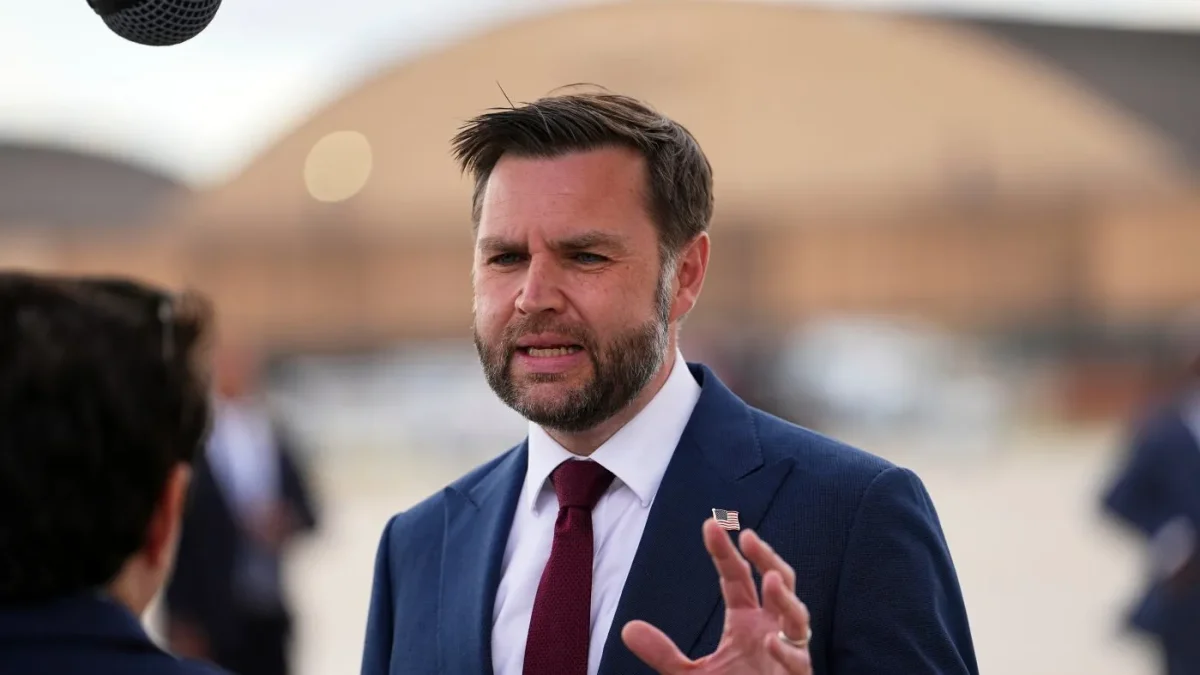
Table of Contents
Vance to Headline Launch of Manufacturing Workforce Training Program at Institute of Peace
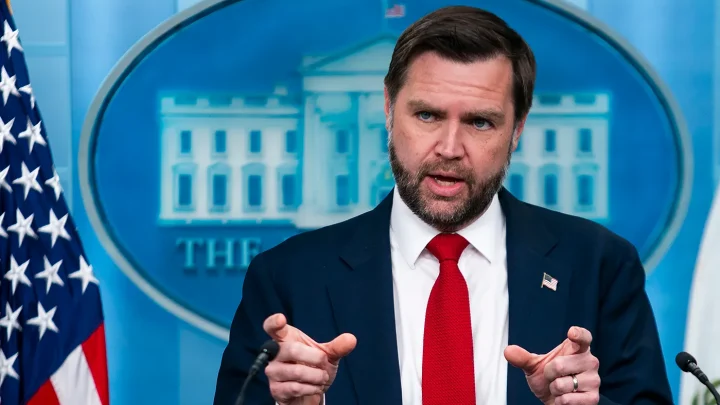
Provpnadvice.com – Washington, D.C. — Vice President JD Vance is set to deliver remarks Thursday morning marking the formal opening of a new federal training initiative aimed at closing the skills gap in America’s advanced manufacturing sector. The event, scheduled to begin at 8:20 a.m. EDT at the Institute of Peace, underscores the Trump administration’s sustained push to reindustrialize the domestic economy and rebuild a pipeline of workers capable of filling roles in semiconductors, defense production, and energy infrastructure.
The Foundry School: Purpose and Scope
The program being inaugurated, known as the Foundry School, operates under the State Department’s Pax Silica initiative. Its stated mission is to prepare entrepreneurs, engineers, technicians, and industrial leaders for careers in advanced manufacturing disciplines. Rather than functioning as a traditional vocational school, the Foundry School is designed as a cross-sector training platform that bridges the gap between academic engineering curricula and the practical demands of factory floors, cleanroom environments, and national-defense supply chains.
The emphasis on semiconductors is not incidental. For more than a decade, the United States has watched its share of global chip fabrication shrink dramatically, with most advanced logic and memory production concentrated in East Asia. The Foundry School’s curriculum targets precisely that vulnerability by cultivating a domestic talent pool capable of supporting new fabs, packaging facilities, and materials-research labs that policymakers hope will anchor reshored production lines.
Pax Silica and the State Department’s Industrial Role
Pax Silica, the parent initiative under which the Foundry School operates, reflects a broader reorientation of American foreign policy toward treating semiconductor supply chains as matters of national security rather than purely commercial interests. Secretary of State Marco Rubio has placed the initiative squarely within the State Department’s portfolio, signaling that diplomatic leverage, allied coordination, and workforce development are now considered inseparable components of tech-industrial strategy.
By housing the Foundry School within a State Department framework, the administration links domestic training directly to international supply-chain diplomacy. Graduates and participants are expected to operate not only within U.S. facilities but also within allied manufacturing ecosystems spanning Japan, South Korea, the Netherlands, and Europe — regions where American firms already maintain packaging, testing, and materials operations.
The Workforce Gap in Context
The urgency behind the program is measurable. Industry surveys have consistently flagged shortages of trained technicians in photolithography, advanced packaging, and power-electronics assembly. Defense contractors, meanwhile, report difficulty staffing roles tied to next-generation munitions, hypersonic-vehicle components, and grid-scale energy systems. The Foundry School’s multi-disciplinary design — spanning entrepreneurship, engineering, and industrial leadership — is intended to produce not just individual operators but the managerial and technical cadres needed to scale domestic production capacity.
President Trump has made the restoration of domestic manufacturing a central pillar of his second-term agenda, pairing tariff measures and export controls with domestic investment incentives. The Foundry School represents the human-capital dimension of that strategy: the argument being advanced is that tariffs and subsidies alone cannot rebuild a factory ecosystem without a concurrent investment in the people who will run, maintain, and innovate within those facilities.
Event Details and Expected Remarks
Vance’s remarks are expected to frame the Foundry School’s launch within the administration’s broader industrial-policy narrative, emphasizing job creation, energy independence, and technological sovereignty. The Institute of Peace, a federally chartered institution in Washington dedicated to advancing peace through education and research, provides the venue for the ceremony.
Attendees are anticipated to include senior State Department officials, representatives from allied semiconductor and defense firms, academic partners, and members of Congress with jurisdiction over trade, energy, and workforce-development appropriations. The timing — a Thursday-morning slot — suggests the administration is coordinating the event with a wider communications push on manufacturing policy.
Implications for Industry and Policy
If the Foundry School scales beyond its initial cohort, it could become a template for sector-specific workforce programs in other advanced-manufacturing domains, from aerospace composites to nuclear-fuel fabrication. Critics of federal workforce intervention have long argued that market signals, not government curricula, should determine training priorities. Proponents counter that the scale and speed of the semiconductor and defense buildout now underway leave insufficient time for organic market adjustment alone.
The program’s placement under Pax Silica also raises questions about the intersection of foreign-policy objectives and domestic labor training. Questions about curriculum governance, intellectual-property protections for training materials, and the role of allied governments in shaping course content will likely surface as the Foundry School moves from its inaugural cohort to subsequent intakes.
For now, the Thursday event marks a concrete step in an administration that has moved from rhetoric to institutional infrastructure in its bid to reconstitute American manufacturing capacity. Whether the Foundry School ultimately produces the depth of skilled labor the sector requires will depend on enrollment scale, industry buy-in, and sustained funding — variables that the next several months of operation will begin to reveal.
Related Reading
Frequently Asked Questions
What is Watch live: Vance headlines opening of school to ‘rebuild American manufacturing’?
Watch live: Vance headlines opening of school to ‘rebuild American manufacturing’ is the main topic of this guide. The article explains the context, practical details, and next steps readers should understand.
Why does Watch live: Vance headlines opening of school to ‘rebuild American manufacturing’ matter?
Watch live: Vance headlines opening of school to ‘rebuild American manufacturing’ matters because readers are looking for a useful answer, not just a short summary. Good content should match search intent and help them decide what to do next.