It’s not just Flock. These cameras, ALPRs may also be in your community

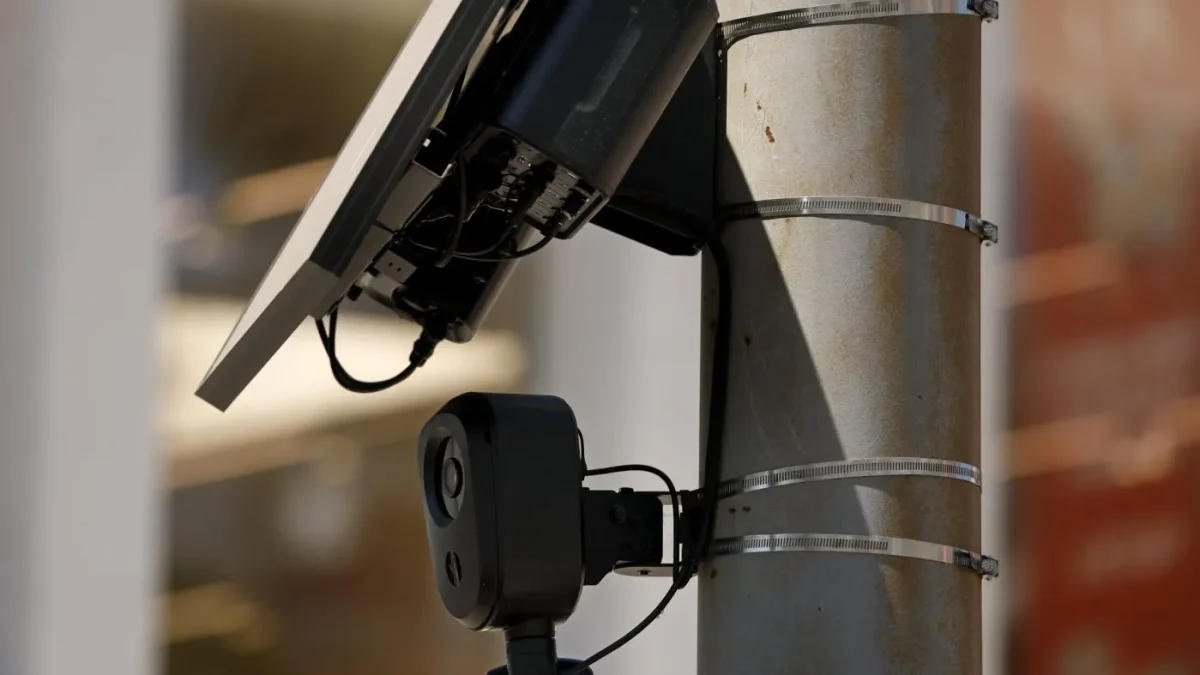
Table of Contents
The License Plate Reader in Your Neighborhood May Not Be Flock — But It Works the Same Way
Provpnadvice.com – Public anger aimed at Flock Safety’s solar-powered surveillance units has dominated headlines for months, yet the company represents only one slice of a far larger infrastructure of automated license plate readers (ALPRs) quietly installed along streets, intersections, and arterial roads across the country. Municipalities that have voted to remove Flock hardware are not necessarily stepping away from plate-scanning technology; many are simply swapping one vendor’s cameras for another’s, often with comparable data-collection practices and fewer public hearings.
A National Footprint Measured in Hundreds of Thousands of Units
The organization DeFlock maintains a volunteer-built, crowd-sourced map pinning down where ALPR cameras sit throughout the continental United States. According to that map, roughly 138,000 units have been logged so far. Of those, approximately 82 percent were manufactured by Flock Safety. Motorola Solutions accounts for about five percent, and Genetec for two percent. A long tail of smaller producers — including Axon, Axis Communications, and Neology — fills out the remainder of the tally.
Flock’s own marketing materials claim partnerships with more than 5,000 law enforcement agencies spread across 6,000 communities, a footprint that explains why the brand has become the public face of plate-reading surveillance. Yet the sheer number of non-Flock units means that a city’s decision to “deflock” its streets does not automatically eliminate the technology from local traffic corridors.
What the Cameras Actually Capture
Every ALPR vendor operates on a broadly similar technical premise: a fixed or mobile camera photographs vehicles as they pass, extracts the plate number, and files the image into a searchable database. The captured frame, however, is not limited to the plate itself. A single photograph can reveal make, model, color, and even the bumper stickers or window decals on a passing car. That metadata accumulates over time into a record of where a particular vehicle — and by extension its driver — has traveled.
Vendors differ in their default retention windows and in how they deploy artificial-intelligence tools to query their archives. Some retain images indefinitely unless a subscriber agency requests deletion; others impose shorter default periods. These policy choices shape how easily a plate record can be linked to other databases, how long a trail of movement persists, and what level of oversight a resident can realistically expect.
The Privacy Argument, From Both Sides
Supporters of ALPR deployment point to concrete investigative benefits: plates captured at a crime scene can be cross-referenced against registration records, and patterns of movement can help narrow suspect pools. Critics counter that the same architecture, built for solving individual cases, doubles as a passive tracking system that logs the comings and goings of every driver — including people who have never been accused of anything — often with minimal judicial review or community notification.
Jay Stanley, a senior policy analyst in the ACLU’s Speech, Privacy, and Technology Project, has written that the distinctions between vendors are significant enough to matter. He notes, for instance, that Flock and Motorola both participate in nationwide law-enforcement data-sharing arrangements, while Axon does not. That single structural difference changes who can query a plate record and under what authority.
“At the same time, communities can’t simply assume that their居民 will be better off from a privacy and civil liberties perspective by dropping Flock and replacing it with another ALPR provider, as some customers have done. They should ask hard questions about whether they really want to create that kind of a system, and if they do, ensure it doesn’t function as a mass surveillance system,” Stanley says.
His point cuts against a common municipal shortcut: the assumption that swapping brands is equivalent to reducing surveillance. If the replacement vendor stores images longer, shares data with more agencies, or applies AI pattern-matching more aggressively, the privacy calculus may shift in the wrong direction even though the hardware on the pole looks different.
Checking Your Own Streets
Residents who want a concrete picture of what is pointed at their block can consult DeFlock’s interactive map, which plots reported ALPR locations across the country. The project describes its sourcing method plainly:
“Camera locations come from volunteers and the OpenStreetMap community, not a private company or government agency,” DeFlock says.
Because the map relies on citizen reporting rather than a vendor’s proprietary inventory, it may undercount units in areas where no one has yet logged a sighting, and it cannot confirm whether a listed camera is still active. Independent verification of individual locations was not possible for this article.
Why the Distinction Matters Now
The debate over ALPRs has moved from abstract privacy theory into concrete municipal budget meetings and city-council votes. When a council member proposes replacing one vendor with another, the question is no longer simply “do we want plate readers?” but “which reader, under what retention rules, with what sharing agreements, and with what community oversight?” The answer to that second question determines whether a neighborhood gains a modest investigative tool or a persistent, searchable record of every car that ever crossed its streets.
Related Reading
Frequently Asked Questions
What is It s not just Flock These?
It s not just Flock These is the main topic of this guide. The article explains the context, practical details, and next steps readers should understand.
Why does It s not just Flock These matter?
It s not just Flock These matters because readers are looking for a useful answer, not just a short summary. Good content should match search intent and help them decide what to do next.