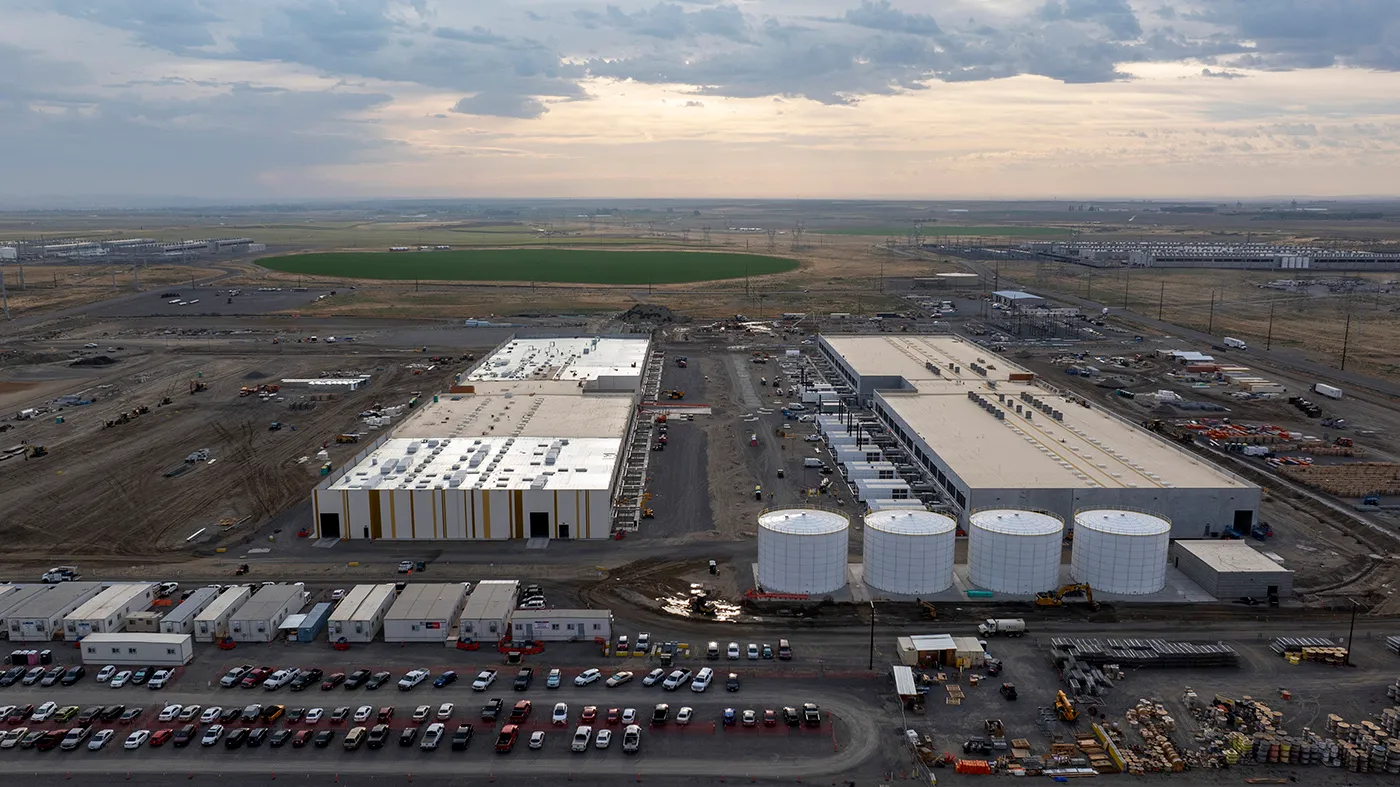
Amazon investing $1B in data center communities

Table of Contents
Amazon Pledges $1 Billion for Communities Hosting Data Centers
Provpnadvice.com – Amazon says it will direct $1 billion over the next five years toward communities that host its data centers, pairing its rapid infrastructure expansion with investments in education, job preparation, and energy efficiency.
The commitment comes as large data facilities face growing resistance in many parts of the United States. Residents and local officials have raised concerns about electricity demand, water consumption, environmental effects, and whether the economic benefits of a facility are shared broadly with the surrounding community.
Education, Training and Energy Improvements
The funding is intended to support free community-college opportunities and workforce-development programs for local residents. Amazon also plans to use part of the investment for projects intended to improve energy efficiency in communities near its data center operations.
Amazon Web Services CEO Matt Garman acknowledged that communities have questions about the arrival of large-scale computing facilities. AWS operates Amazon’s cloud-computing business, whose infrastructure underpins many online services and is increasingly important to the expansion of artificial intelligence tools.
“We understand why there is apprehension in some communities where data centers are being built,” Garman wrote.
Amazon is presenting the investment as part of a broader set of operating principles called the Amazon Data Center Commitment. The company said those principles are meant to make its practices clearer as demand for cloud capacity and AI-related computing continues to grow.
Promises on Power Costs and Transparency
A central part of the announcement is Amazon’s pledge that its facilities will not increase electricity bills for nearby residents. Power costs have become a major issue in debates over data center projects because such sites can require substantial amounts of electricity to run servers, cooling systems, and supporting equipment.
The company also said it will stop using nondisclosure agreements in connection with these projects. Greater public disclosure could give residents and local governments more opportunity to examine proposed development, discuss expected infrastructure needs, and assess commitments made by the company.
For communities considering a new facility, the practical questions often extend beyond the construction site itself. New development can involve grid upgrades, roads, water systems, workforce needs, and long-term planning for local land use. Amazon’s stated commitments seek to address some of those concerns while it continues to build data center capacity.
Water Targets and Public Reporting
Amazon is also targeting “water positive” operations for its data centers by 2030. In practical terms, the company says it aims to return more water to local systems than its facilities consume.
It plans to release annual information covering water use and efficiency, as well as energy use and efficiency. Regular reporting may make it easier for communities, policymakers, and customers to measure progress against the company’s public goals.
Water has become a particularly visible point of contention around data centers. Cooling equipment can require water, although the amount and method of use can differ depending on a site’s design, location, climate, and local infrastructure. Public reporting can help distinguish broad claims about data center impacts from the circumstances of individual projects.
A Challenging Environment for Data Center Growth
The announcement arrives as the United States seeks to add server capacity quickly to support expanding AI development. Data centers store, process, and transmit the information that powers cloud applications, streaming platforms, business software, and AI systems. Their growth has made them important pieces of digital infrastructure, but it has also intensified local scrutiny.
A Pew Research Center poll found that 60 percent of Americans would be uncomfortable with a data center operating near them. Half of respondents said these facilities were mostly harmful for household energy costs, while 54 percent viewed them as mostly harmful for the environment.
Those views present a challenge for companies seeking local support for new projects. Community approval can depend on whether a proposal addresses concerns about utility demand, water resources, transparency, jobs, and the distribution of benefits. Financial pledges and reporting promises may influence those discussions, but residents are likely to continue asking for project-specific details.
Garman argued that some criticism of data centers does not accurately reflect their effects. He pointed to claims that facilities are consuming all available water or driving every increase in energy rates, describing those assertions as false or misleading.
“There is urgency to this data center buildout because we aren’t the only country that sees the benefits of AI for the economy and national security,” Garman wrote.
He said competition over AI development has consequences beyond the technology sector, including economic and national-security considerations. Amazon’s new commitment reflects the reality that building the infrastructure needed for AI will require not only capital and engineering, but also sustained trust from the communities where that infrastructure is located.
Related Reading
Frequently Asked Questions
What is Amazon investing 1B in data center?
Amazon investing 1B in data center is the main topic of this guide. The article explains the context, practical details, and next steps readers should understand.
Why does Amazon investing 1B in data center matter?
Amazon investing 1B in data center matters because readers are looking for a useful answer, not just a short summary. Good content should match search intent and help them decide what to do next.